

6E7R image
Deposition Date 2018-07-27
Release Date 2019-01-30
Last Version Date 2024-11-20
Entry Detail
PDB ID:
6E7R
Title:
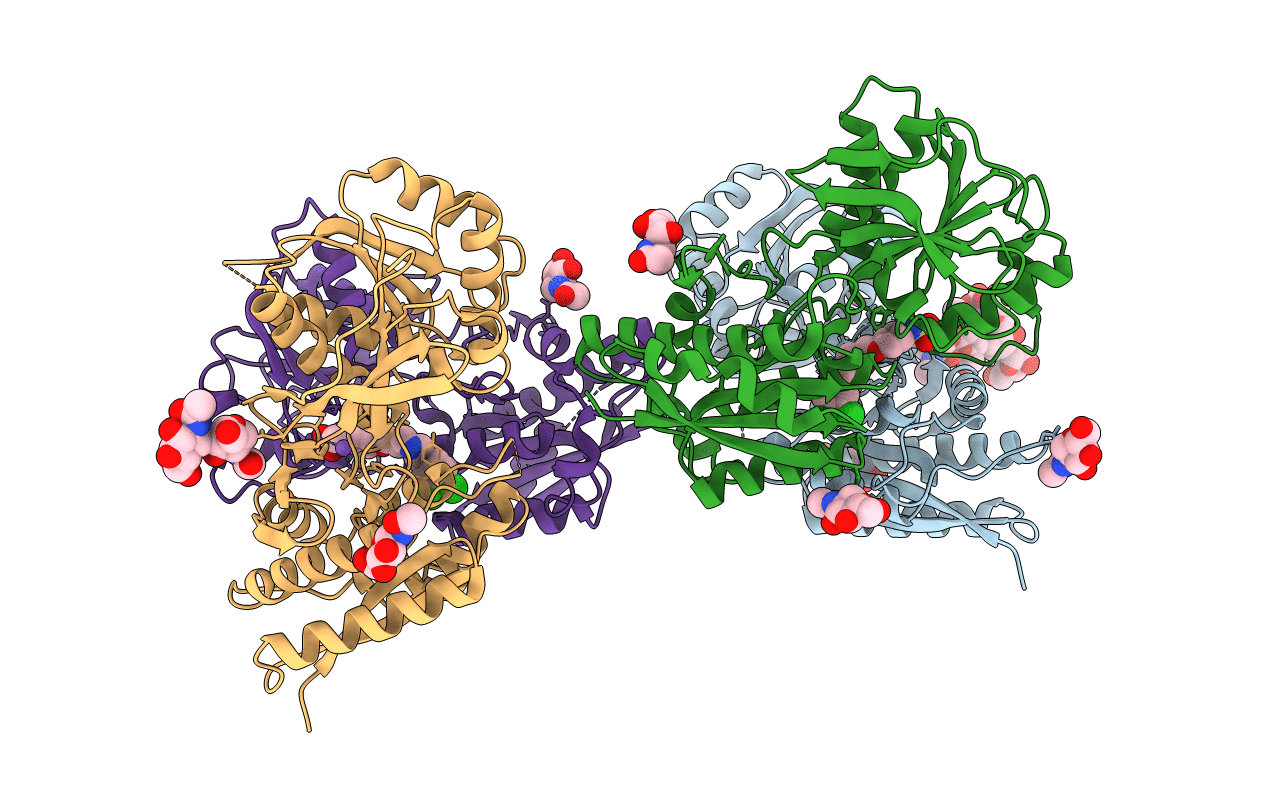
Heterodimer of the GluN1b-GluN2B NMDA receptor amino-terminal domains bound to allosteric inhibitor 93-4
Biological Source:
Source Organism(s):
Expression System(s):
Method Details:
Experimental Method:
Resolution:
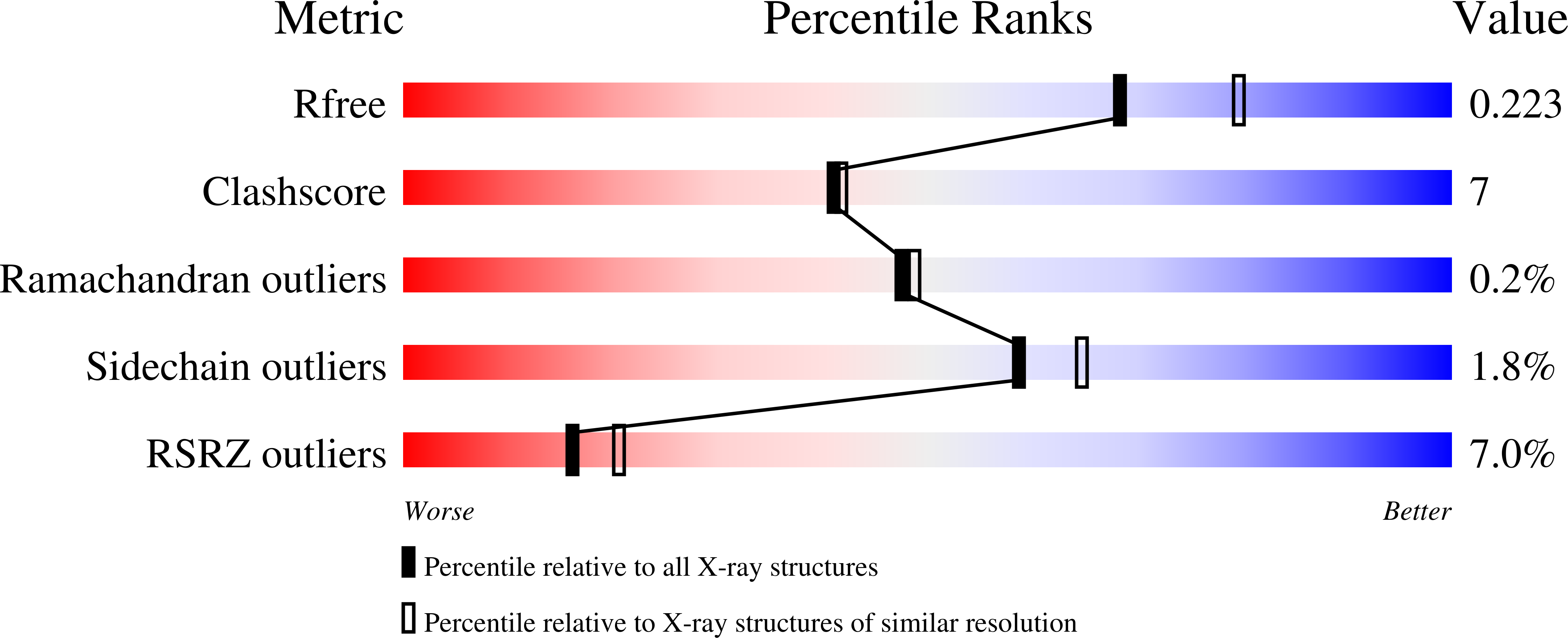
2.10 Å
R-Value Free:
0.21
R-Value Work:
0.18
R-Value Observed:
0.19
Space Group:
C 1 2 1
Macromolecular Entities
Structures with similar UniProt ID
Protein Blast
Polymer Type:polypeptide(L)
Molecule:Glutamate receptor ionotropic
Gene (Uniprot):grin1
Mutagens:N61Q, N371Q
Chain IDs:A, C
Chain Length:385
Number of Molecules:2
Biological Source:Xenopus laevis
Structures with similar UniProt ID
Protein Blast
Polymer Type:polypeptide(L)
Molecule:Glutamate receptor ionotropic
Gene (Uniprot):Grin2b
Mutagens:N348D
Chain IDs:B, D
Chain Length:363
Number of Molecules:2
Biological Source:Rattus norvegicus
Primary Citation
Structural elements of a pH-sensitive inhibitor binding site in NMDA receptors.
NAT.COMMUN. 10 321 ? (2019)
PMID: 30659174 DOI: .

Abstact

Context-dependent inhibition of N-methyl-D-aspartate (NMDA) receptors has important therapeutic implications for the treatment of neurological diseases that are associated with altered neuronal firing and signaling. This is especially true in stroke, where the proton concentration in the afflicted area can increase by an order of magnitude. A class of allosteric inhibitors, the 93-series, shows greater potency against GluN1-GluN2B NMDA receptors in such low pH environments, allowing targeted therapy only within the ischemic region. Here we map the 93-series compound binding site in the GluN1-GluN2B NMDA receptor amino terminal domain and show that the interaction of the N-alkyl group with a hydrophobic cage of the binding site is critical for pH-dependent inhibition. Mutation of residues in the hydrophobic cage alters pH-dependent potency, and remarkably, can convert inhibitors into potentiators. Our study provides a foundation for the development of highly specific neuroprotective compounds for the treatment of neurological diseases.

Legend

Protein

Chemical

Disease

Primary Citation of related structures
Feedback Form
Name
Email
Institute
Feedback