

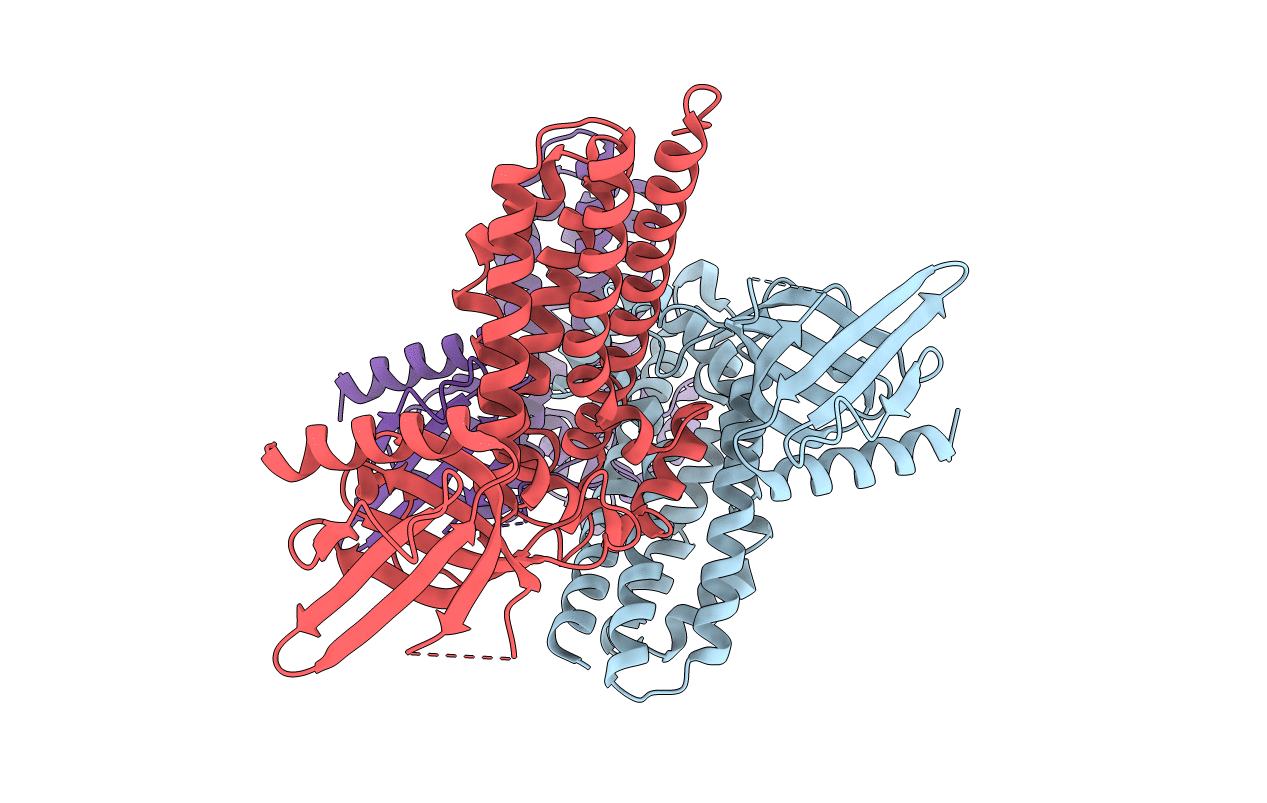
6D8Z image
Deposition Date 2018-04-27
Release Date 2019-02-20
Last Version Date 2023-10-04
Entry Detail
PDB ID:
6D8Z
Title:
Crystal Structure of the C-terminal Guanine Nucleotide Exchange Factor Module of Human Trio
Biological Source:
Source Organism(s):
Homo sapiens (Taxon ID: 9606)
Expression System(s):
Method Details:
Experimental Method:
Resolution:
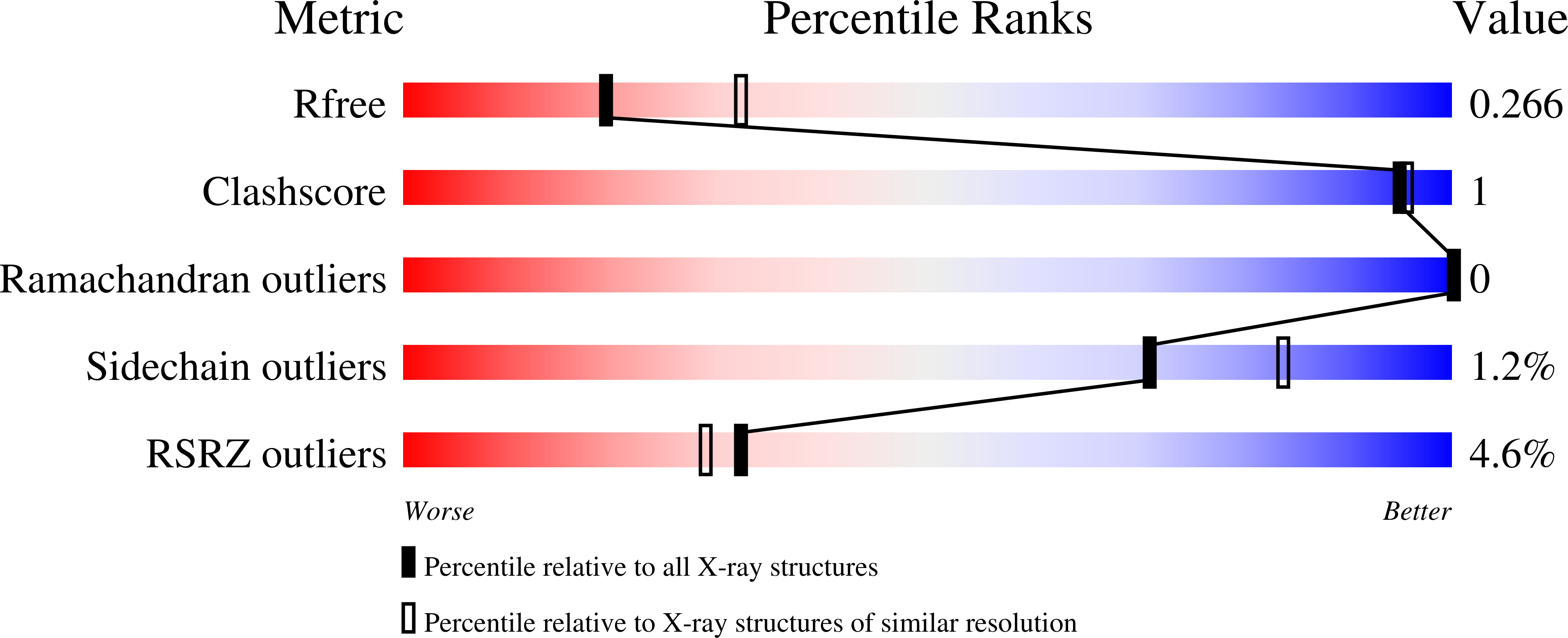
2.65 Å
R-Value Free:
0.26
R-Value Work:
0.22
R-Value Observed:
0.22
Space Group:
P 21 21 21
Macromolecular Entities
Polymer Type:polypeptide(L)
Molecule:Triple functional domain prot
Gene (Uniprot):TRIO
Chain IDs:A, B, C
Chain Length:319
Number of Molecules:3
Biological Source:Homo sapiens
Primary Citation
Structure of the C-terminal guanine nucleotide exchange factor module of Trio in an autoinhibited conformation reveals its oncogenic potential.
Sci Signal 12 ? ? (2019)
PMID: 30783010 DOI: 10.1126/scisignal.aav2449

Abstact

The C-terminal guanine nucleotide exchange factor (GEF) module of Trio (TrioC) transfers signals from the Galpha(q/11) subfamily of heterotrimeric G proteins to the small guanosine triphosphatase (GTPase) RhoA, enabling Galpha(q/11)-coupled G protein-coupled receptors (GPCRs) to control downstream events, such as cell motility and gene transcription. This conserved signal transduction axis is crucial for tumor growth in uveal melanoma. Previous studies indicate that the GEF activity of the TrioC module is autoinhibited, with release of autoinhibition upon Galpha(q/11) binding. Here, we determined the crystal structure of TrioC in its basal state and found that the pleckstrin homology (PH) domain interacts with the Dbl homology (DH) domain in a manner that occludes the Rho GTPase binding site, thereby suggesting the molecular basis of TrioC autoinhibition. Biochemical and biophysical assays revealed that disruption of the autoinhibited conformation destabilized and activated the TrioC module in vitro. Last, mutations in the DH-PH interface found in patients with cancer activated TrioC and, in the context of full-length Trio, led to increased abundance of guanosine triphosphate-bound RhoA (RhoA.GTP) in human cells. These mutations increase mitogenic signaling through the RhoA axis and, therefore, may represent cancer drivers operating in a Galpha(q/11)-independent manner.

Legend

Protein

Chemical

Disease

Primary Citation of related structures
Feedback Form
Name
Email
Institute
Feedback