

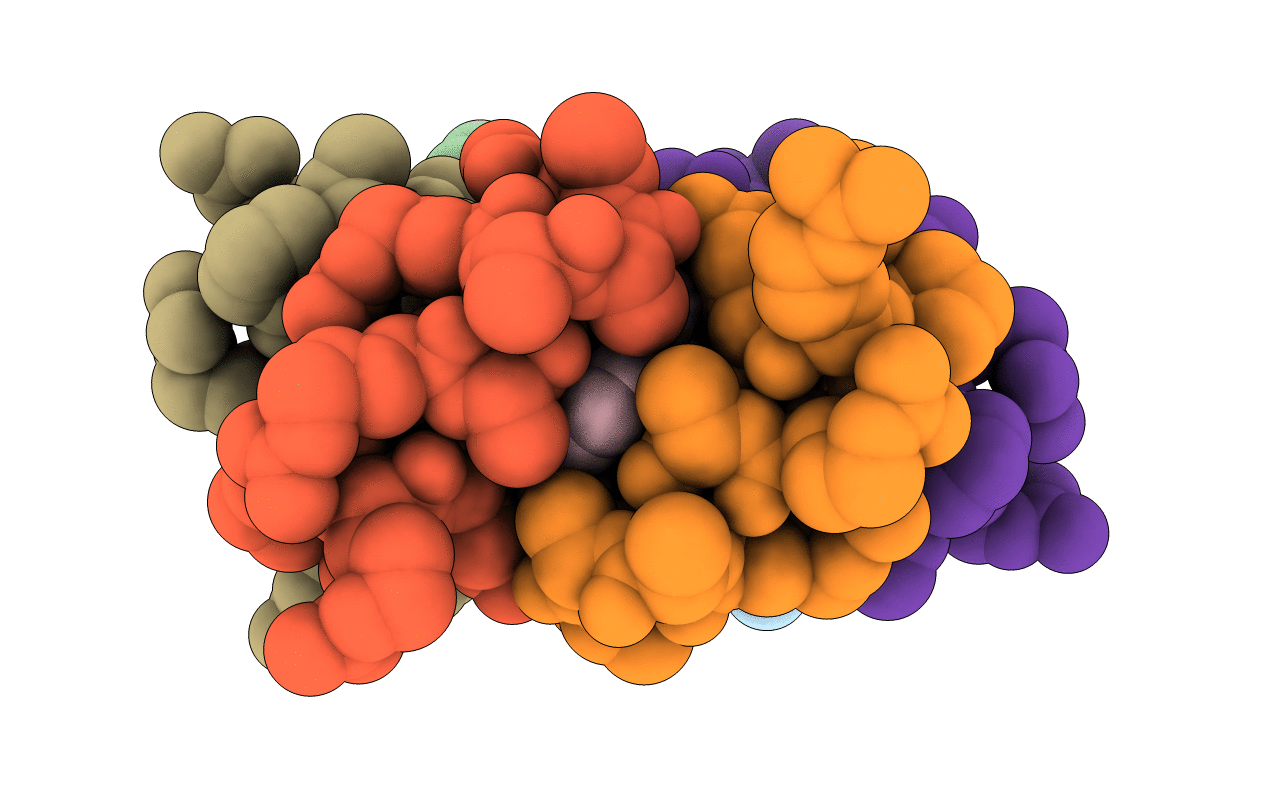
6B17 image
Deposition Date 2017-09-17
Release Date 2018-02-21
Last Version Date 2024-10-23
Entry Detail
PDB ID:
6B17
Keywords:
Title:
Design of a short thermally stable alpha-helix embedded in a macrocycle
Biological Source:
Source Organism(s):
Method Details:
Experimental Method:
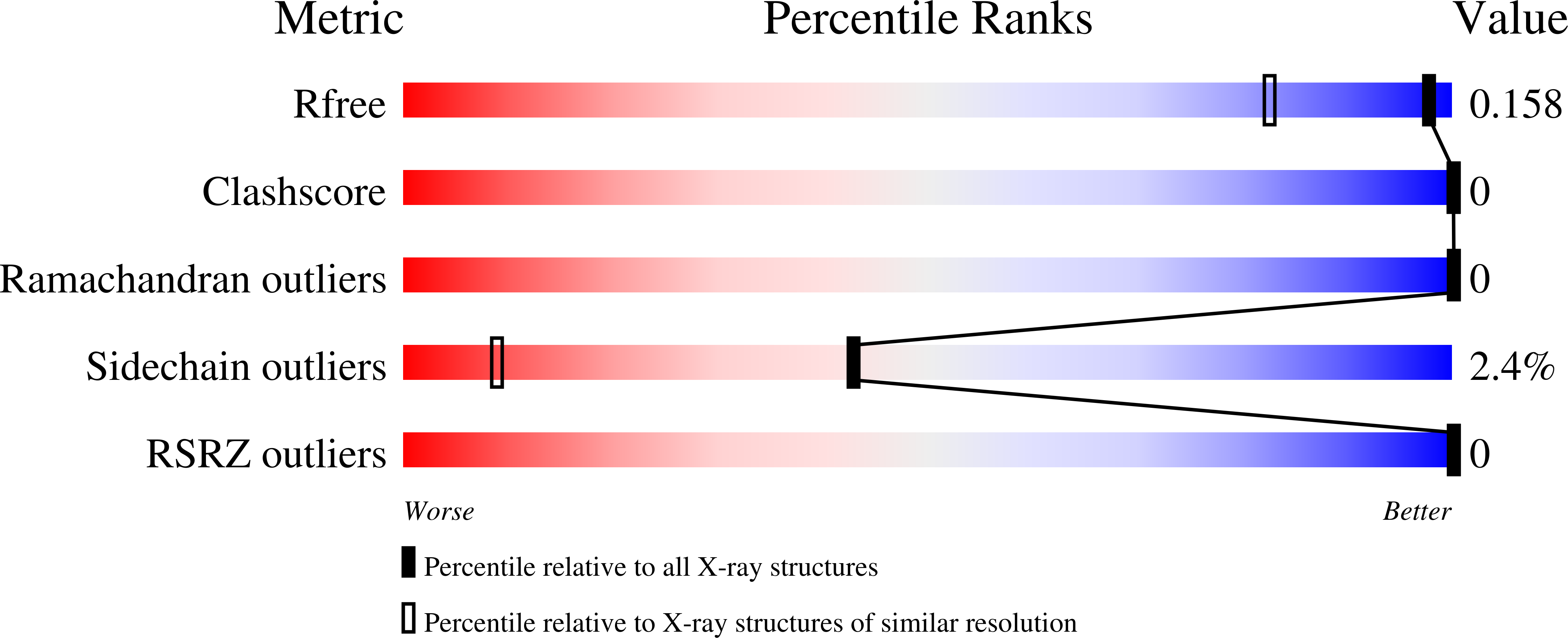
Resolution:
1.25 Å
R-Value Free:
0.14
R-Value Work:
0.13
R-Value Observed:
0.13
Space Group:
P 1 21 1
Macromolecular Entities
Structural Superimposition Protein Blast
Polymer Type:polypeptide(L)
Molecule:Capped-strapped peptide
Chain IDs:A, B, C (auth: E), D (auth: F), E (auth: D), F (auth: C)
Chain Length:15
Number of Molecules:6
Biological Source:synthetic construct
Ligand Molecules
Primary Citation
Design of a Short Thermally Stable alpha-Helix Embedded in a Macrocycle.
Chembiochem 19 902 906 (2018)
PMID: 29417711 DOI: 10.1002/cbic.201800026

Abstact

Although helices play key roles in peptide-protein and protein-protein interactions, the helical conformation is generally unstable for short peptides (10-15 residues) in aqueous solution in the absence of their binding partners. Thus, stabilizing the helical conformation of peptides can lead to increases in binding potency, specificity, and stability towards proteolytic degradation. Helices have been successfully stabilized by introducing side chain-to-side chain crosslinks within the central portion of the helix. However, this approach leaves the ends of the helix free, thus leading to fraying and exposure of the non-hydrogen-bonded amide groups to solvent. Here, we develop a "capped-strapped" peptide strategy to stabilize helices by embedding the entire length of the helix within a macrocycle, which also includes a semirigid organic template as well as end-capping interactions. We have designed a ten-residue capped-strapped helical peptide that behaves like a miniprotein, with a cooperative thermal unfolding transition and Tm ≈70 °C, unprecedented for helical peptides of this length. The NMR structure determination confirmed the design, and X-ray crystallography revealed a novel quaternary structure with implications for foldamer design.

Legend

Protein

Chemical

Disease

Primary Citation of related structures
Feedback Form
Name
Email
Institute
Feedback