

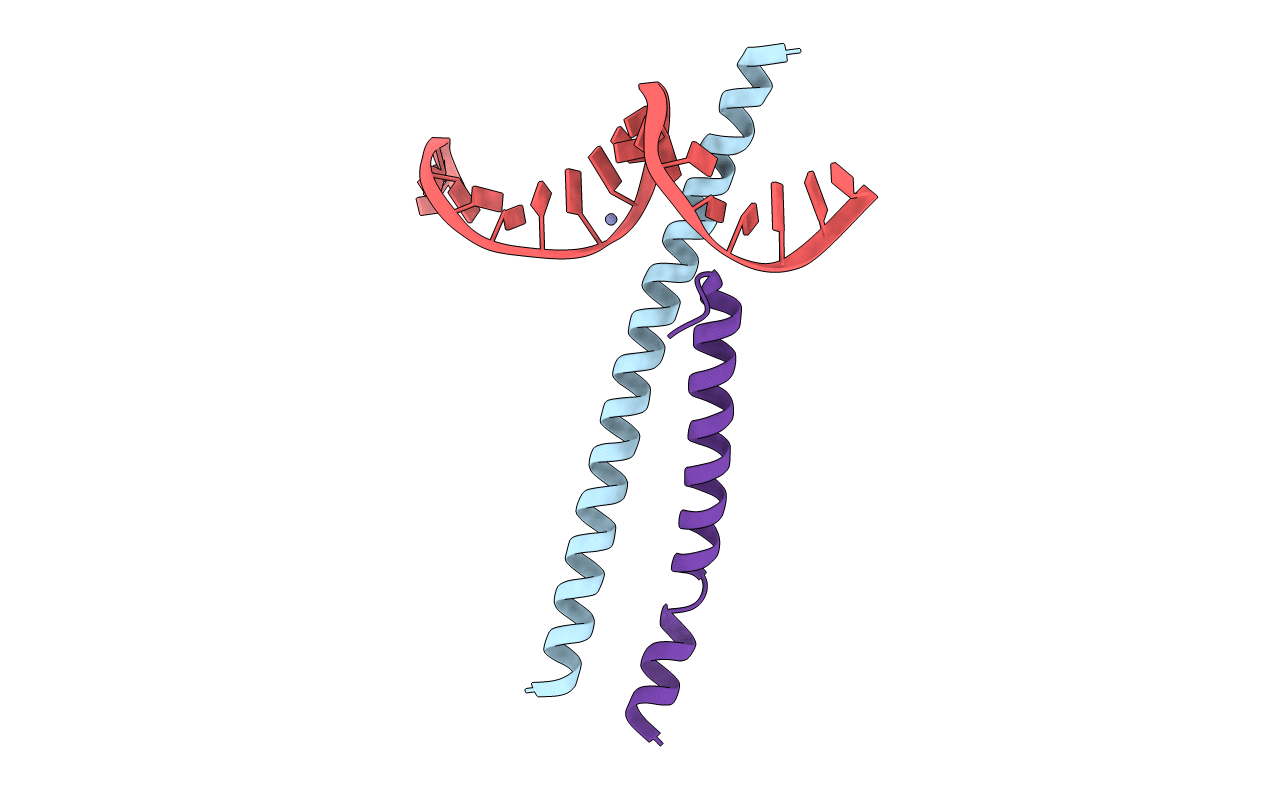
5ZK1 image
Deposition Date 2018-03-22
Release Date 2018-06-20
Last Version Date 2024-11-13
Entry Detail
PDB ID:
5ZK1
Title:
Crystal Structure of the CRTC2(SeMet)-CREB-CRE complex
Biological Source:
Source Organism(s):
Homo sapiens (Taxon ID: 9606)
Mus musculus (Taxon ID: 10090)
synthetic construct (Taxon ID: 32630)
Expression System(s):
Method Details:
Experimental Method:
Resolution:
3.05 Å
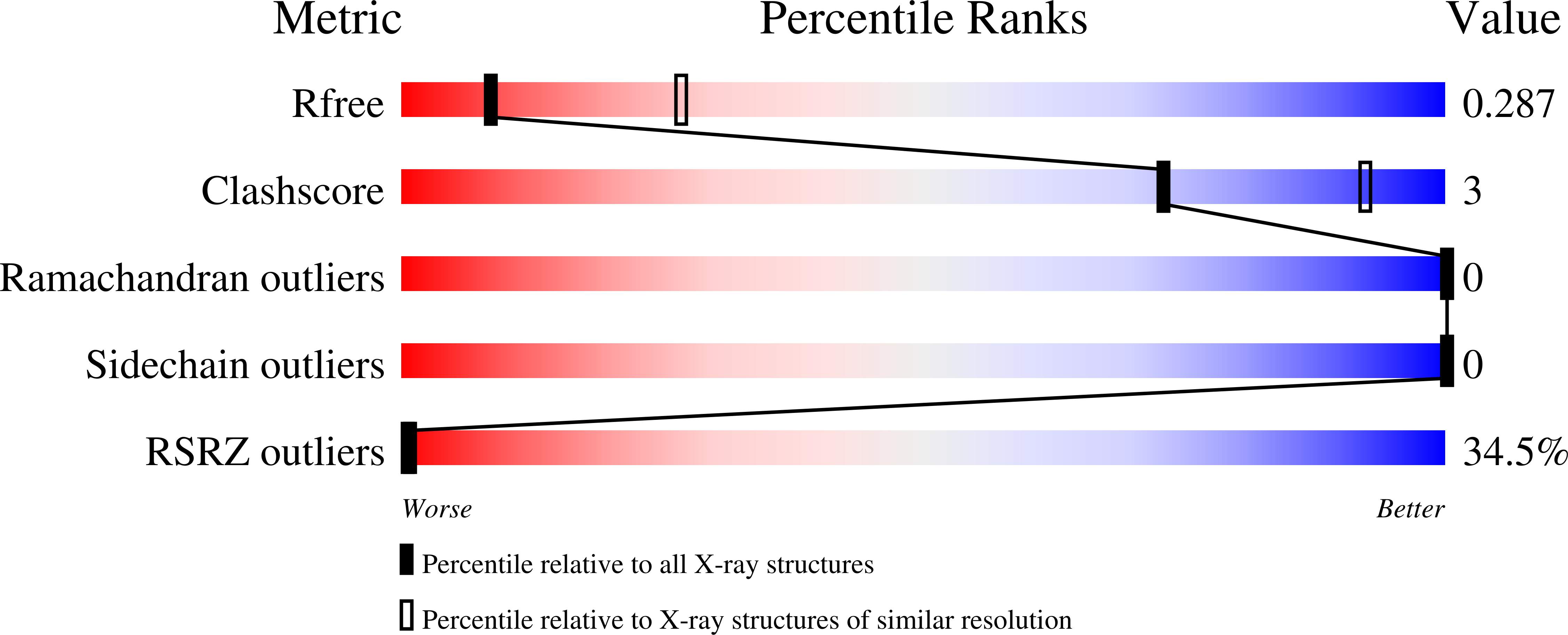
R-Value Free:
0.26
R-Value Work:
0.22
R-Value Observed:
0.23
Space Group:
C 2 2 21
Macromolecular Entities
Polymer Type:polypeptide(L)
Molecule:Cyclic AMP-responsive element
Gene (Uniprot):CREB1
Mutagens:C300S, C377S
Chain IDs:B (auth: A)
Chain Length:59
Number of Molecules:1
Biological Source:Homo sapiens
Polymer Type:polydeoxyribonucleotide
Molecule:DNA (5'-D(*CP*TP*TP*GP*GP*CP*
Chain IDs:A (auth: B)
Chain Length:20
Number of Molecules:1
Biological Source:synthetic construct
Polymer Type:polypeptide(L)
Molecule:CREB-regulated transcription
Gene (Uniprot):Crtc2
Chain IDs:C
Chain Length:42
Number of Molecules:1
Biological Source:Mus musculus
Modified Residue
Compound ID Chain ID Parent Comp ID Details 2D Image
MSE C MET modified residue
Ligand Molecules
Primary Citation
Structural Insights into the CRTC2-CREB Complex Assembly on CRE.
J. Mol. Biol. 430 1926 1939 (2018)
PMID: 29733854 DOI: 10.1016/j.jmb.2018.04.038

Abstact

The cAMP response element (CRE) binding protein (CREB) is central in the transcription regulation by cAMP, and the CREB-regulated transcriptional coactivators (CRTCs) play critical roles in CREB-mediated transcription activation. Upon stimulation, CRTCs translocate into the nucleus and complex with CREB on CRE promoters to activate target gene transcription. Their physiological importance is underscored by their function in energy balance, long-term memory, longevity and other processes. The CREB binding domain on CRTCs has been mapped, which interacts with the CREB basic leucine zipper domain that also mediates interaction with CRE-containing DNA. We report here crystal structures of a complex containing the CRTC2 CREB binding domain, the CREB basic leucine zipper domain and a CRE-containing DNA. The structures revealed that CRTC and CREB form a 2:2 complex on CRE-containing DNA, and CRTC interacts with both CREB and DNA through highly conserved residues. Structure-guided functional studies revealed that both interactions are crucial for the complex assembly and CREB stabilization on DNA. Interestingly, we found that the CRTC-DNA interaction confers selectivity toward the intrinsic DNA shape, which may play a role in selective transcription activation of the CRE genes.

Legend

Protein

Chemical

Disease

Primary Citation of related structures
Feedback Form
Name
Email
Institute
Feedback