

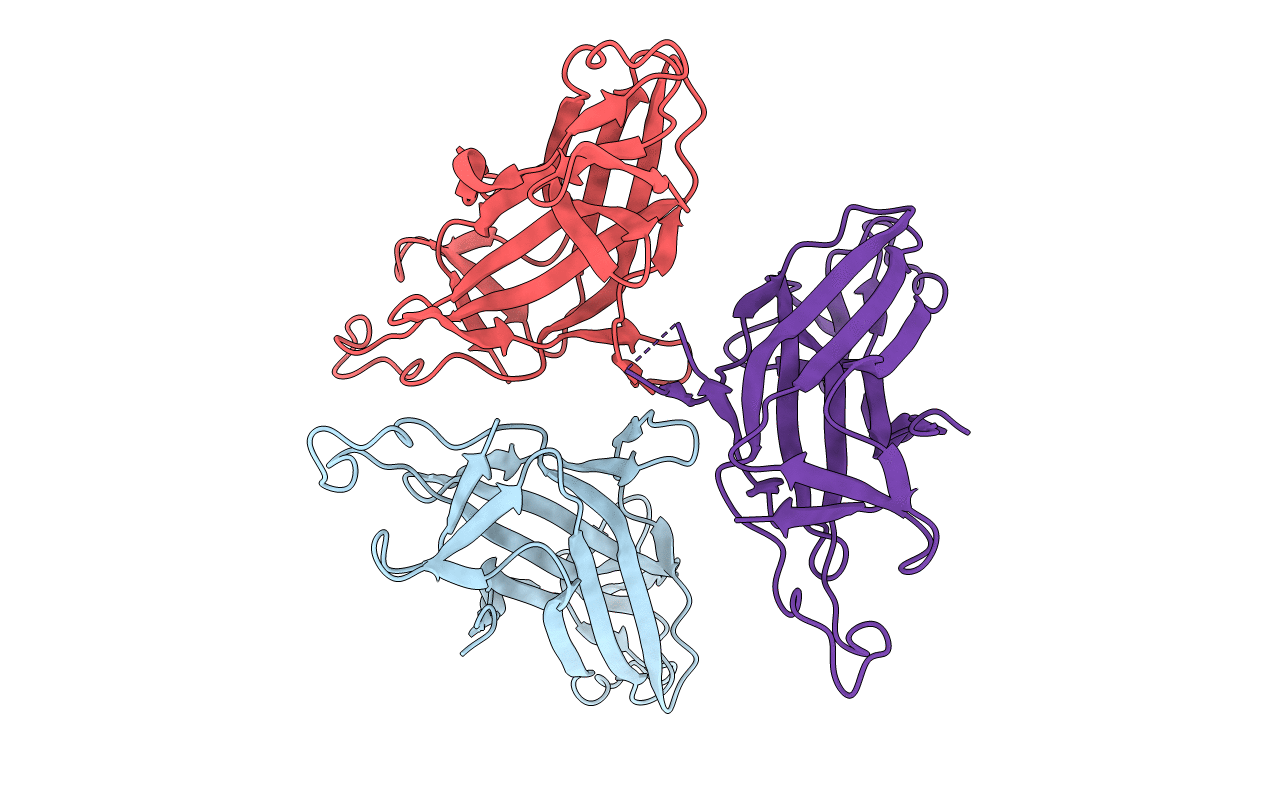
5ZHU image
Deposition Date 2018-03-13
Release Date 2018-05-23
Last Version Date 2023-11-22
Entry Detail
PDB ID:
5ZHU
Keywords:
Title:
Crystal structure of the DNA-binding domain of human myelin-gene regulatory factor
Biological Source:
Source Organism(s):
Homo sapiens (Taxon ID: 9606)
Expression System(s):
Method Details:
Experimental Method:
Resolution:
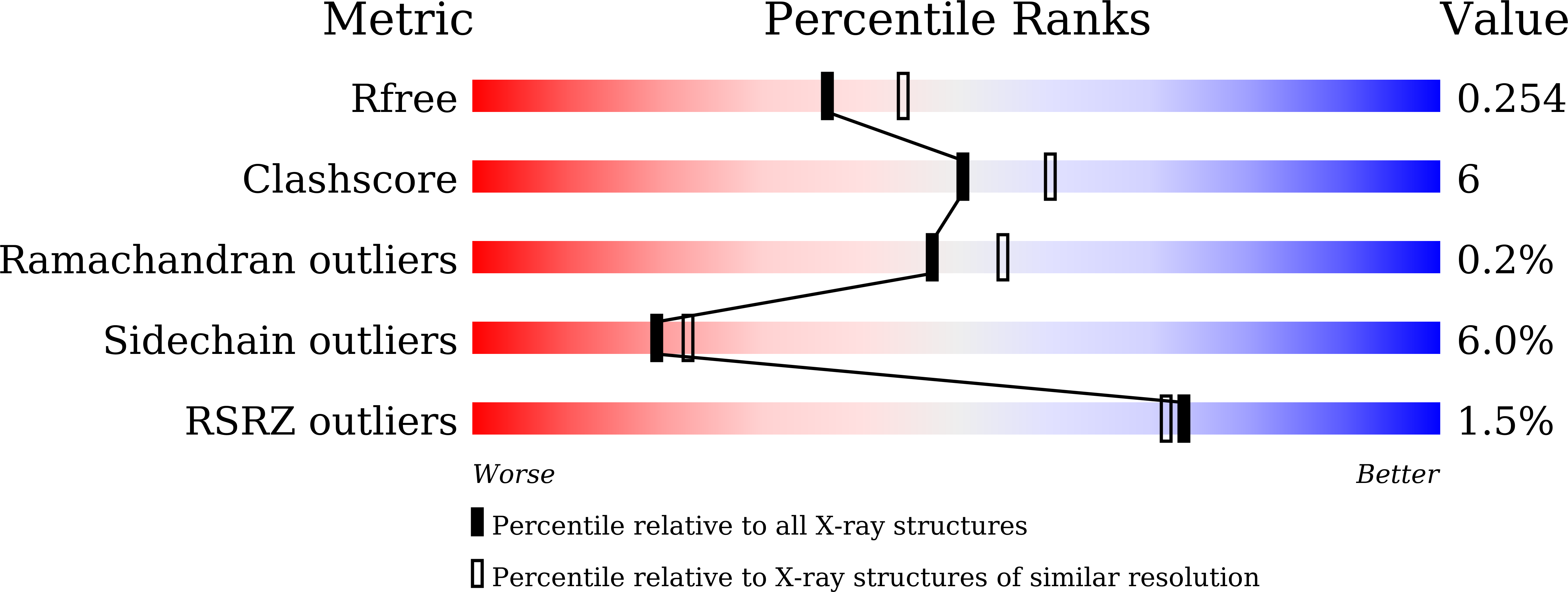
2.20 Å
R-Value Free:
0.25
R-Value Work:
0.22
R-Value Observed:
0.22
Space Group:
P 3
Macromolecular Entities
Structures with similar UniProt ID
Protein Blast
Polymer Type:polypeptide(L)
Molecule:Myelin regulatory factor
Gene (Uniprot):MYRF
Chain IDs:A, B, C
Chain Length:183
Number of Molecules:3
Biological Source:Homo sapiens
Primary Citation
Structure of the DNA-binding domain of human myelin-gene regulatory factor reveals its potential protein-DNA recognition mode.
J. Struct. Biol. 203 170 178 (2018)
PMID: 29729323 DOI: 10.1016/j.jsb.2018.04.007

Abstact

Myelin-gene regulatory factor (MYRF) is a membrane-bound transcription factors, which is responsible for the differentiation of oligodendrocytes and myelination of central nervous system. Followed by a self-cleavage by the intramolecular chaperone auto-processing (ICA) domain, DNA-binding domain (DBD) of MYRF is released from the endoplasmic reticulum (ER) and was then translocated to the nucleus to regulate gene expression. In present work, we have solved the crystal structure of the human MYRF-DBD to 1.85-Å resolution. It exhibits a typical s-type Ig-fold and packs as symmetric trimeric form in the crystal via hydrogen-bond networks in three regions. Accordingly, we identified a couple of key residues on MYRF-DBD, which might play important roles in DNA-binding, in particular Arg521 on its C-terminal tail. The R521A mutant of DBD showed only 17% affinity to dsDNA targets compared to wild-type DBD. Then we built a plausible protein-DNA binding model of MYRF-DBD, which will help to elucidate its mechanism in DNA-binding and transcriptional regulation.

Legend

Protein

Chemical

Disease

Primary Citation of related structures
Feedback Form
Name
Email
Institute
Feedback