

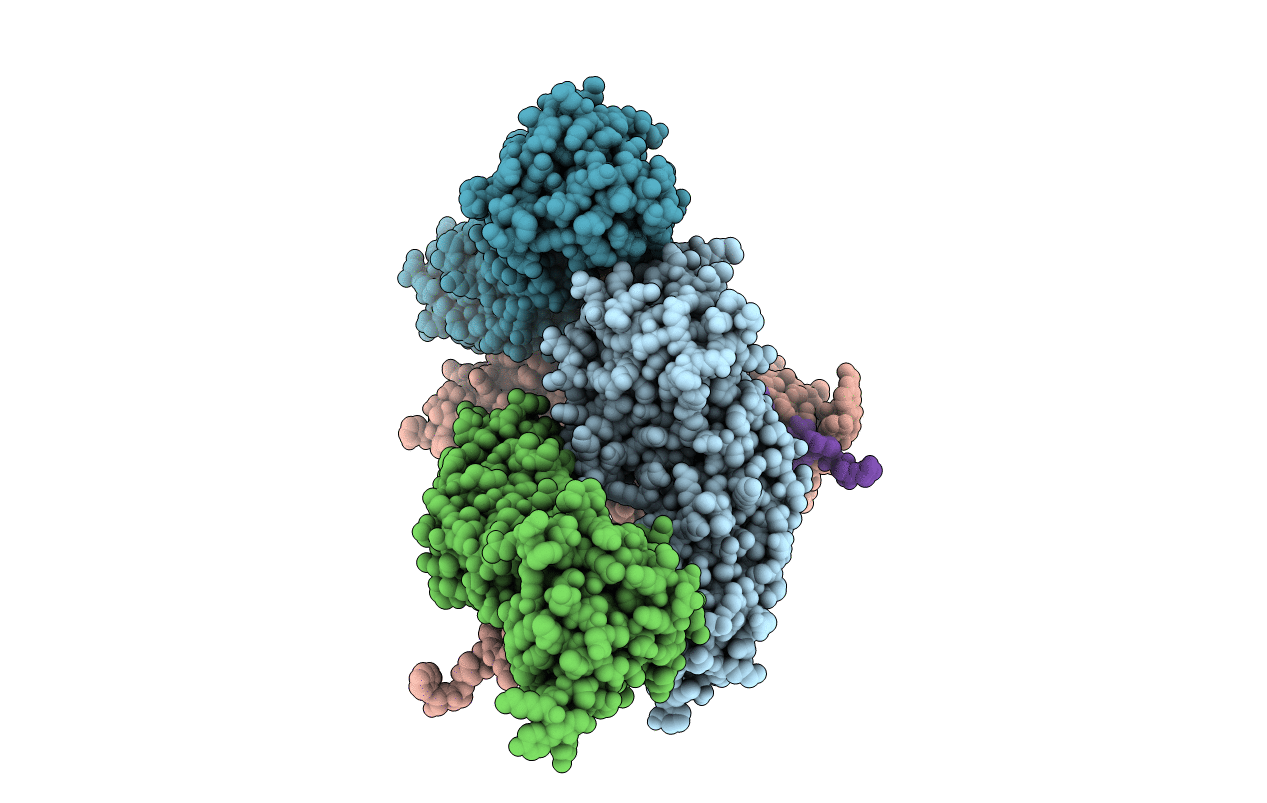
5WTB image
Deposition Date 2016-12-10
Release Date 2017-07-19
Last Version Date 2023-11-08
Entry Detail
PDB ID:
5WTB
Keywords:
Title:
Complex Structure of Staphylococcus aureus SdrE with human complement factor H
Biological Source:
Expression System(s):
Method Details:
Experimental Method:
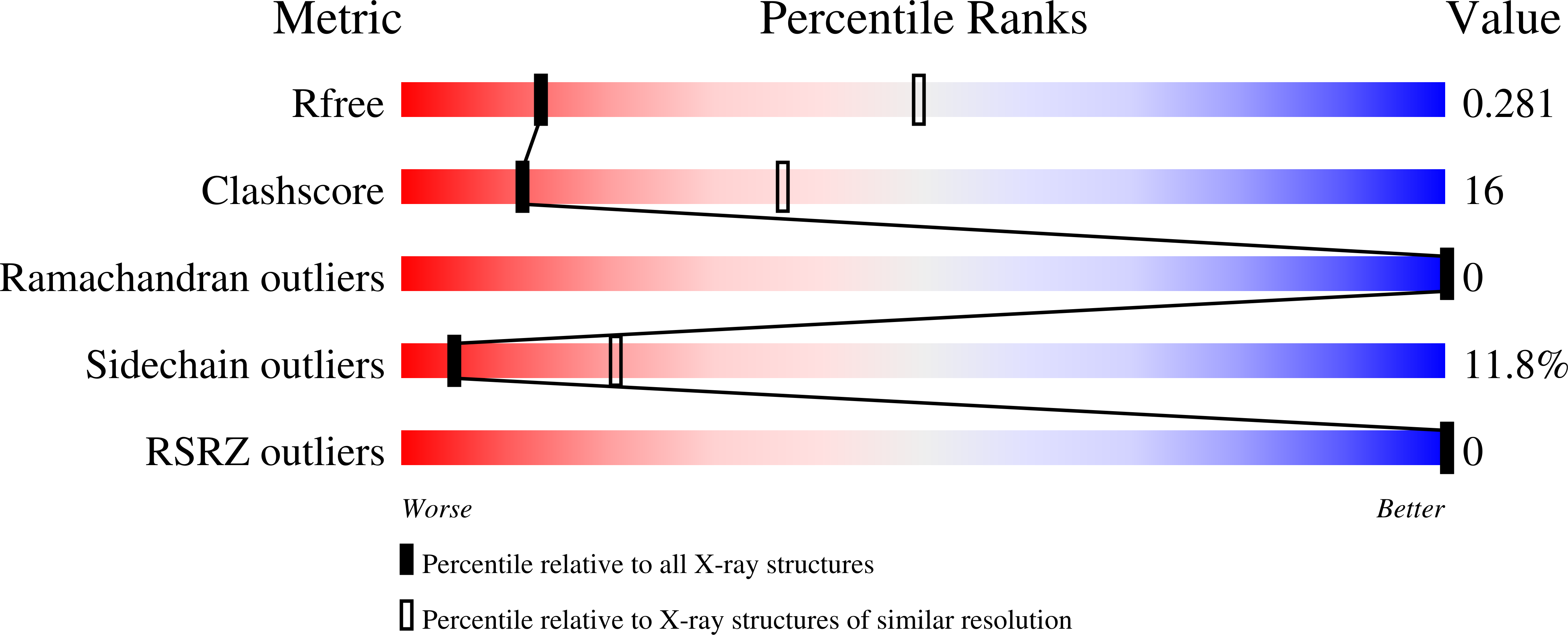
Resolution:
3.30 Å
R-Value Free:
0.28
R-Value Work:
0.22
R-Value Observed:
0.22
Space Group:
P 21 21 21
Macromolecular Entities
Polymer Type:polypeptide(L)
Molecule:Serine-aspartate repeat-conta
Gene (Uniprot):sdrE
Mutagens:I489M
Chain IDs:A (auth: D), B (auth: A), C (auth: B), D (auth: C)
Chain Length:338
Number of Molecules:4
Biological Source:Staphylococcus aureus (strain Mu50 / ATCC 700699)
Polymer Type:polypeptide(L)
Molecule:Peptide from Complement facto
Gene (Uniprot):CFH
Chain IDs:E, F, G, H
Chain Length:21
Number of Molecules:4
Biological Source:Homo sapiens
Ligand Molecules
Primary Citation
Staphylococcus aureus SdrE captures complement factor H's C-terminus via a novel 'close, dock, lock and latch' mechanism for complement evasion
Biochem. J. 474 1619 1631 (2017)
PMID: 28258151 DOI: 10.1042/BCJ20170085

Abstact

Complement factor H (CFH) is a soluble complement regulatory protein essential for the down-regulation of the alternative pathway on interaction with specific markers on the host cell surface. It recognizes the complement component 3b (C3b) and 3d (C3d) fragments in addition to self cell markers (i.e. glycosaminoglycans, sialic acid) to distinguish host cells that deserve protection from pathogens that should be eliminated. The Staphylococcus aureus surface protein serine-aspartate repeat protein E (SdrE) was previously reported to bind human CFH as an immune-evasion tactic. However, the molecular mechanism underlying SdrE-CFH-mediated immune evasion remains unknown. In the present study, we identified a novel region at CFH's C-terminus (CFH1206-1226), which binds SdrE N2 and N3 domains (SdrEN2N3) with high affinity, and determined the crystal structures of apo-SdrEN2N3 and the SdrEN2N3-CFH1206-1226 complex. Comparison of the structure of the CFH-SdrE complex with other CFH structures reveals that CFH's C-terminal tail flips from the main body to insert into the ligand-binding groove of SdrE. In addition, SdrEN2N3 adopts a 'close' state in the absence of CFH, which undergoes a large conformational change on CFH binding, suggesting a novel 'close, dock, lock and latch' (CDLL) mechanism for SdrE to recognize its ligand. Our findings imply that SdrE functions as a 'clamp' to capture CFH's C-terminal tail via a unique CDLL mechanism and sequesters CFH on the surface of S. aureus for complement evasion.

Legend

Protein

Chemical

Disease

Primary Citation of related structures
Feedback Form
Name
Email
Institute
Feedback