

5UUT image
Deposition Date 2017-02-17
Release Date 2018-01-17
Last Version Date 2024-03-06
Entry Detail
PDB ID:
5UUT
Keywords:
Title:
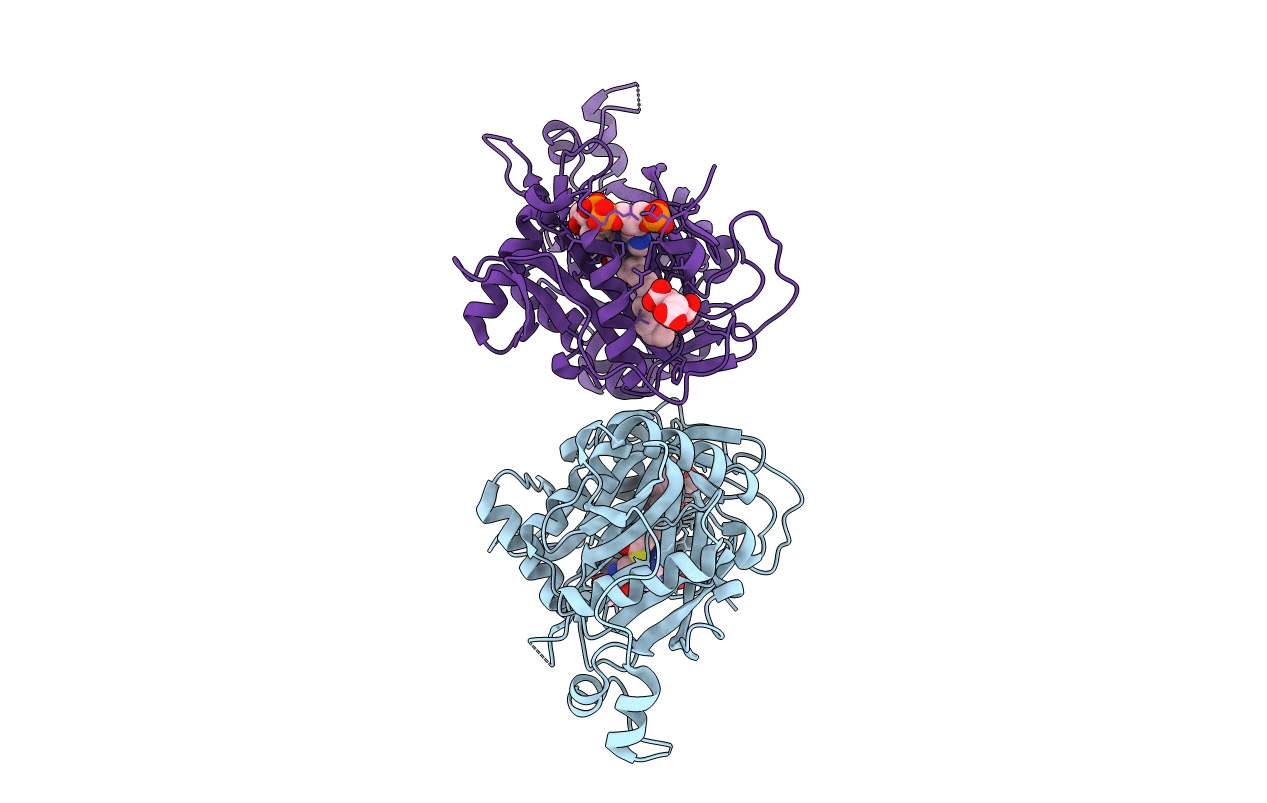
N-myristoyltransferase 1 (NMT) bound to myristoyl-CoA
Biological Source:
Source Organism(s):
Homo sapiens (Taxon ID: 9606)
Expression System(s):
Method Details:
Experimental Method:
Resolution:
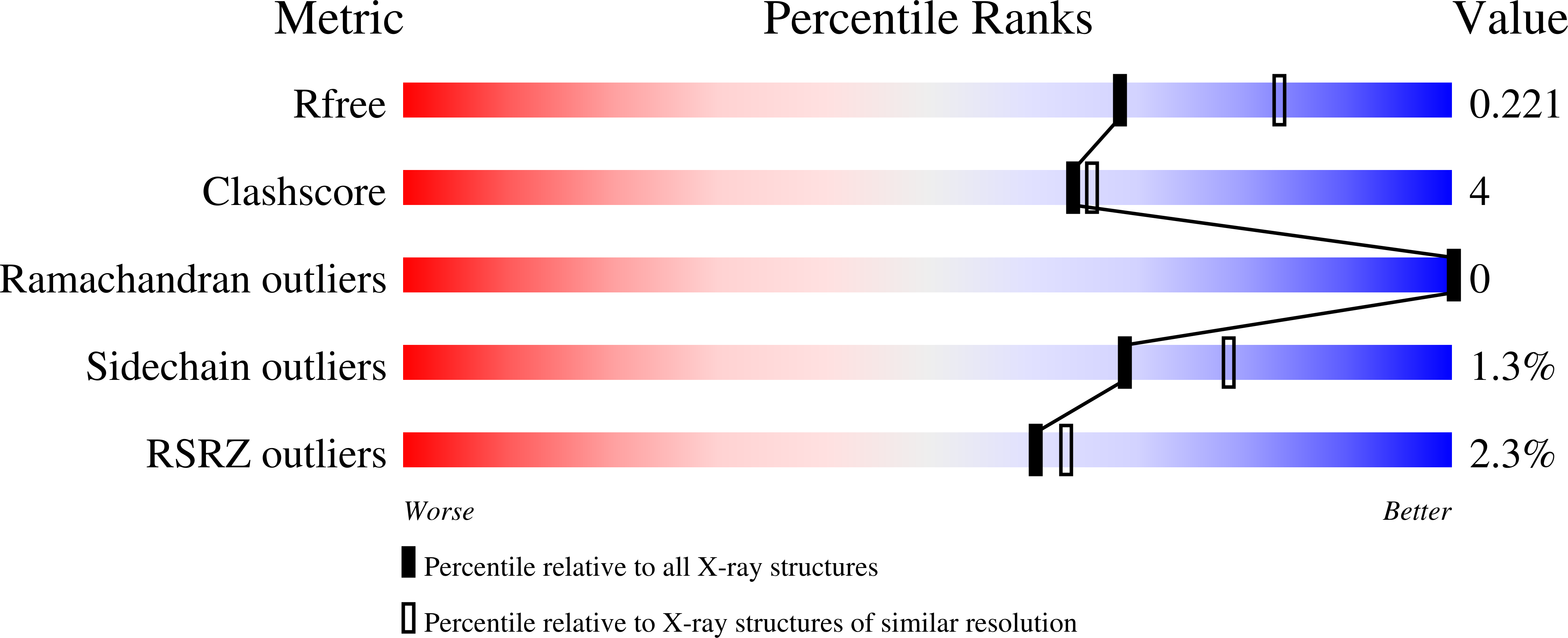
2.25 Å
R-Value Free:
0.22
R-Value Work:
0.17
R-Value Observed:
0.17
Space Group:
P 21 21 2
Macromolecular Entities
Structures with similar UniProt ID
Protein Blast
Polymer Type:polypeptide(L)
Molecule:Glycylpeptide N-tetradecanoyl
Gene (Uniprot):NMT1
Chain IDs:A, B
Chain Length:391
Number of Molecules:2
Biological Source:Homo sapiens
Primary Citation
Blocking Myristoylation of Src Inhibits Its Kinase Activity and Suppresses Prostate Cancer Progression.
Cancer Res. 77 6950 6962 (2017)
PMID: 29038344 DOI: 10.1158/0008-5472.CAN-17-0981

Abstact

Protein N-myristoylation enables localization to membranes and helps maintain protein conformation and function. N-myristoyltransferases (NMT) catalyze co- or posttranslational myristoylation of Src family kinases and other oncogenic proteins, thereby regulating their function. In this study, we provide genetic and pharmacologic evidence that inhibiting the N-myristoyltransferase NMT1 suppresses cell-cycle progression, proliferation, and malignant growth of prostate cancer cells. Loss of myristoylation abolished the tumorigenic potential of Src and its synergy with androgen receptor in mediating tumor invasion. We identified the myristoyl-CoA analogue B13 as a small-molecule inhibitor of NMT1 enzymatic activity. B13 exposure blocked Src myristoylation and Src localization to the cytoplasmic membrane, attenuating Src-mediated oncogenic signaling. B13 exerted its anti-invasive and antitumor effects against prostate cancer cells, with minimal toxic side-effects in vivo Structural optimization based on structure-activity relationships enabled the chemical synthesis of LCL204, with enhanced inhibitory potency against NMT1. Collectively, our results offer a preclinical proof of concept for the use of protein myristoylation inhibitors as a strategy to block prostate cancer progression. Cancer Res; 77(24); 6950-62. ©2017 AACR.

Legend

Protein

Chemical

Disease

Primary Citation of related structures
Feedback Form
Name
Email
Institute
Feedback