

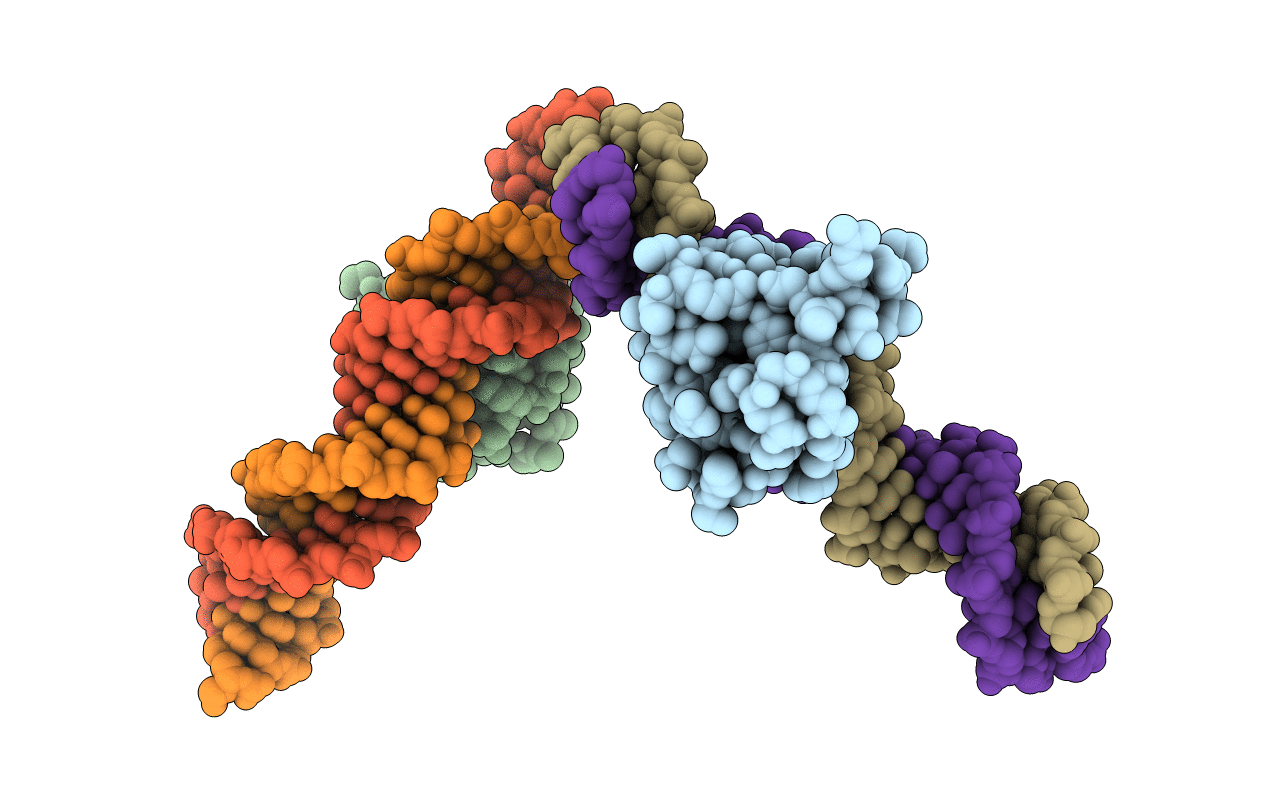
5J2Y image
Deposition Date 2016-03-30
Release Date 2017-04-12
Last Version Date 2024-11-13
Entry Detail
PDB ID:
5J2Y
Title:
Molecular insight into the regulatory mechanism of the quorum-sensing repressor RsaL in Pseudomonas aeruginosa
Biological Source:
Source Organism(s):
Expression System(s):
Method Details:
Experimental Method:
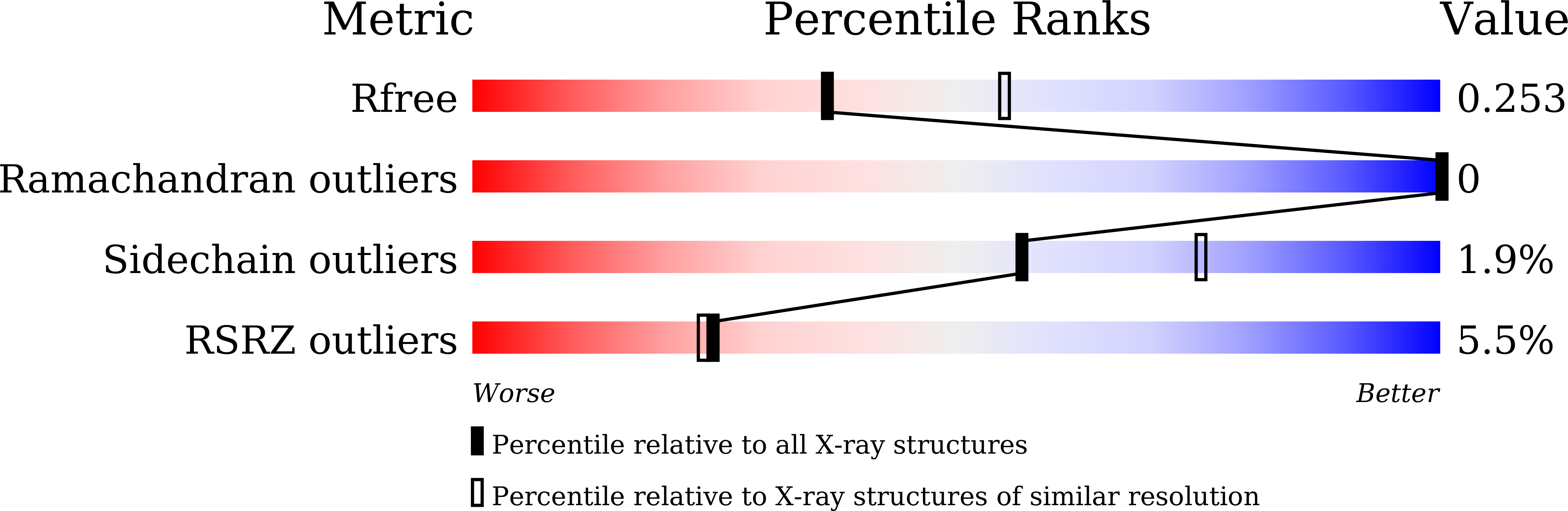
Resolution:
2.40 Å
R-Value Free:
0.25
R-Value Work:
0.22
R-Value Observed:
0.22
Space Group:
P 21 21 2
Macromolecular Entities
Structures with similar UniProt ID
Protein Blast
Polymer Type:polypeptide(L)
Molecule:Regulatory protein
Gene (Uniprot):rsaL
Chain IDs:A, B
Chain Length:80
Number of Molecules:2
Biological Source:Pseudomonas aeruginosa
Polymer Type:polydeoxyribonucleotide
Molecule:DNA (26-MER)
Chain IDs:C (auth: F), E (auth: f)
Chain Length:26
Number of Molecules:2
Biological Source:synthetic construct
Polymer Type:polydeoxyribonucleotide
Molecule:DNA (26-MER)
Chain IDs:D (auth: R), F (auth: r)
Chain Length:26
Number of Molecules:2
Biological Source:synthetic construct
Modified Residue
Compound ID Chain ID Parent Comp ID Details 2D Image
MSE A MET modified residue
Primary Citation
Crystal structure of Pseudomonas aeruginosa RsaL bound to promoter DNA reaffirms its role as a global regulator involved in quorum-sensing.
Nucleic Acids Res. 45 699 710 (2017)
PMID: 27924027 DOI: 10.1093/nar/gkw954

Abstact

Pseudomonas aeruginosa possesses at least three well-defined quorum-sensing (QS) (las, rhl and pqs) systems that control a variety of important functions including virulence. RsaL is a QS repressor that reduces QS signal production and ensures homeostasis by functioning in opposition to LasR. However, its regulatory role in signal homeostasis remains elusive. Here, we conducted a ChIP-seq assay and revealed that RsaL bound to two new targets, the intergenic regions of PA2228/PA2229 and pqsH/cdpR, which are required for PQS synthesis. Deletion of rsaL reduced transcription of pqsH and cdpR, thus decreasing PQS signal production. The ΔrsaL strain exhibited increased pyocyanin production and reduced biofilm formation, which are dependent on CdpR or PqsH activity. In addition, we solved the structure of the RsaL-DNA complex at a 2.4 Å resolution. Although the overall sequence similarity is quite low, RsaL folds into a HTH-like structure, which is conserved among many transcriptional regulators. Complementation results of the rsaL knockout cells with different rsaL mutants further confirmed the critical role of the DNA-binding residues (including Arg20, Gln27, Gln38, Gly35, Ser37 and Ser42) that are essential for DNA binding. Our findings reveal new targets of RsaL and provide insight into the detailed characterization of the RsaL-DNA interaction.

Legend

Protein

Chemical

Disease

Primary Citation of related structures
Feedback Form
Name
Email
Institute
Feedback