

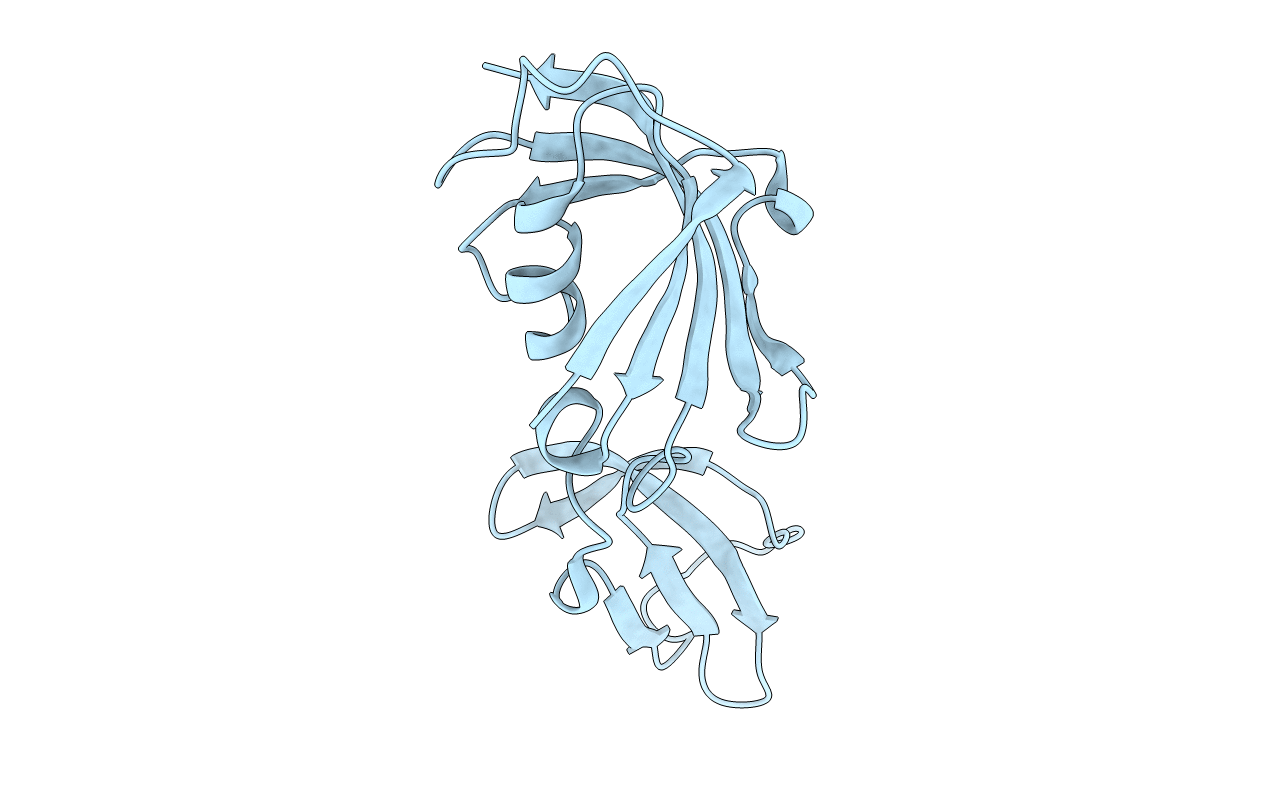
5I7P image
Deposition Date 2016-02-18
Release Date 2017-03-08
Last Version Date 2026-04-22
Entry Detail
PDB ID:
5I7P
Keywords:
Title:
Crystal structure of Fkbp12-IF(SlyD), a chimeric protein of human Fkbp12 and the insert in flap domain of Ecoli SlyD
Biological Source:
Source Organism(s):
Homo sapiens (Taxon ID: 9606)
Escherichia coli (Taxon ID: 562)
Expression System(s):
Method Details:
Experimental Method:
Resolution:
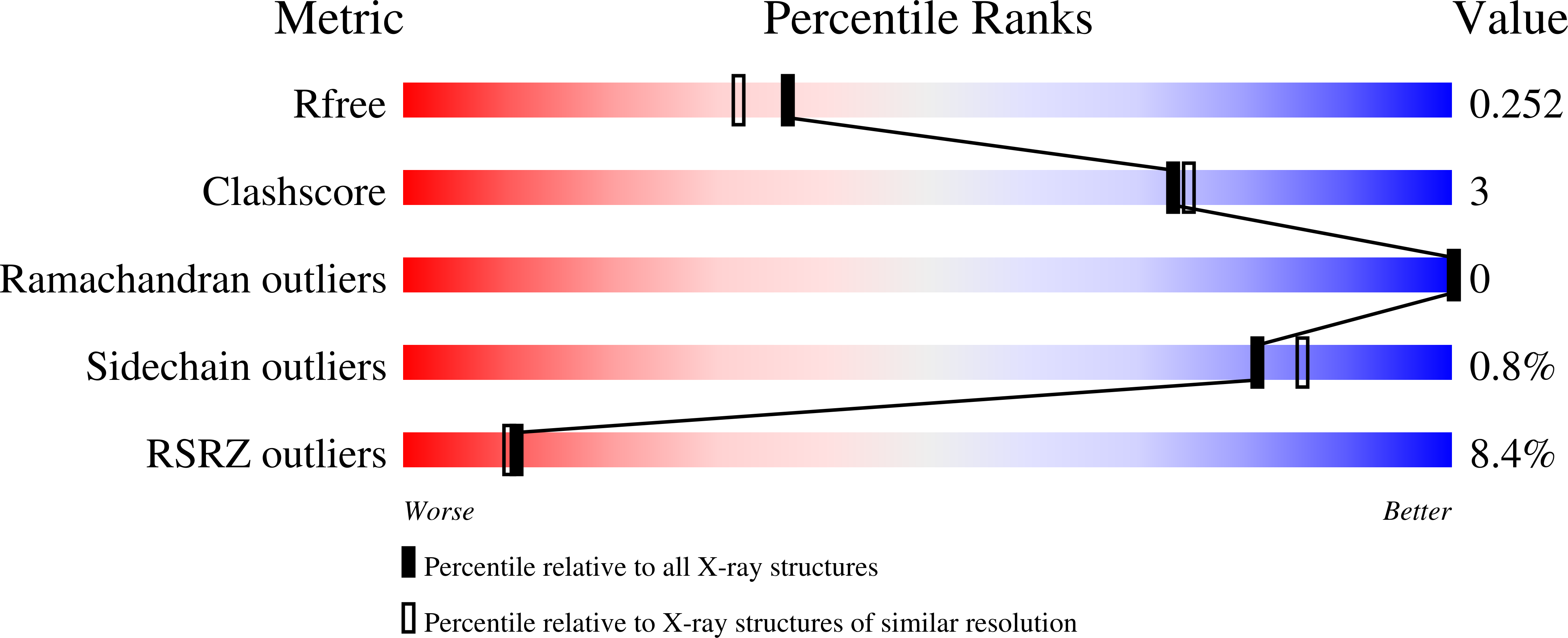
2.00 Å
R-Value Free:
0.24
R-Value Work:
0.21
R-Value Observed:
0.22
Space Group:
P 41 21 2
Macromolecular Entities
Protein Blast
Polymer Type:polypeptide(L)
Molecule:Peptidyl-prolyl cis-trans iso
Gene (Uniprot):slyD, FKBP1A
Chain IDs:A
Chain Length:161
Number of Molecules:1
Biological Source:Homo sapiens, Escherichia coli
Primary Citation
Bacterial Chaperone Domain Insertions Convert Human FKBP12 into an Excellent Protein-Folding Catalyst-A Structural and Functional Analysis.
Molecules 29 ? ? (2024)
PMID: 38611720 DOI: 10.3390/molecules29071440

Abstact

Many folding enzymes use separate domains for the binding of substrate proteins and for the catalysis of slow folding reactions such as prolyl isomerization. FKBP12 is a small prolyl isomerase without a chaperone domain. Its folding activity is low, but it could be increased by inserting the chaperone domain from the homolog SlyD of E. coli near the prolyl isomerase active site. We inserted two other chaperone domains into human FKBP12: the chaperone domain of SlpA from E. coli, and the chaperone domain of SlyD from Thermococcus sp. Both stabilized FKBP12 and greatly increased its folding activity. The insertion of these chaperone domains had no influence on the FKBP12 and the chaperone domain structure, as revealed by two crystal structures of the chimeric proteins. The relative domain orientations differ in the two crystal structures, presumably representing snapshots of a more open and a more closed conformation. Together with crystal structures from SlyD-like proteins, they suggest a path for how substrate proteins might be transferred from the chaperone domain to the prolyl isomerase domain.

Legend

Protein

Chemical

Disease

Primary Citation of related structures
Feedback Form
Name
Email
Institute
Feedback