

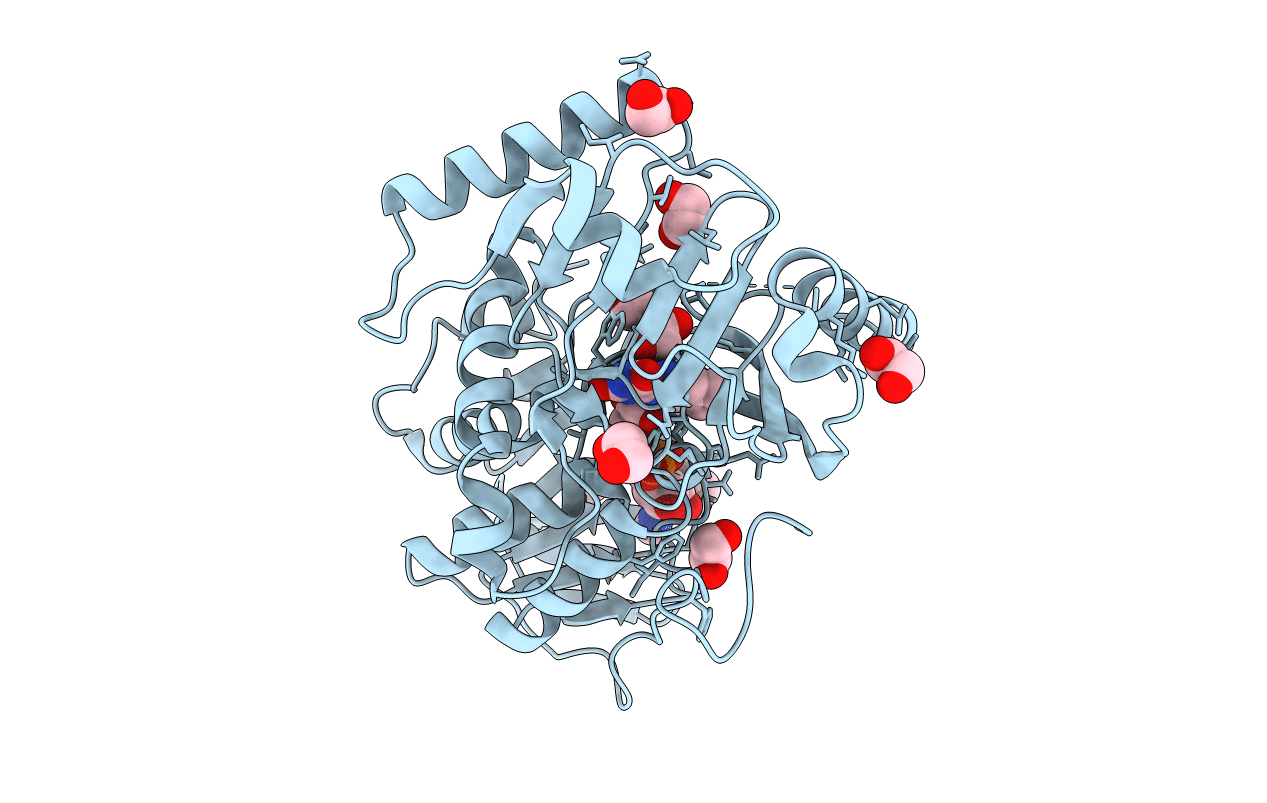
5I39 image
Deposition Date 2016-02-10
Release Date 2016-08-03
Last Version Date 2024-10-30
Entry Detail
PDB ID:
5I39
Keywords:
Title:
High resolution structure of L-amino acid deaminase from Proteus vulgaris with the deletion of the specific insertion sequence
Biological Source:
Source Organism(s):
Proteus vulgaris (Taxon ID: 585)
Expression System(s):
Method Details:
Experimental Method:
Resolution:
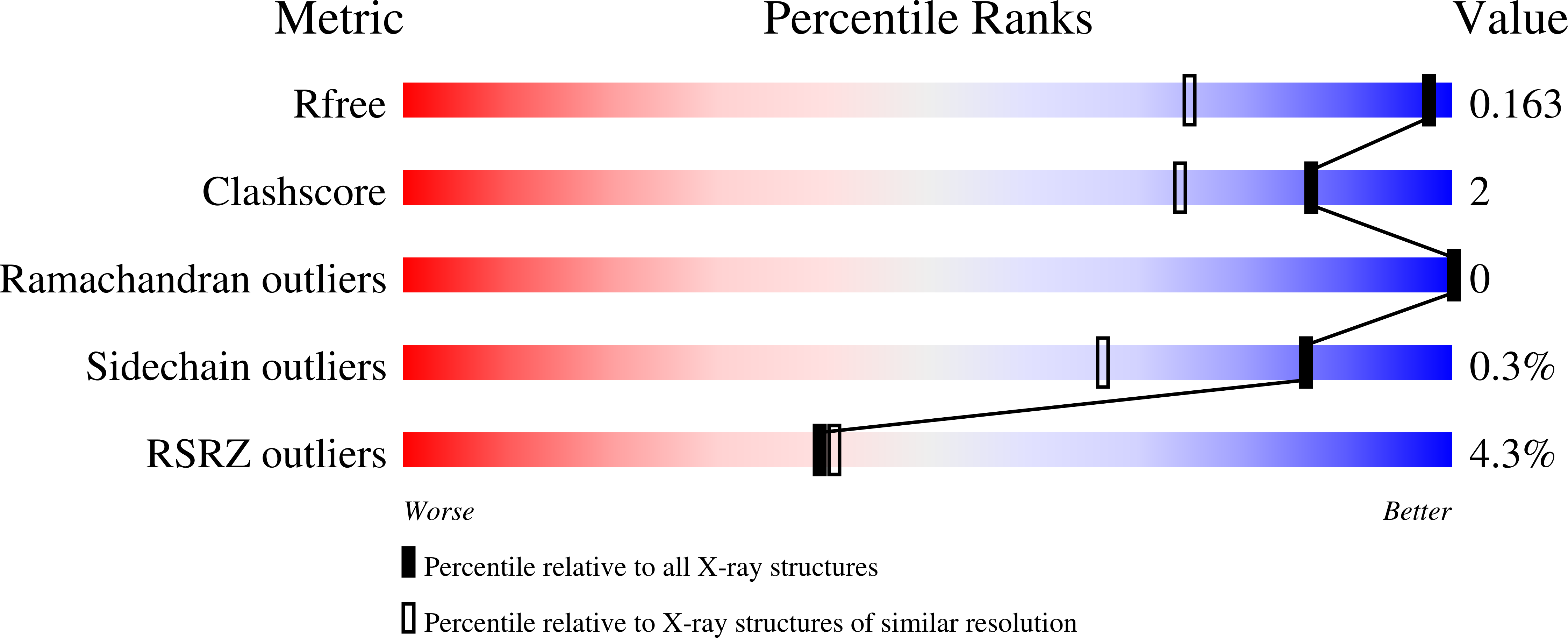
1.20 Å
R-Value Free:
0.15
R-Value Work:
0.14
R-Value Observed:
0.14
Space Group:
P 21 21 21
Macromolecular Entities
Polymer Type:polypeptide(L)
Molecule:L-amino acid deaminase
Gene (Uniprot):LAD
Chain IDs:A
Chain Length:408
Number of Molecules:1
Biological Source:Proteus vulgaris
Modified Residue
Compound ID Chain ID Parent Comp ID Details 2D Image
MSE A MET modified residue
Primary Citation
Crystal structure of a membrane-bound l-amino acid deaminase from Proteus vulgaris
J. Struct. Biol. 195 306 315 (2016)
PMID: 27422658 DOI: 10.1016/j.jsb.2016.07.008

Abstact

l-amino acid oxidases/deaminases (LAAOs/LAADs) are a class of oxidoreductases catalyzing the oxidative deamination of l-amino acids to α-keto acids. They are widely distributed in eukaryotic and prokaryotic organisms, and exhibit diverse substrate specificity, post-translational modifications and cellular localization. While LAAOs isolated from snake venom have been extensively characterized, the structures and functions of LAAOs from other species are largely unknown. Here, we reported crystal structure of a bacterial membrane-bound LAAD from Proteus vulgaris (pvLAAD) in complex with flavin adenine dinucleotide (FAD). We found that the overall fold of pvLAAD does not resemble typical LAAOs. Instead it, is similar to d-amino acid oxidases (DAAOs) with an additional hydrophobic insertion module on protein surface. Structural analysis and liposome-binding assays suggested that the hydrophobic module serves as an extra membrane-binding site for LAADs. Bacteria from genera Proteus and Providencia were found to encode two classes of membrane-bound LAADs. Based on our structure, the key roles of residues Q278 and L317 in substrate selectivity were proposed and biochemically analyzed. While LAADs on the membrane were proposed to transfer electrons to respiratory chain for FAD re-oxidization, we observed that the purified pvLAAD could generate a significant amount of hydrogen peroxide in vitro, suggesting it could use dioxygen to directly re-oxidize FADH2 as what typical LAAOs usually do. These findings provide a novel insights for a better understanding this class of enzymes and will help developing biocatalysts for industrial applications.

Legend

Protein

Chemical

Disease

Primary Citation of related structures
Feedback Form
Name
Email
Institute
Feedback