

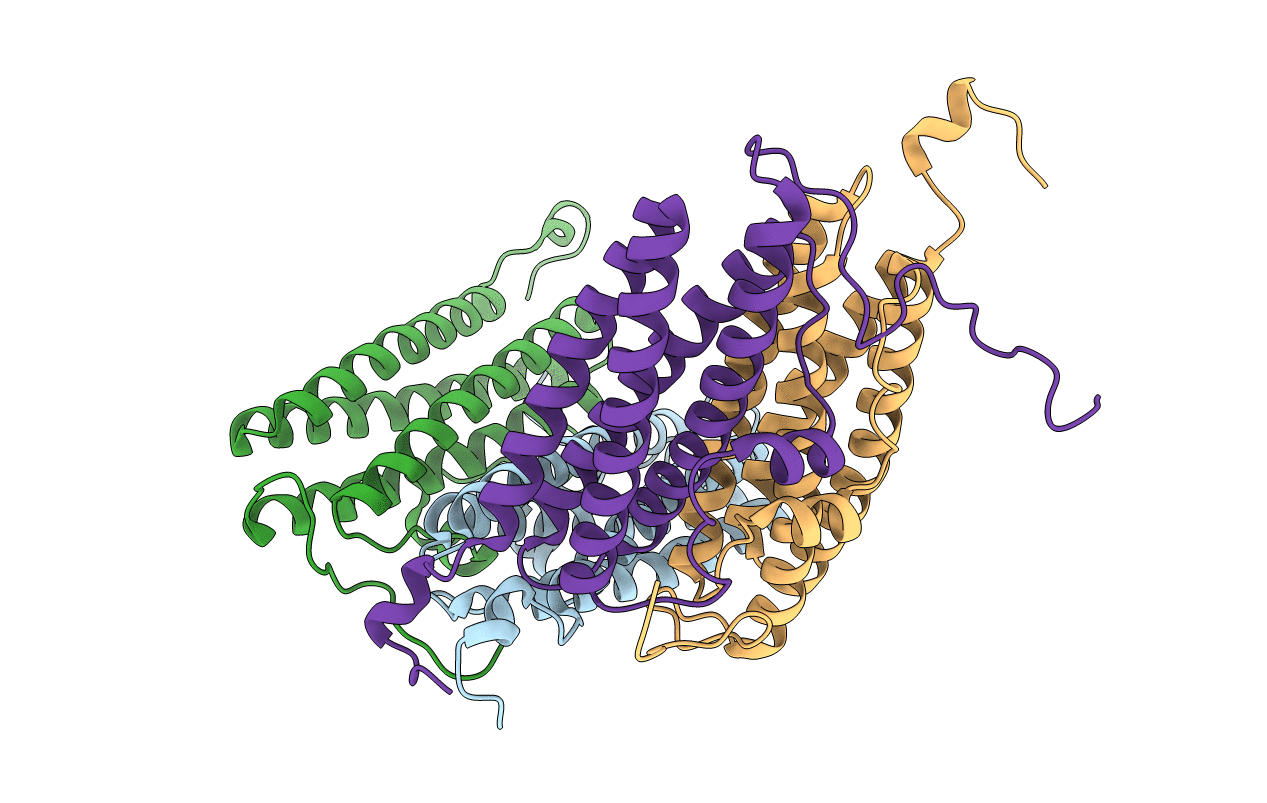
5HJF image
Deposition Date 2016-01-13
Release Date 2017-01-25
Last Version Date 2026-03-11
Entry Detail
PDB ID:
5HJF
Title:
The apo form of Dps4 from Nostoc punctiforme
Biological Source:
Source Organism(s):
Expression System(s):
Method Details:
Experimental Method:
Resolution:
1.59 Å
R-Value Free:
0.14
R-Value Work:
0.13
R-Value Observed:
0.13
Space Group:
P 63

Macromolecular Entities
Polymer Type:polypeptide(L)
Molecule:Ferritin, Dps family protein
Gene (Uniprot):Npun_R5799
Mutagens:S2A
Chain IDs:A, B, C, D
Chain Length:185
Number of Molecules:4
Biological Source:Nostoc punctiforme
Primary Citation
The Dps4 from Nostoc punctiforme ATCC 29133 is a member of His-type FOC containing Dps protein class that can be broadly found among cyanobacteria.
PLoS ONE 14 e0218300 e0218300 (2019)
PMID: 31369577 DOI: 10.1371/journal.pone.0218300

Abstact

Dps proteins (DNA-binding proteins from starved cells) have been found to detoxify H2O2. At their catalytic centers, the ferroxidase center (FOC), Dps proteins utilize Fe2+ to reduce H2O2 and therefore play an essential role in the protection against oxidative stress and maintaining iron homeostasis. Whereas most bacteria accommodate one or two Dps, there are five different Dps proteins in Nostoc punctiforme, a phototrophic and filamentous cyanobacterium. This uncommonly high number of Dps proteins implies a sophisticated machinery for maintaining complex iron homeostasis and for protection against oxidative stress. Functional analyses and structural information on cyanobacterial Dps proteins are rare, but essential for understanding the function of each of the NpDps proteins. In this study, we present the crystal structure of NpDps4 in its metal-free, iron- and zinc-bound forms. The FOC coordinates either two iron atoms or one zinc atom. Spectroscopic analyses revealed that NpDps4 could oxidize Fe2+ utilizing O2, but no evidence for its use of the oxidant H2O2 could be found. We identified Zn2+ to be an effective inhibitor of the O2-mediated Fe2+ oxidation in NpDps4. NpDps4 exhibits a FOC that is very different from canonical Dps, but structurally similar to the atypical one from DpsA of Thermosynechococcus elongatus. Sequence comparisons among Dps protein homologs to NpDps4 within the cyanobacterial phylum led us to classify a novel FOC class: the His-type FOC. The features of this special FOC have not been identified in Dps proteins from other bacterial phyla and it might be unique to cyanobacterial Dps proteins.

Legend

Protein

Chemical

Disease

Primary Citation of related structures
Feedback Form
Name
Email
Institute
Feedback