

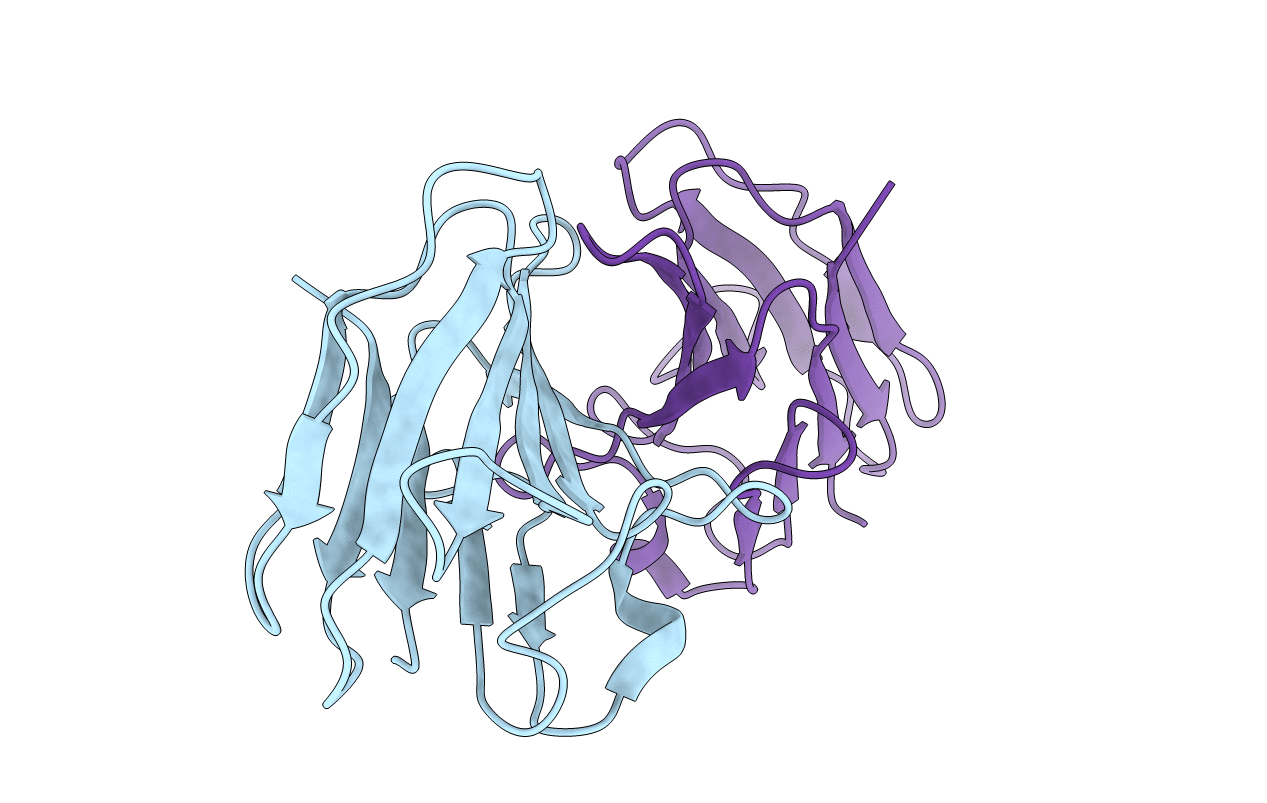
5FID image
Deposition Date 2015-12-23
Release Date 2016-12-07
Last Version Date 2024-11-20
Entry Detail
PDB ID:
5FID
Keywords:
Title:
Crystal structure of the protein elicitor MoHrip2 from Magnaporthe oryzae
Biological Source:
Source Organism(s):
Expression System(s):
Method Details:
Experimental Method:
Resolution:
1.81 Å
R-Value Free:
0.20
R-Value Work:
0.16
R-Value Observed:
0.16
Space Group:
P 1 21 1

Macromolecular Entities
Structures with similar UniProt ID
Protein Blast
Polymer Type:polypeptide(L)
Molecule:Elicitor protein Hrip2
Gene (Uniprot):hrip2
Mutagens:L78M
Chain IDs:A, B
Chain Length:137
Number of Molecules:2
Biological Source:Magnaporthe oryzae
Modified Residue
Compound ID Chain ID Parent Comp ID Details 2D Image
MSE A MET modified residue
Primary Citation
Crystal Structure Analysis and the Identification of Distinctive Functional Regions of the Protein Elicitor Mohrip2
Front Plant Sci 7 1103 1103 (2016)
PMID: 27507984 DOI: 10.3389/fpls.2016.01103

Abstact

The protein elicitor MoHrip2, which was extracted from Magnaporthe oryzae as an exocrine protein, triggers the tobacco immune system and enhances blast resistance in rice. However, the detailed mechanisms by which MoHrip2 acts as an elicitor remain unclear. Here, we investigated the structure of MoHrip2 to elucidate its functions based on molecular structure. The three-dimensional structure of MoHrip2 was obtained. Overall, the crystal structure formed a β-barrel structure and showed high similarity to the pathogenesis-related (PR) thaumatin superfamily protein thaumatin-like xylanase inhibitor (TL-XI). To investigate the functional regions responsible for MoHrip2 elicitor activities, the full length and eight truncated proteins were expressed in Escherichia coli and were evaluated for elicitor activity in tobacco. Biological function analysis showed that MoHrip2 triggered the defense system against Botrytis cinerea in tobacco. Moreover, only MoHrip2M14 and other fragments containing the 14 amino acids residues in the middle region of the protein showed the elicitor activity of inducing a hypersensitive response and resistance related pathways, which were similar to that of full-length MoHrip2. These results revealed that the central 14 amino acid residues were essential for anti-pathogenic activity.

Legend

Protein

Chemical

Disease

Primary Citation of related structures
Feedback Form
Name
Email
Institute
Feedback