

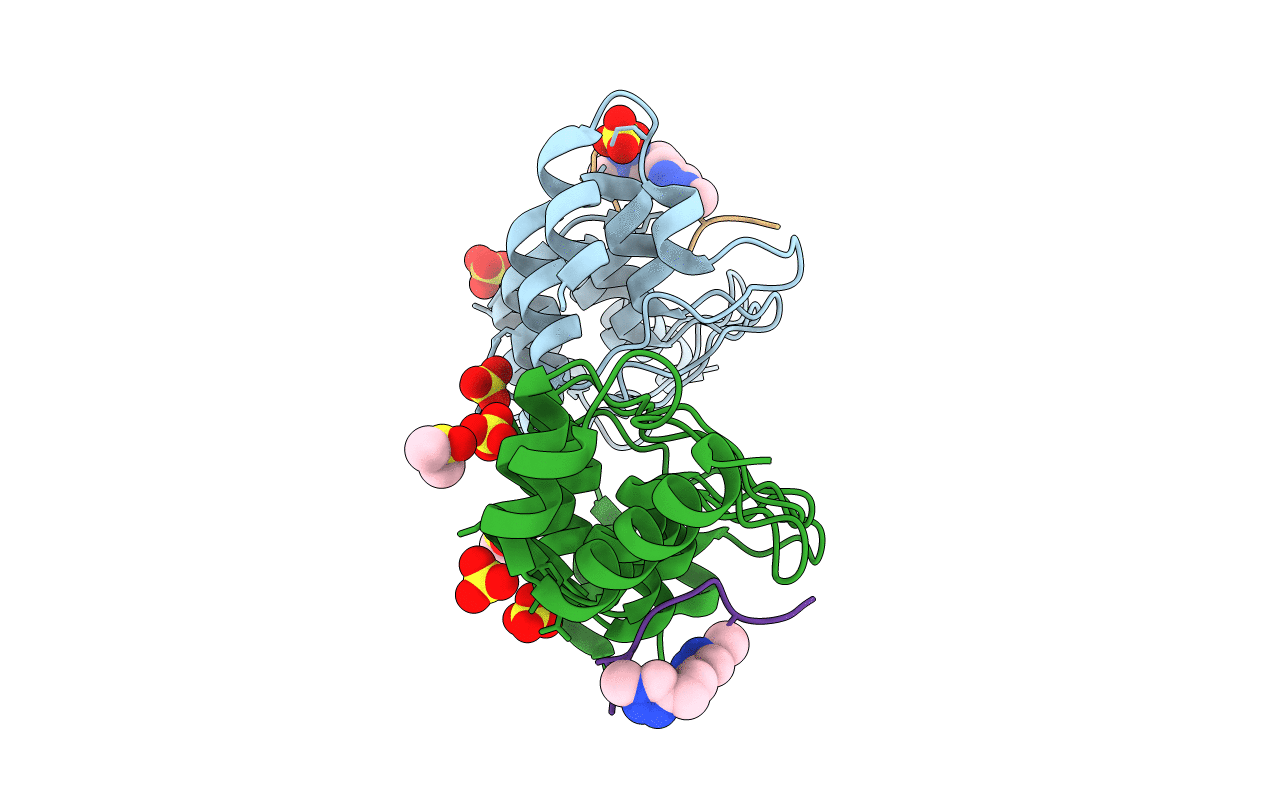
5BXO image
Deposition Date 2015-06-09
Release Date 2016-06-29
Last Version Date 2026-05-13
Entry Detail
PDB ID:
5BXO
Keywords:
Title:
Human Tankyrase-2 in Complex with Macrocyclised Extended Peptide cp4n2m3
Biological Source:
Source Organism(s):
Homo sapiens (Taxon ID: 9606)
Expression System(s):
Method Details:
Experimental Method:
Resolution:
1.33 Å
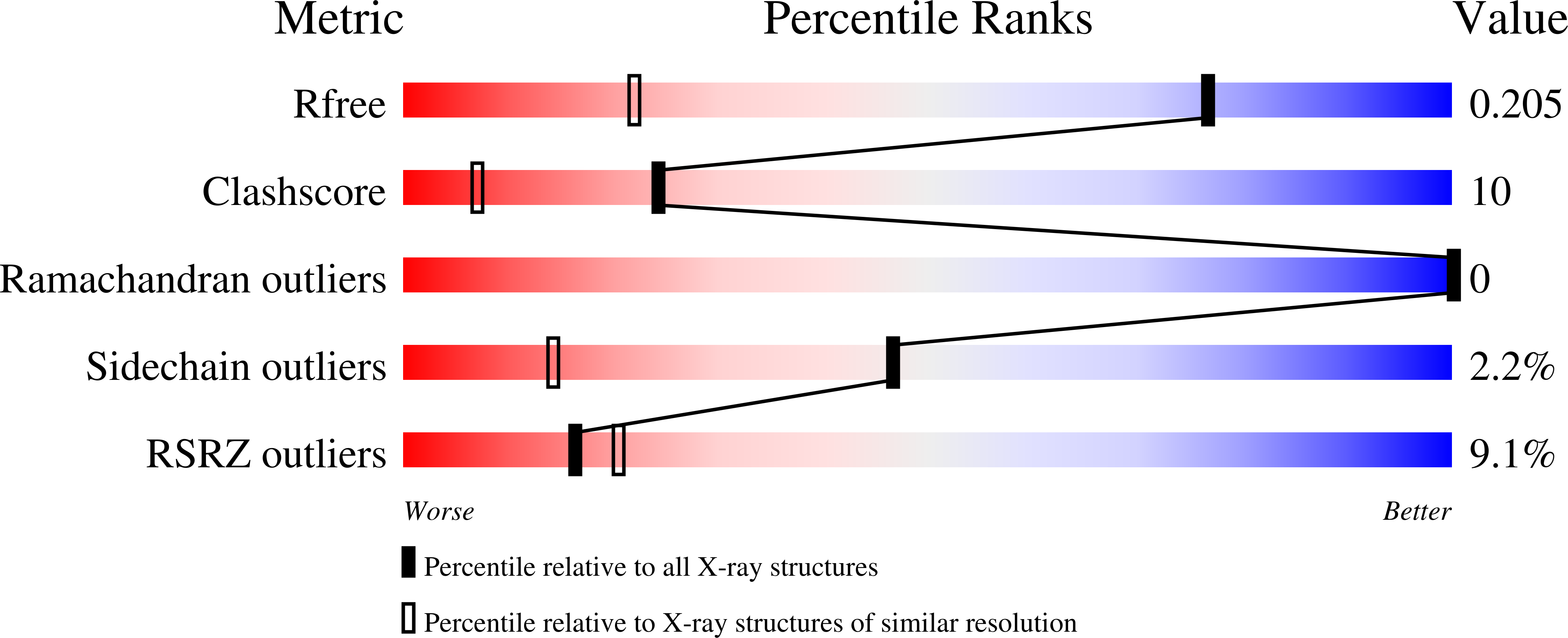
R-Value Free:
0.20
R-Value Work:
0.17
R-Value Observed:
0.17
Space Group:
P 1
Macromolecular Entities
Structures with similar UniProt ID
Protein Blast
Polymer Type:polypeptide(L)
Molecule:Tankyrase-2
Gene (Uniprot):TNKS2
Chain IDs:A, B
Chain Length:164
Number of Molecules:2
Biological Source:Homo sapiens
Structures with similar UniProt ID
Protein Blast
Polymer Type:polypeptide(L)
Molecule:Tankyrase-2
Gene (Uniprot):TNKS2
Chain IDs:C, D
Chain Length:10
Number of Molecules:2
Biological Source:Homo sapiens
Primary Citation
Macrocyclized Extended Peptides: Inhibiting the Substrate-Recognition Domain of Tankyrase.
J.Am.Chem.Soc. 139 2245 2256 (2017)
PMID: 28084734 DOI: 10.1021/jacs.6b10234

Abstact

We report a double-click macrocyclization approach for the design of constrained peptide inhibitors having non-helical or extended conformations. Our targets are the tankyrase proteins (TNKS), poly(ADP-ribose) polymerases (PARP) that regulate Wnt signaling by targeting Axin for degradation. TNKS are deregulated in many different cancer types, and inhibition of TNKS therefore represents an attractive therapeutic strategy. However, clinical development of TNKS-specific PARP catalytic inhibitors is challenging due to off-target effects and cellular toxicity. We instead targeted the substrate-recognition domain of TNKS, as it is unique among PARP family members. We employed a two-component strategy, allowing peptide and linker to be separately engineered and then assembled in a combinatorial fashion via click chemistry. Using the consensus substrate-peptide sequence as a starting point, we optimized the length and rigidity of the linker and its position along the peptide. Optimization was further guided by high-resolution crystal structures of two of the macrocyclized peptides in complex with TNKS. This approach led to macrocyclized peptides with submicromolar affinities for TNKS and high proteolytic stability that are able to disrupt the interaction between TNKS and Axin substrate and to inhibit Wnt signaling in a dose-dependent manner. The peptides therefore represent a promising starting point for a new class of substrate-competitive inhibitors of TNKS with potential for suppressing Wnt signaling in cancer. Moreover, by demonstrating the application of the double-click macrocyclization approach to non-helical, extended, or irregularly structured peptides, we greatly extend its potential and scope, especially given the frequency with which such motifs mediate protein-protein interactions.

Legend

Protein

Chemical

Disease

Primary Citation of related structures
Feedback Form
Name
Email
Institute
Feedback