

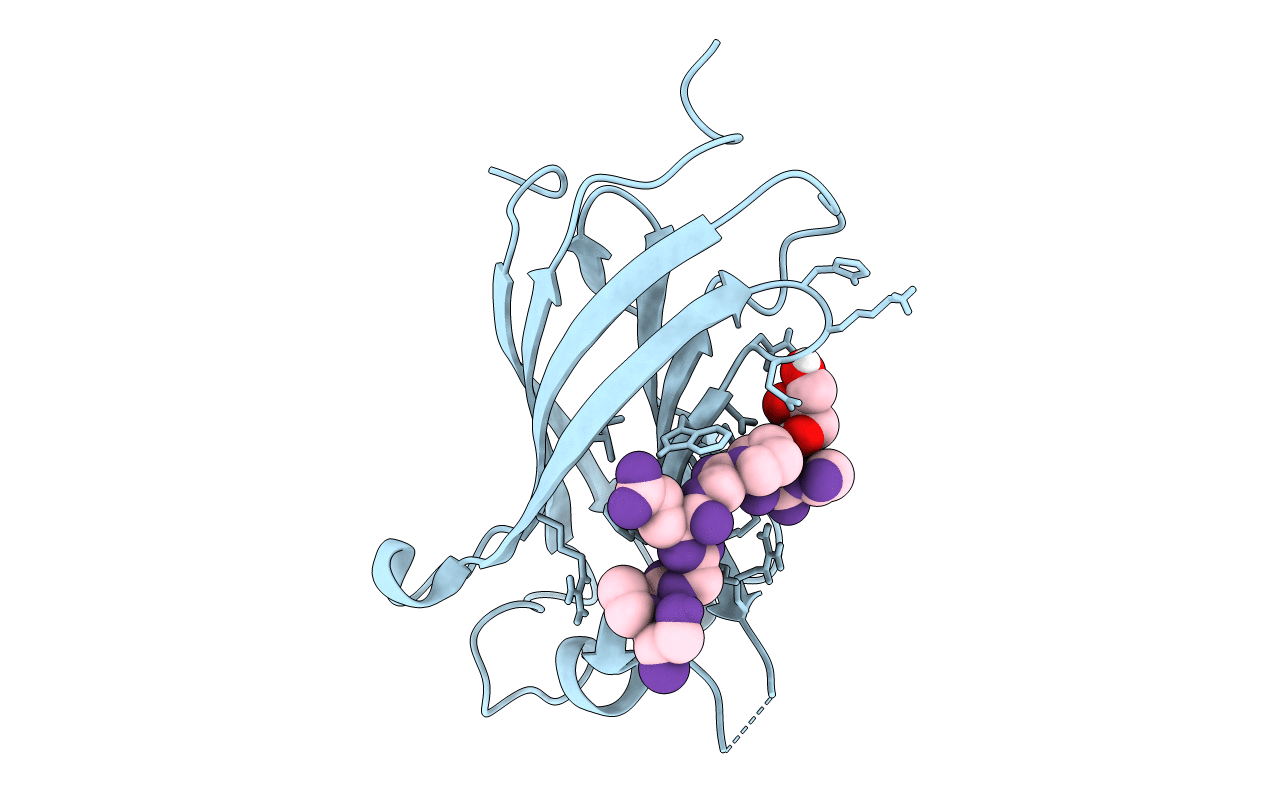
4YSI image
Deposition Date 2015-03-17
Release Date 2016-02-03
Last Version Date 2023-09-27
Entry Detail
PDB ID:
4YSI
Title:
Structure of USP7 with a novel viral protein
Biological Source:
Source Organism(s):
Expression System(s):
Method Details:
Experimental Method:
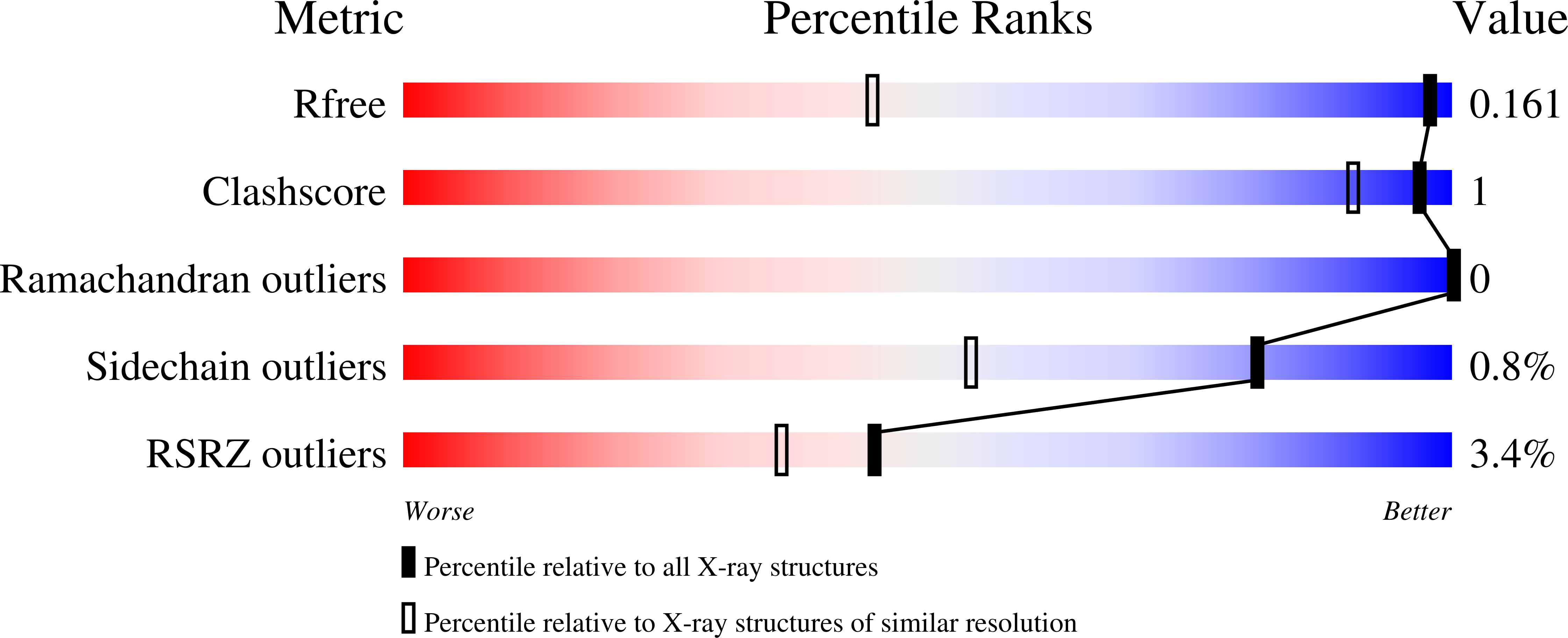
Resolution:
1.02 Å
R-Value Free:
0.16
R-Value Work:
0.15
R-Value Observed:
0.15
Space Group:
P 41
Macromolecular Entities
Polymer Type:polypeptide(L)
Molecule:Ubiquitin carboxyl-terminal h
Gene (Uniprot):USP7
Chain IDs:A
Chain Length:143
Number of Molecules:1
Biological Source:Homo sapiens
Polymer Type:polypeptide(L)
Molecule:SER-PRO-GLY-GLU-GLY-PRO-SER-G
Chain IDs:B
Chain Length:8
Number of Molecules:1
Biological Source:Human herpesvirus 8
Ligand Molecules
Primary Citation
Identification of Kaposi Sarcoma Herpesvirus (KSHV) vIRF1 Protein as a Novel Interaction Partner of Human Deubiquitinase USP7.
J Biol Chem 291 6281 ? (2016)
PMID: 26786098 DOI: .

Abstact

Viral interferon regulatory factor 1 (vIRF1), a Kaposi sarcoma herpesvirus protein, destabilizes p53 by inhibiting p53 acetylation and Hdm2 phosphorylation. This leads to increased ubiquitination and degradation of p53 by Hdm2, which cripples the cellular p53-mediated antiviral response. Ubiquitin-specific protease 7 (USP7) deubiquitinates p53 and Hdm2 and regulates their stability. We identified an EGPS consensus sequence in vIRF1, which is identical to that found in Epstein-Barr virus nuclear antigen 1 (EBNA1) that interacts with the N-terminal domain of USP7 (USP7-NTD). GST pulldown assays demonstrated that vIRF1 interacts with USP7-NTD via its EGPS motif. NMR heteronuclear single quantum correlation (HSQC) analysis revealed chemical perturbations after titration of USP7-NTD with vIRF1 (44)SPGEGPSGTG(53) peptide. In contrast, these perturbations were reduced with a mutant vIRF1 peptide, (44)SPGEGPAGTG(53). Fluorescence polarization analysis indicated that the vIRF1 peptide interacted with USP7-NTD with a Kd of 2.0 μm. The crystal structure of the USP7-NTD·vIRF1 peptide complex revealed an identical mode of binding as that of the EBNA1 peptide to USP7-NTD. We also showed that USP7 interacts with vIRF1 in U2OS cells. Decreased levels of p53, but not Hdm2 or ataxia telangiectasia-mutated (ATM), were seen after expression of vIRF1, but not with a vIRF1 mutant protein. Our results support a new role for vIRF1 through deregulation of the deubiquitinating enzyme USP7 to inhibit p53-mediated antiviral responses.

Legend

Protein

Chemical

Disease

Primary Citation of related structures
Feedback Form
Name
Email
Institute
Feedback