

4UQG image
Deposition Date 2014-06-23
Release Date 2014-12-03
Last Version Date 2024-01-10
Entry Detail
PDB ID:
4UQG
Keywords:
Title:
A new bio-isosteric base pair based on reversible bonding
Biological Source:
Source Organism(s):
Expression System(s):
Method Details:
Experimental Method:
Resolution:
2.00 Å
R-Value Free:
0.21
R-Value Work:
0.17
R-Value Observed:
0.17
Space Group:
P 21 21 21
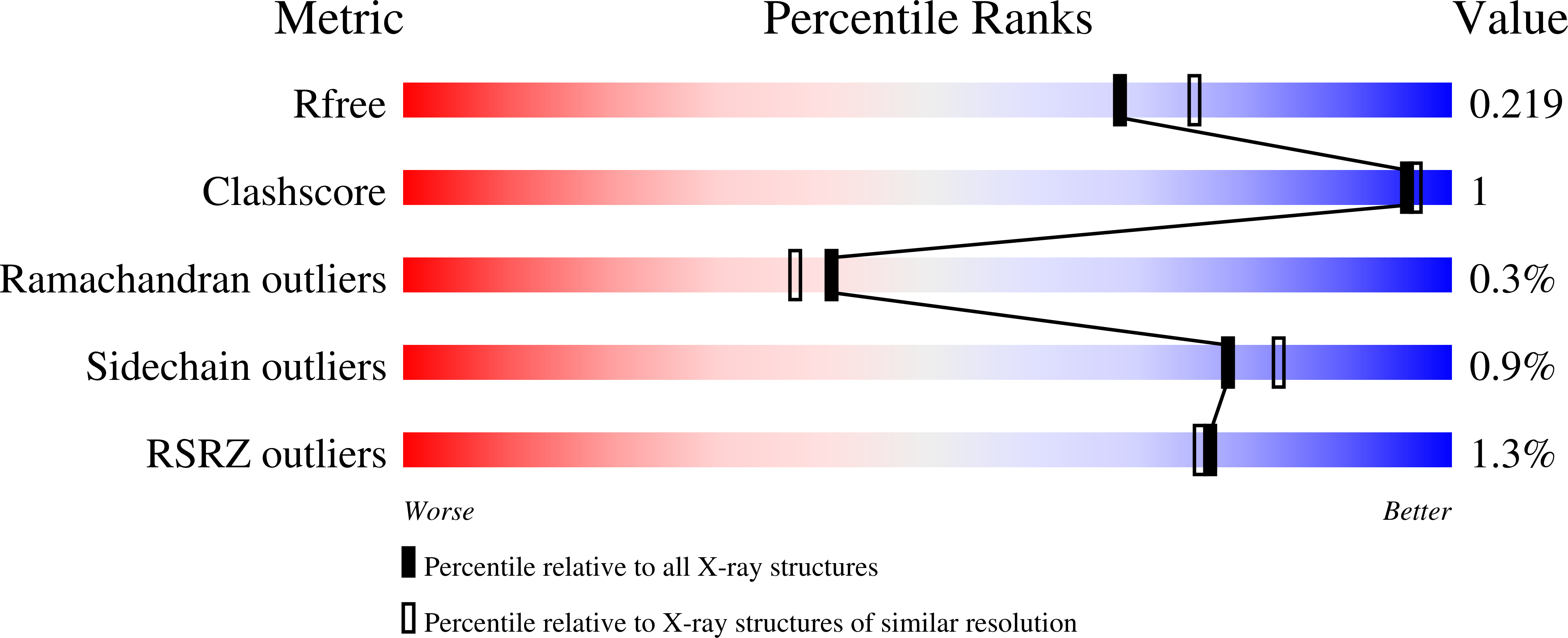
Macromolecular Entities
Structures with similar UniProt ID
Protein Blast
Polymer Type:polypeptide(L)
Molecule:DNA POLYMERASE
Gene (Uniprot):polA
Chain IDs:A
Chain Length:579
Number of Molecules:1
Biological Source:GEOBACILLUS STEAROTHERMOPHILUS
Polymer Type:polydeoxyribonucleotide
Molecule:5'-D(*GP*AP*CP*C T0TP*TP*CP*C
Chain IDs:B
Chain Length:10
Number of Molecules:1
Biological Source:synthetic construct
Polymer Type:polydeoxyribonucleotide
Molecule:5'-D(*AP*GP*GP*GP*A SAYP*GP*G
Chain IDs:C
Chain Length:10
Number of Molecules:1
Biological Source:synthetic construct
Ligand Molecules
Peptide-like Molecules
PRD_900003
Primary Citation
"Post-it" type connected DNA created with a reversible covalent cross-link.
Angew. Chem. Int. Ed. Engl. 54 796 800 (2015)
PMID: 25446281 DOI: 10.1002/anie.201407854

Abstact

We report the development of a new heterobase that is held together through reversible bonding. The so-formed cross-link adds strong stabilization to the DNA duplex. Despite this, the cross-link opens and closes through reversible imine bonding. Moreover, even enzymatic incorporation of the cross-link is possible. The new principle can be used to stabilize DNA duplexes and nanostructures that otherwise require high salt concentrations, which may hinder biological applications.

Legend

Protein

Chemical

Disease

Primary Citation of related structures
Feedback Form
Name
Email
Institute
Feedback