

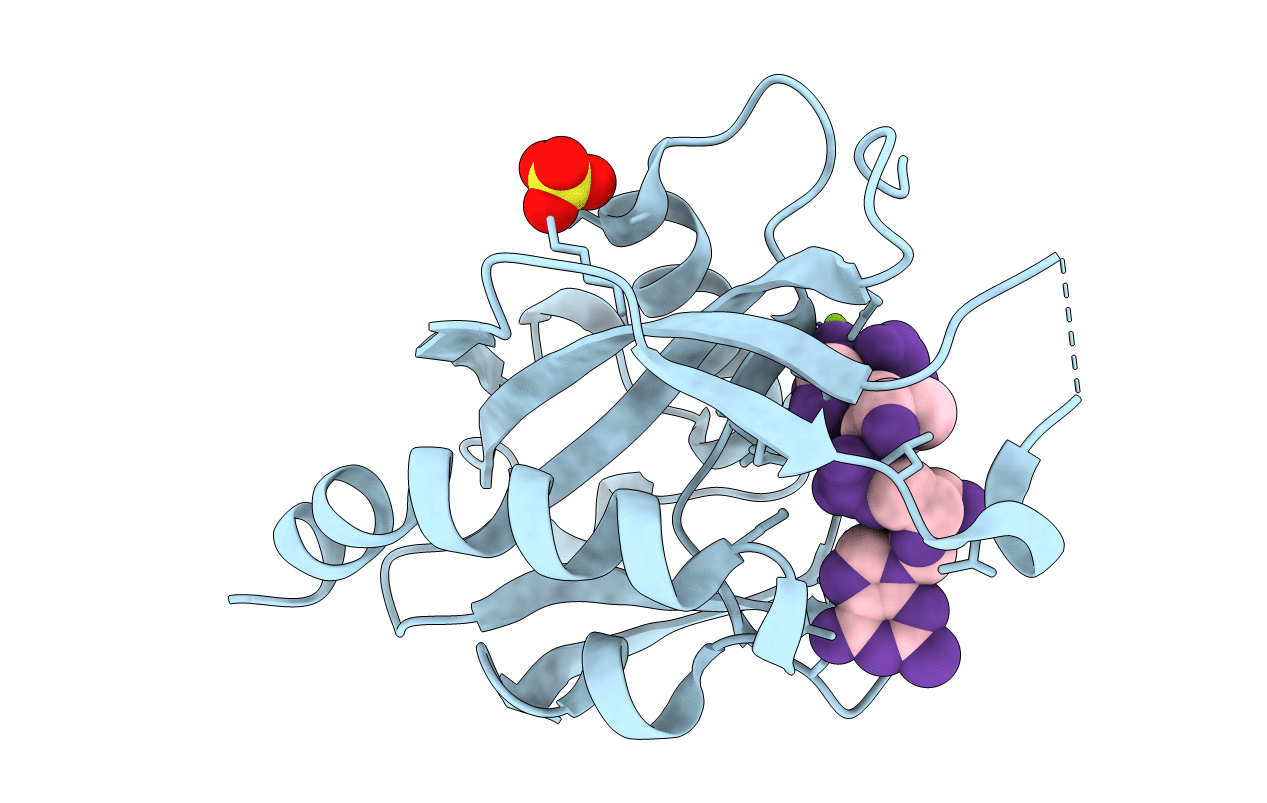
4S2Y image
Deposition Date 2015-01-23
Release Date 2015-02-11
Last Version Date 2023-09-20
Entry Detail
PDB ID:
4S2Y
Keywords:
Title:
Structure of E. coli RppH bound to RNA and three magnesium ions
Biological Source:
Source Organism(s):
Expression System(s):
Method Details:
Experimental Method:
Resolution:
1.60 Å
R-Value Free:
0.19
R-Value Work:
0.17
R-Value Observed:
0.17
Space Group:
C 1 2 1
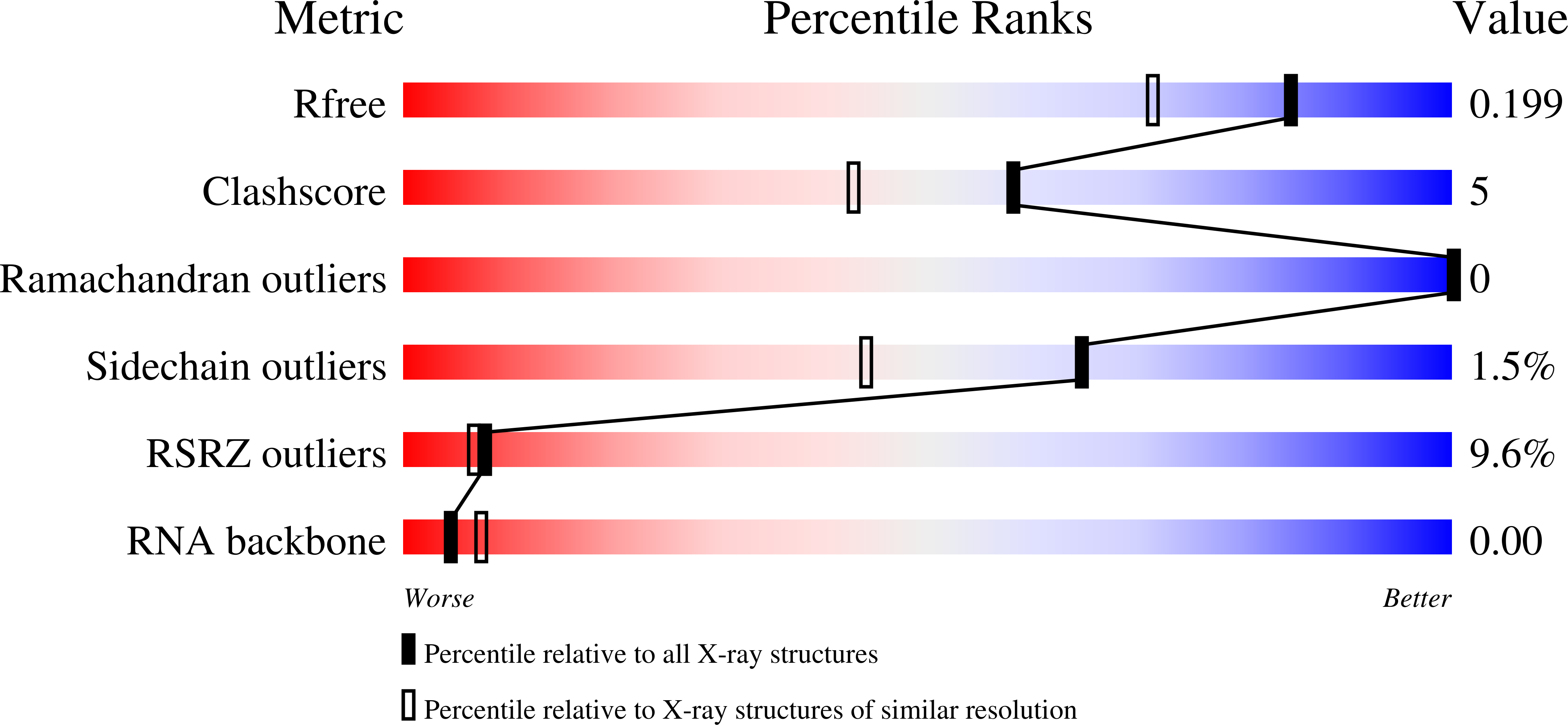
Macromolecular Entities
Structures with similar UniProt ID
Protein Blast
Polymer Type:polypeptide(L)
Molecule:RNA pyrophosphohydrolase
Gene (Uniprot):rppH
Mutagens:Q159A, E160A
Chain IDs:A
Chain Length:161
Number of Molecules:1
Biological Source:Escherichia coli
Polymer Type:polyribonucleotide
Molecule:RNA (5'-R(*(APC)*GP*U)-3')
Chain IDs:B
Chain Length:3
Number of Molecules:1
Biological Source:
Primary Citation
Structures of RNA Complexes with the Escherichia coli RNA Pyrophosphohydrolase RppH Unveil the Basis for Specific 5'-End-dependent mRNA Decay.
J. Biol. Chem. 290 9487 9499 (2015)
PMID: 25657011 DOI: 10.1074/jbc.M114.634824

Abstact

5'-End-dependent RNA degradation impacts virulence, stress responses, and DNA repair in bacteria by controlling the decay of hundreds of mRNAs. The RNA pyrophosphohydrolase RppH, a member of the Nudix hydrolase superfamily, triggers this degradation pathway by removing pyrophosphate from the triphosphorylated RNA 5' terminus. Here, we report the x-ray structures of Escherichia coli RppH (EcRppH) in apo- and RNA-bound forms. These structures show distinct conformations of EcRppH·RNA complexes on the catalytic pathway and suggest a common catalytic mechanism for Nudix hydrolases. EcRppH interacts with RNA by a bipartite mechanism involving specific recognition of the 5'-terminal triphosphate and the second nucleotide, thus enabling discrimination against mononucleotides as substrates. The structures also reveal the molecular basis for the preference of the enzyme for RNA substrates bearing guanine in the second position by identifying a protein cleft in which guanine interacts with EcRppH side chains via cation-π contacts and hydrogen bonds. These interactions explain the modest specificity of EcRppH at the 5' terminus and distinguish the enzyme from the highly selective RppH present in Bacillus subtilis. The divergent means by which RNA is recognized by these two functionally and structurally analogous enzymes have important implications for mRNA decay and the regulation of protein biosynthesis in bacteria.

Legend

Protein

Chemical

Disease

Primary Citation of related structures
Feedback Form
Name
Email
Institute
Feedback