

4P7U image
Deposition Date 2014-03-27
Release Date 2015-06-24
Last Version Date 2024-11-13
Entry Detail
PDB ID:
4P7U
Title:
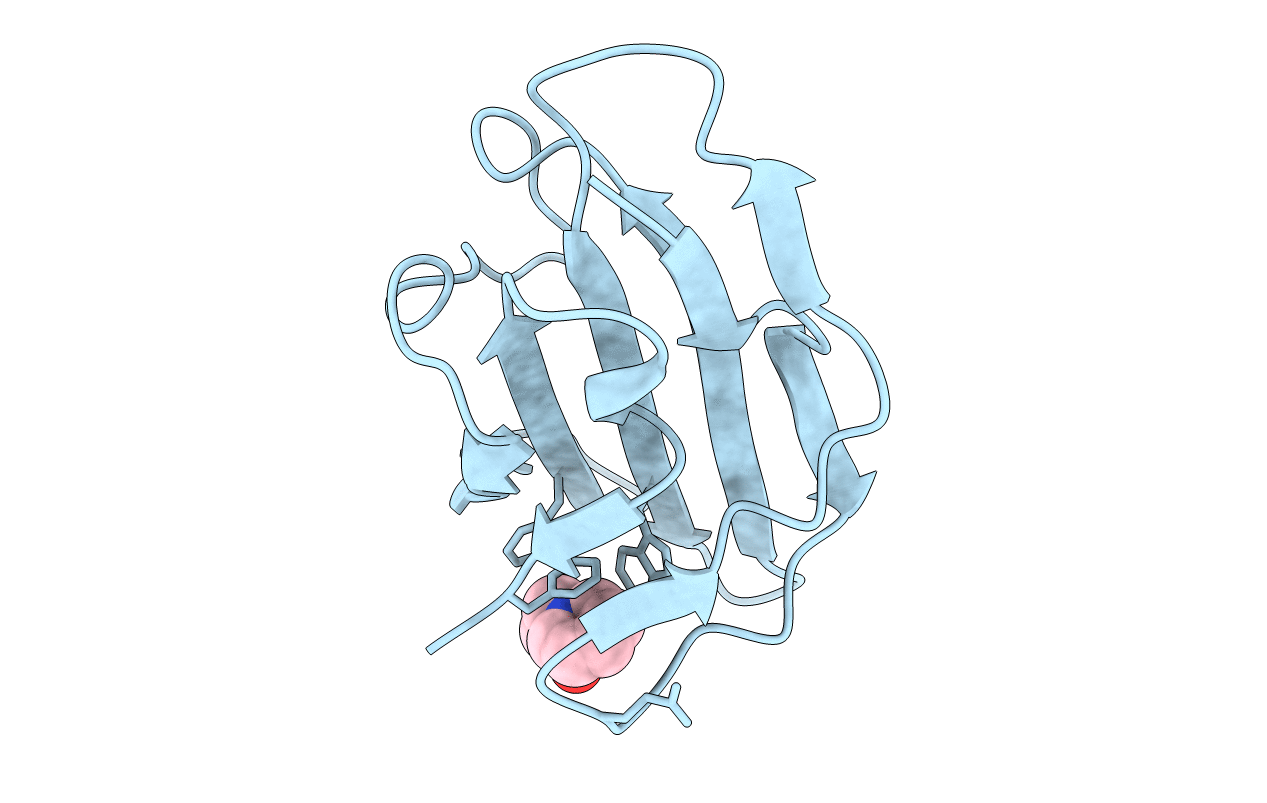
Extracellular domain of type II Transforming Growth Factor Beta receptor in complex with NDSB-201
Biological Source:
Source Organism(s):
Homo sapiens (Taxon ID: 9606)
Expression System(s):
Method Details:
Experimental Method:
Resolution:
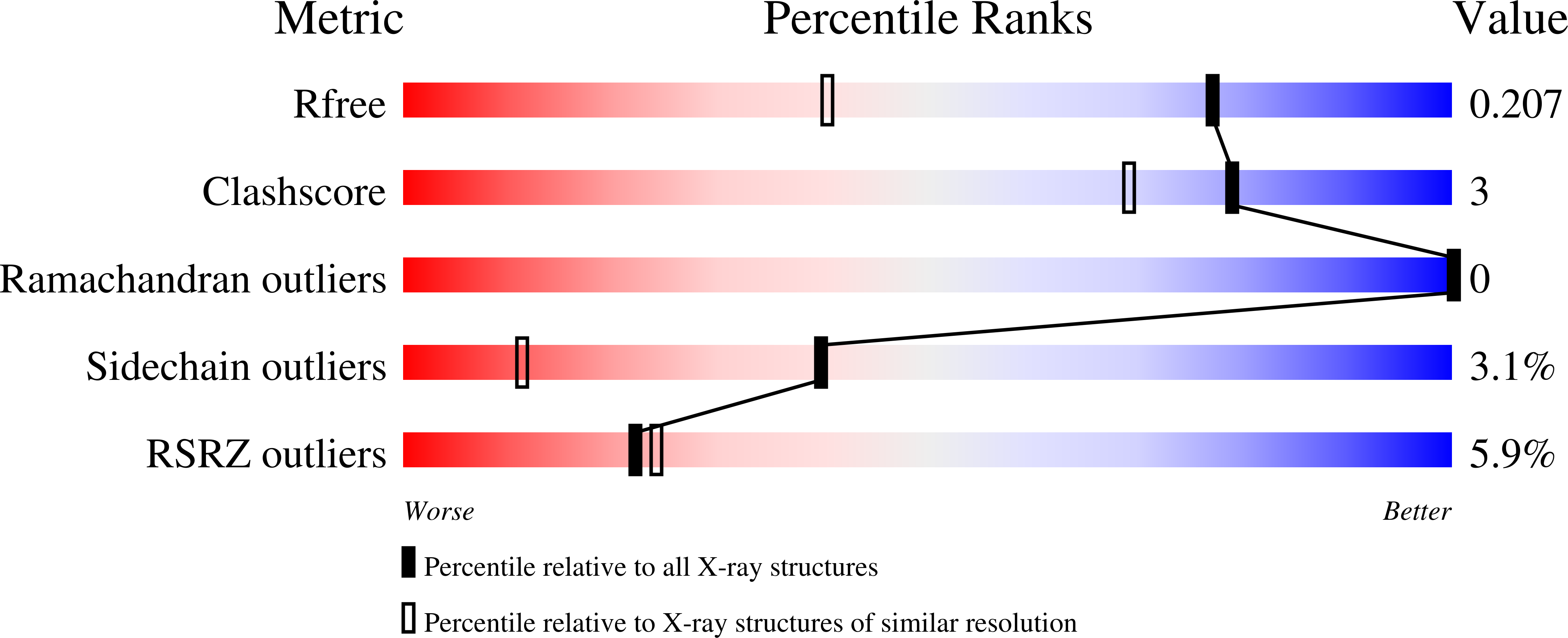
1.50 Å
R-Value Free:
0.20
R-Value Work:
0.17
R-Value Observed:
0.17
Space Group:
P 21 21 21
Macromolecular Entities
Structures with similar UniProt ID
Protein Blast
Polymer Type:polypeptide(L)
Molecule:TGF-beta receptor type-2
Gene (Uniprot):TGFBR2
Mutagens:Q26A K97T
Chain IDs:A
Chain Length:112
Number of Molecules:1
Biological Source:Homo sapiens
Ligand Molecules
Primary Citation
The non-detergent sulfobetaine-201 acts as a pharmacological chaperone to promote folding and crystallization of the type II TGF-beta receptor extracellular domain.
Protein Expr. Purif. 115 19 25 (2015)
PMID: 26073093 DOI: 10.1016/j.pep.2015.06.001

Abstact

The roles of the extracellular domain of type II TGF-β receptor (TBRII-ECD) in physiological processes ranging from development to cancer to wound healing render it an attractive target for exploration with chemical tools. For such applications, large amounts of active soluble protein are needed, but the yields of TBRII-ECD we obtained with current folding protocols were variable. To expedite the identification of alternative folding conditions, we developed an on-plate screen. This assay indicated that effective folding additives included the non-detergent sulfobetaine-201 (NDSB-201). Although NDSB-201 can facilitate protein folding, the mode by which it does so is poorly understood. We postulated that specific interactions between NDSB-201 and TBRII-ECD might be responsible. Analysis by X-ray crystallography indicates that the TBRII-ECD possesses a binding pocket for NDSB-201. The pyridinium group of the additive stacks with a phenylalanine side chain in the binding site. The ability of NDSB-201 to occupy a pocket on the protein provides a molecular mechanism for the additive's ability to minimize TBRII-ECD aggregation and stabilize the folded state. NDSB-201 also accelerates TBRII-ECD crystallization, suggesting it may serve as a useful crystallization additive for proteins refolded with it. Our results also suggest there is a site on TBRII-ECD that could be targeted by small-molecule modulators.

Legend

Protein

Chemical

Disease

Primary Citation of related structures
Feedback Form
Name
Email
Institute
Feedback