

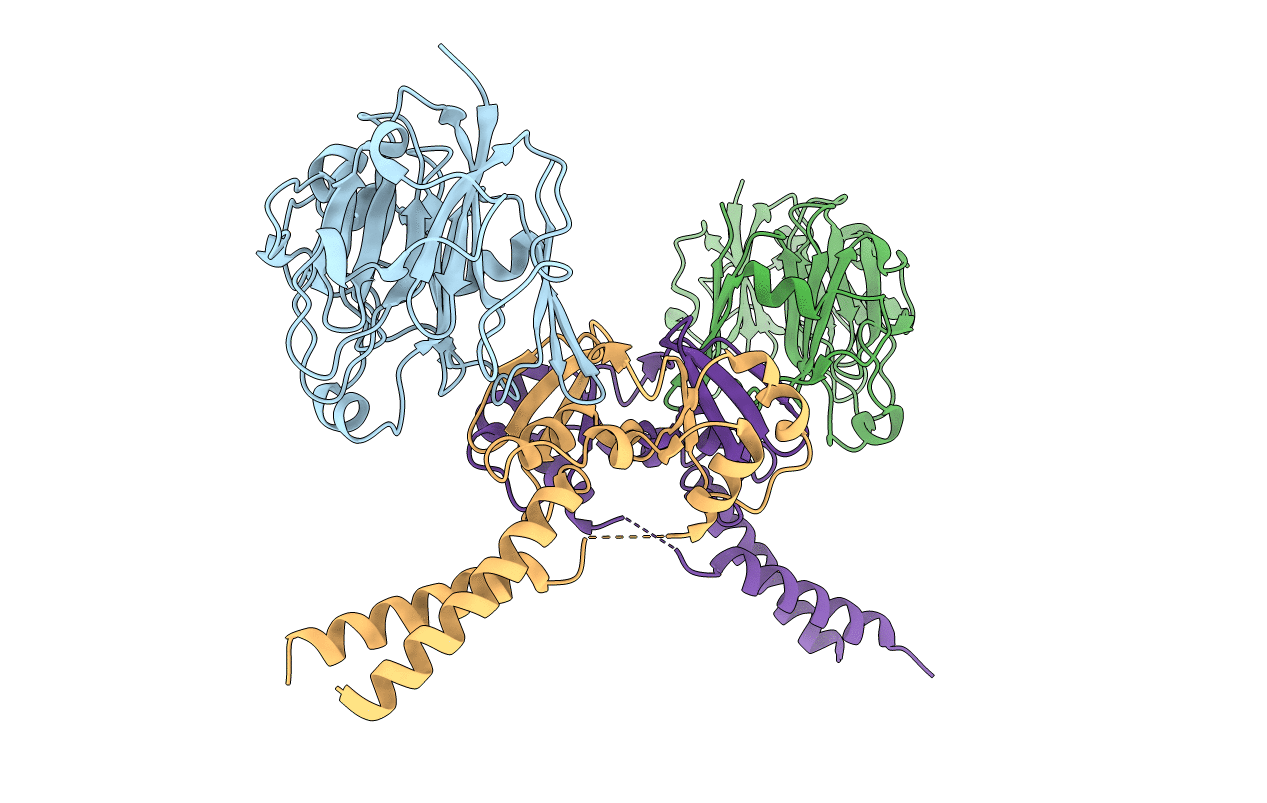
4MN4 image
Deposition Date 2013-09-09
Release Date 2013-10-23
Last Version Date 2024-11-06
Entry Detail
PDB ID:
4MN4
Title:
Structural Basis for the MukB-topoisomerase IV Interaction
Biological Source:
Source Organism(s):
Expression System(s):
Method Details:
Experimental Method:
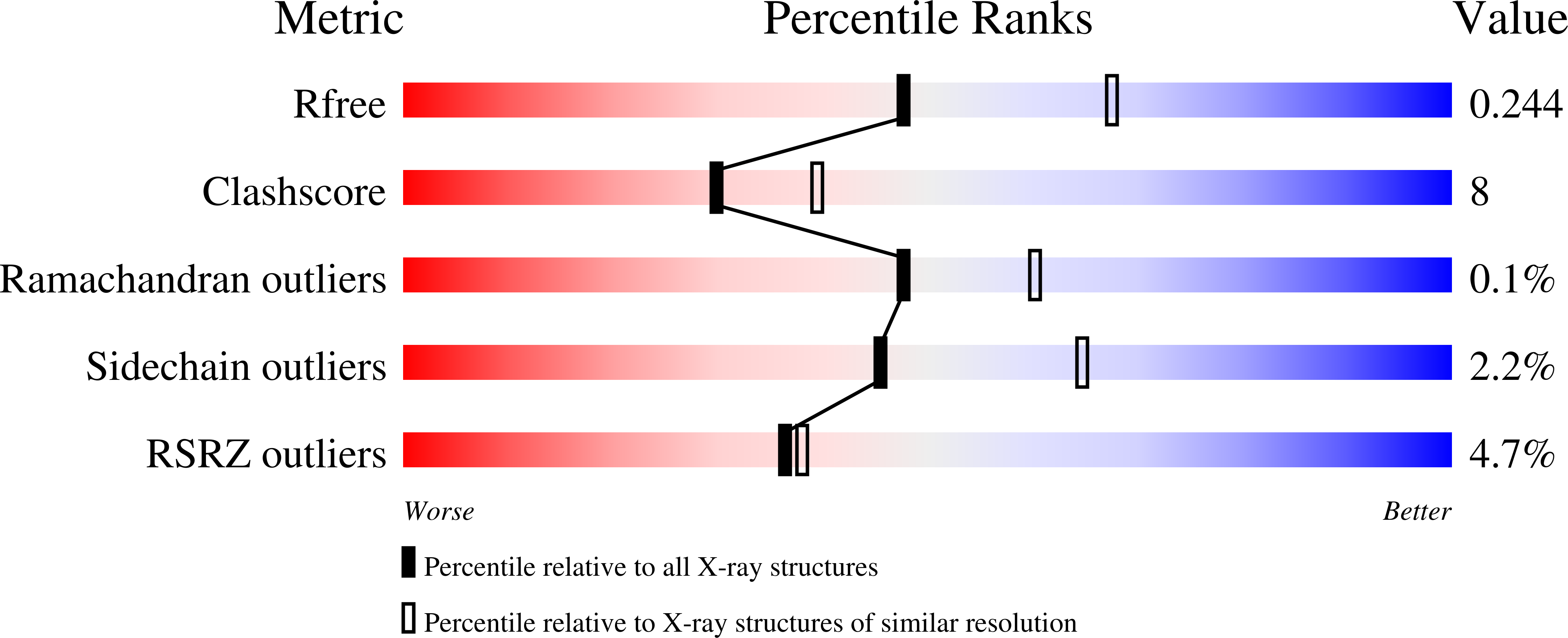
Resolution:
2.30 Å
R-Value Free:
0.24
R-Value Work:
0.20
R-Value Observed:
0.20
Space Group:
P 21 21 21
Macromolecular Entities
Polymer Type:polypeptide(L)
Molecule:DNA topoisomerase 4 subunit A
Gene (Uniprot):parC
Chain IDs:A, D (auth: B)
Chain Length:259
Number of Molecules:2
Biological Source:Escherichia coli
Polymer Type:polypeptide(L)
Molecule:Chromosome partition protein
Gene (Uniprot):mukB
Chain IDs:B (auth: C), C (auth: D)
Chain Length:163
Number of Molecules:2
Biological Source:Escherichia coli
Modified Residue
Compound ID Chain ID Parent Comp ID Details 2D Image
MSE A MET SELENOMETHIONINE
Primary Citation
Structural basis for the MukB-topoisomerase IV interaction and its functional implications in vivo.
EMBO J. 32 2950 2962 (2013)
PMID: 24097060 DOI: 10.1038/emboj.2013.218

Abstact

Chromosome partitioning in Escherichia coli is assisted by two interacting proteins, topoisomerase (topo) IV and MukB. MukB stimulates the relaxation of negative supercoils by topo IV; to understand the mechanism of their action and to define this functional interplay, we determined the crystal structure of a minimal MukB-topo IV complex to 2.3 Å resolution. The structure shows that the so-called 'hinge' region of MukB forms a heterotetrameric assembly with a C-terminal DNA binding domain (CTD) on topo IV's ParC subunit. Biochemical studies show that the hinge stimulates topo IV by competing for a site on the CTD that normally represses activity on negatively supercoiled DNA, while complementation tests using mutants implicated in the interaction reveal that the cellular dependency on topo IV derives from a joint need for both strand passage and MukB binding. Interestingly, the configuration of the MukB·topo IV complex sterically disfavours intradimeric interactions, indicating that the proteins may form oligomeric arrays with one another, and suggesting a framework by which MukB and topo IV may collaborate during daughter chromosome disentanglement.

Legend

Protein

Chemical

Disease

Primary Citation of related structures
Feedback Form
Name
Email
Institute
Feedback