

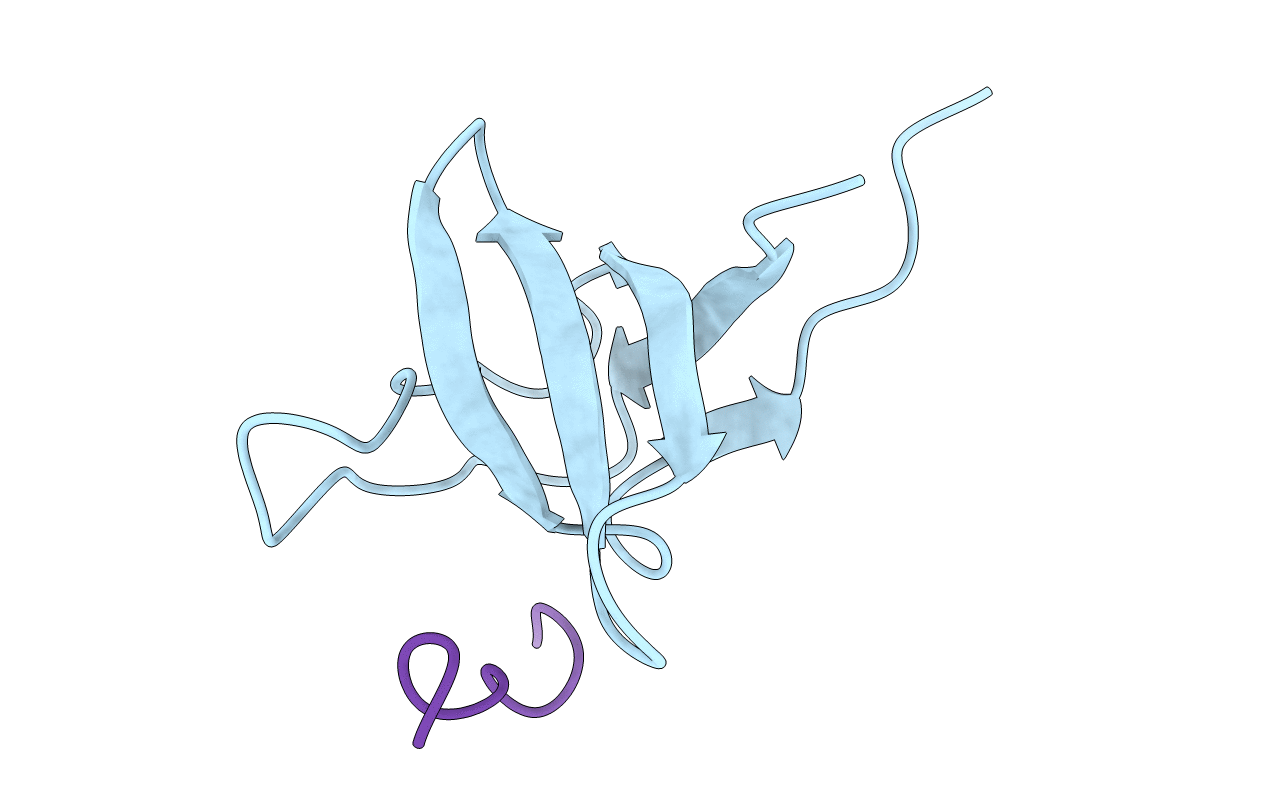
4LNP image
Deposition Date 2013-07-11
Release Date 2014-05-28
Last Version Date 2024-03-20
Entry Detail
PDB ID:
4LNP
Title:
The first SH3 domain from CAP/Ponsin in complex with proline rich peptide from Vinculin
Biological Source:
Source Organism(s):
Homo sapiens (Taxon ID: 9606)
Expression System(s):
Method Details:
Experimental Method:
Resolution:
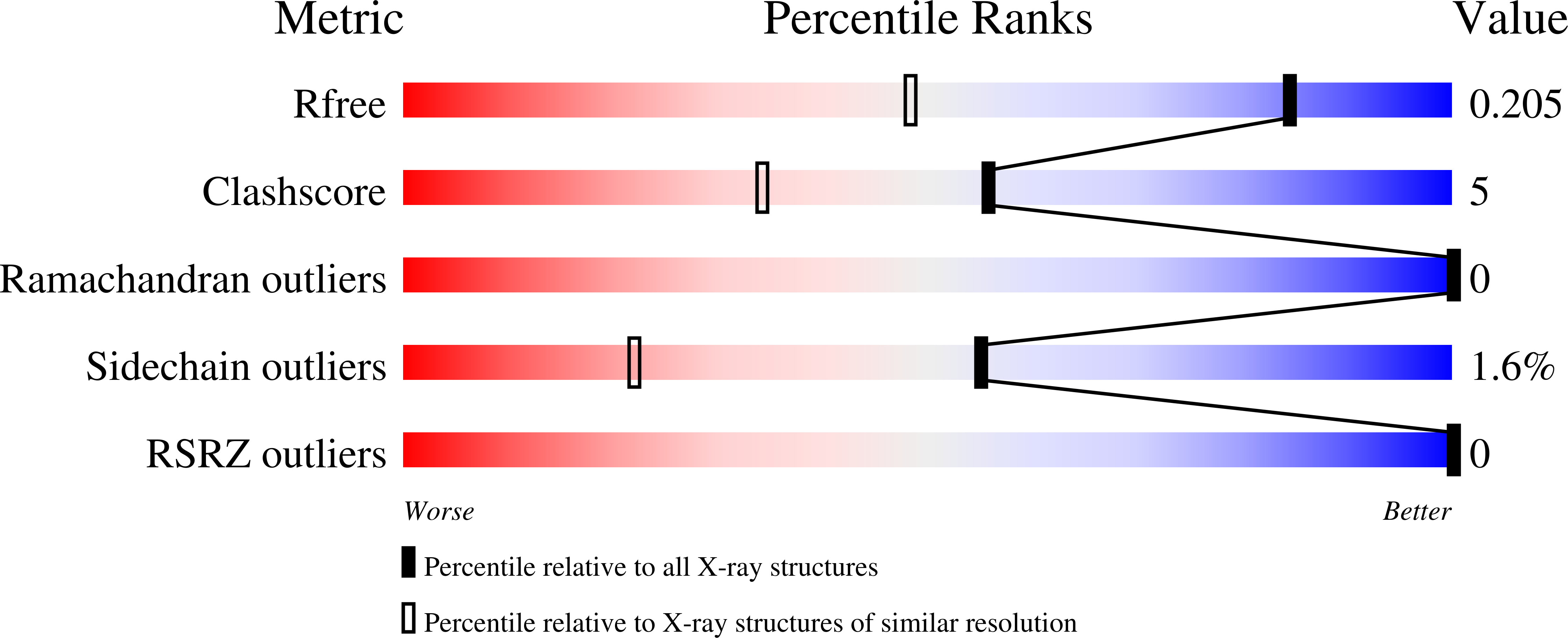
1.41 Å
R-Value Free:
0.19
R-Value Work:
0.13
R-Value Observed:
0.13
Space Group:
P 21 21 21
Macromolecular Entities
Polymer Type:polypeptide(L)
Molecule:Sorbin and SH3 domain-contain
Gene (Uniprot):SORBS1
Chain IDs:A
Chain Length:61
Number of Molecules:1
Biological Source:Homo sapiens
Polymer Type:polypeptide(L)
Molecule:Vinculin
Gene (Uniprot):VCL
Chain IDs:B
Chain Length:10
Number of Molecules:1
Biological Source:Homo sapiens
Primary Citation
Structural investigation of the interaction between the tandem SH3 domains of c-Cbl-associated protein and vinculin
J. Struct. Biol. 187 194 205 (2014)
PMID: 24878663 DOI: 10.1016/j.jsb.2014.05.009

Abstact

c-Cbl-associated protein (CAP) is an important cytoskeletal adaptor protein involved in the regulation of adhesion turnover. The interaction between CAP and vinculin is critical for the recruitment of CAP to focal adhesions. The tandem SH3 domains (herein termed SH3a and SH3b) of CAP are responsible for its interaction with vinculin. However, the structural mechanism underlying the interaction between CAP and vinculin is poorly understood. In this manuscript, we report the solution structure of the tandem SH3 domains of CAP. Our NMR and ITC data indicate that the SH3a and SH3b domains of CAP simultaneously bind to a long proline-rich region of vinculin with different binding specificities. Furthermore, the crystal structures of the individual SH3a and SH3b domains complexed with their substrate peptides indicate that Q807(SH3a) and D881(SH3b) are the critical residues determining the different binding specificities of the SH3 domains. Based on the obtained structural information, a model of the SH3ab-vinculin complex was generated using MD simulation and SAXS data.

Legend

Protein

Chemical

Disease

Primary Citation of related structures
Feedback Form
Name
Email
Institute
Feedback