

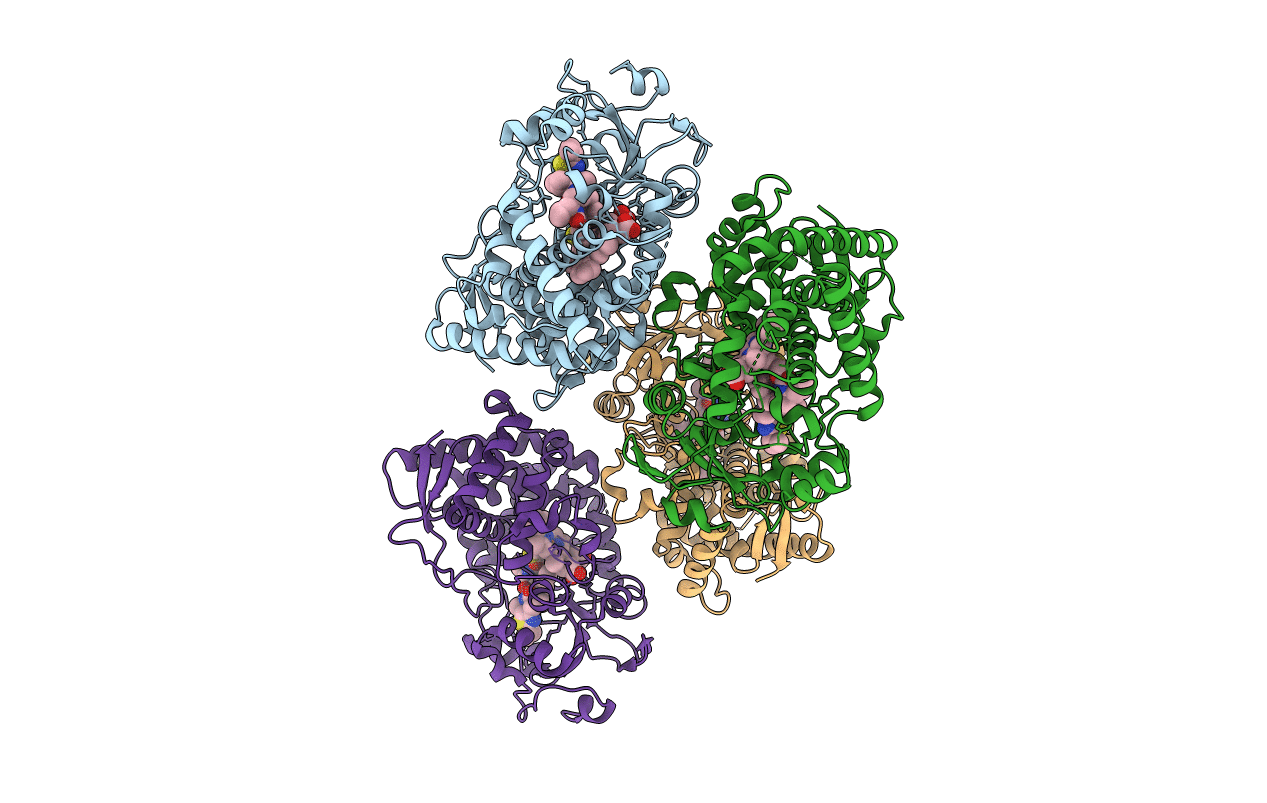
4K9W image
Deposition Date 2013-04-21
Release Date 2013-06-19
Last Version Date 2026-08-12
Entry Detail
PDB ID:
4K9W
Title:
Complex of human CYP3A4 with a desoxyritonavir analog
Biological Source:
Source Organism(s):
Homo sapiens (Taxon ID: 9606)
Expression System(s):
Method Details:
Experimental Method:
Resolution:
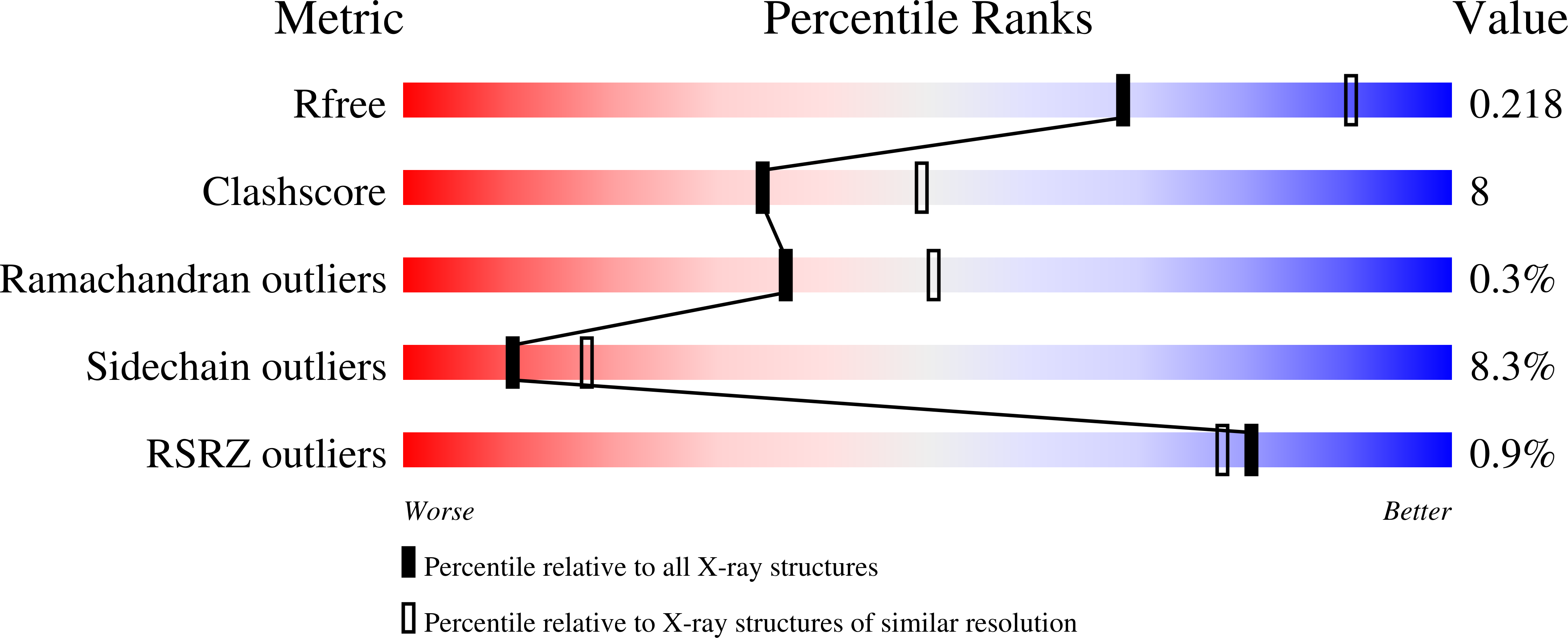
2.40 Å
R-Value Free:
0.19
R-Value Work:
0.16
R-Value Observed:
0.16
Space Group:
P 31
Macromolecular Entities
Polymer Type:polypeptide(L)
Molecule:Cytochrome P450 3A4
Gene (Uniprot):CYP3A4
Mutagens:3-22 deletion
Chain IDs:A, B, C, D
Chain Length:487
Number of Molecules:4
Biological Source:Homo sapiens
Primary Citation
Dissecting Cytochrome P450 3A4-Ligand Interactions Using Ritonavir Analogues.
Biochemistry 52 4474 4481 (2013)
PMID: 23746300 DOI: 10.1021/bi4005396

Abstact

Cytochrome P450 3A4 (CYP3A4) inhibitors ritonavir and cobicistat, currently administered to HIV patients as pharmacoenhancers, were designed on the basis of the chemical structure/activity relationships rather than the CYP3A4 crystal structure. To better understand the structural basis for CYP3A4 inhibition and the ligand binding process, we investigated five desoxyritonavir analogues to elucidate how substitution/elimination of the phenyl side groups (Phe-1 and Phe-2) and removal of the isopropyl-thiazole (IPT) moiety affect affinity, inhibitory potency, and the ligand binding mode. Our experimental and structural data indicate that the side group size reduction not only drastically lowers affinity and inhibitory potency for CYP3A4 but also leads to multiple binding modes. Regardless of the side group chemical nature and the number of molecules bound, the space adjacent to the 369-371 peptide and Arg105 (Phe-2 site) is always occupied and, hence, must be a critically important binding site. When possible, the ligands also try to fill the pocket near the I-helix (Phe-1 site), even if it causes steric hindrance. Extensive hydrophobic interactions established at the Phe-1 site improve inhibitory potency, whereas contacts provided by IPT might strengthen the Fe-N bond. Overall, however, the end group contributes less to the ligand association process, which, in contrast, is greatly facilitated by the polar interactions mediated by the active site Ser119.

Legend

Protein

Chemical

Disease

Primary Citation of related structures
Feedback Form
Name
Email
Institute
Feedback