

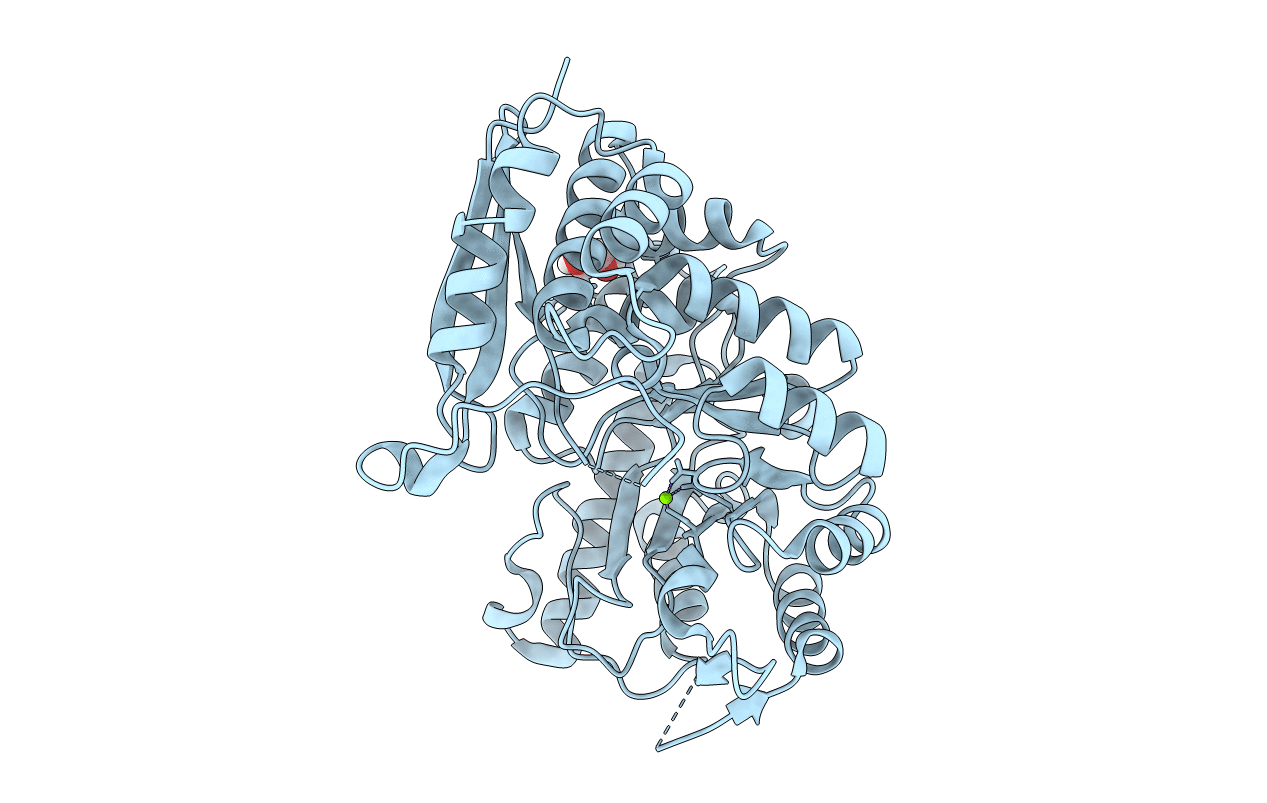
4G7F image
Deposition Date 2012-07-20
Release Date 2012-08-29
Last Version Date 2026-03-04
Entry Detail
PDB ID:
4G7F
Keywords:
Title:
Crystal Structure of Enolase from Trypanosoma Cruzi
Biological Source:
Source Organism(s):
Expression System(s):
Method Details:
Experimental Method:
Resolution:
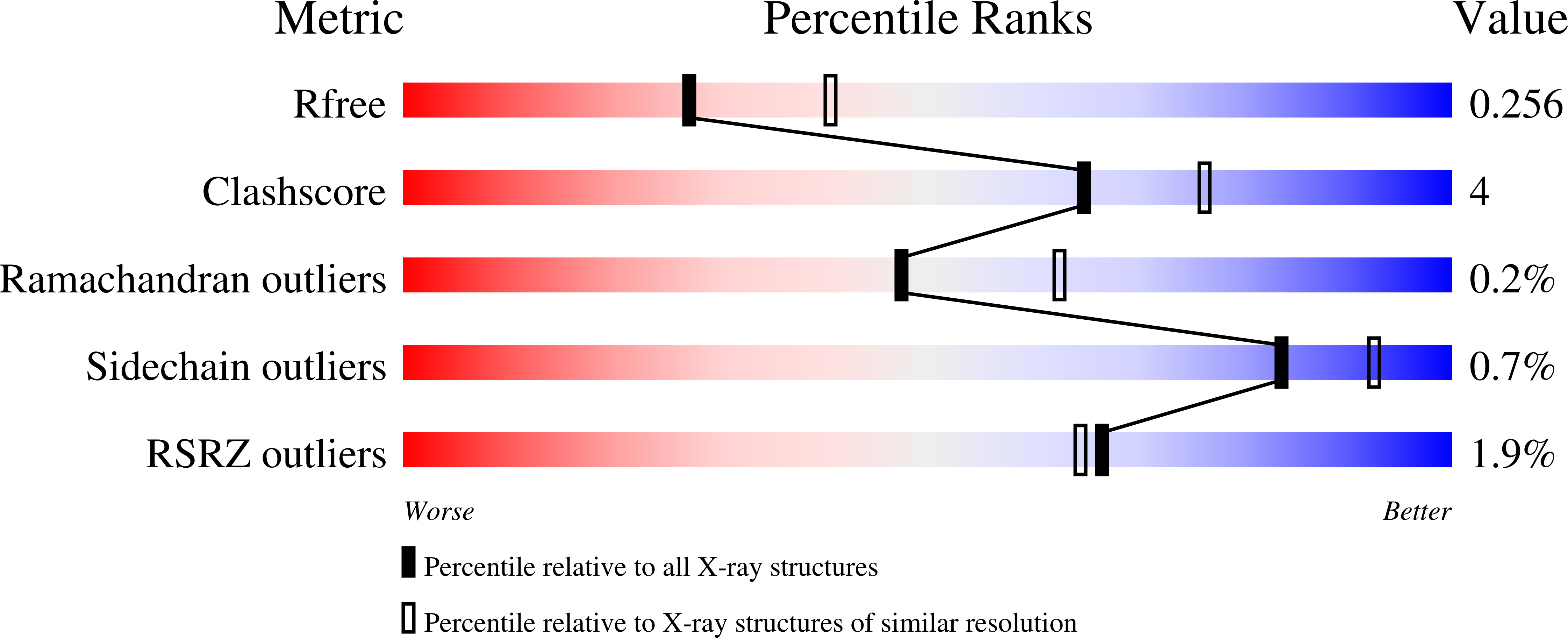
2.40 Å
R-Value Free:
0.25
R-Value Work:
0.18
R-Value Observed:
0.19
Space Group:
C 2 2 21
Macromolecular Entities
Structures with similar UniProt ID
Protein Blast
Polymer Type:polypeptide(L)
Molecule:Enolase
Gene (Uniprot):Tc00.1047053504105.140
Chain IDs:A
Chain Length:429
Number of Molecules:1
Biological Source:Trypanosoma cruzi
Primary Citation
Structural Characterization of Glycolytic Enzymes from Trypanosoma cruzi.
Mol. Biochem. Parasitol. ? 111736 111736 (2026)
PMID: 41713750 DOI: 10.1016/j.molbiopara.2026.111736

Abstact

Trypanosoma cruzi, the etiological agent of Chagas disease, depends on glycolysis for ATP production, rendering its glycolytic enzymes attractive targets for therapeutic development. Here, we report the high-resolution crystal structures of two essential glycolytic enzymes, glucose-6-phosphate isomerase (Tc PGI, 1.8 A) and enolase (Tc enolase, 2.4 A) and provide structural and computational analyses to support structure-based drug design. Tc PGI adopts a dimeric alphabetaalpha sandwich fold and features a parasite-specific 53-residue N-terminal extension and a unique C-terminal hook region which both distinguish it from its human ortholog. Tc enolase exhibits the conserved (alpha/beta) 8 TIM barrel fold but harbors minor distinct structural deviations, including an extended alpha17 helix and a structured alpha1 region, which differentiate it from human isoforms. Both enzymes exhibited high thermal stability, consistent with adaptation to the parasite's complex life cycle. Structure-based virtual screening using a scaffold with known multi-target potential identified distinct high-affinity inhibitors for each enzyme. Molecular dynamics simulations further confirmed stable enzyme-inhibitor interactions and favorable binding energetics. Collectively, these findings reveal structural signatures unique to T. cruzi glycolytic enzymes and lay the groundwork for the development of antiparasitic therapeutics.

Legend

Protein

Chemical

Disease

Primary Citation of related structures
Feedback Form
Name
Email
Institute
Feedback