

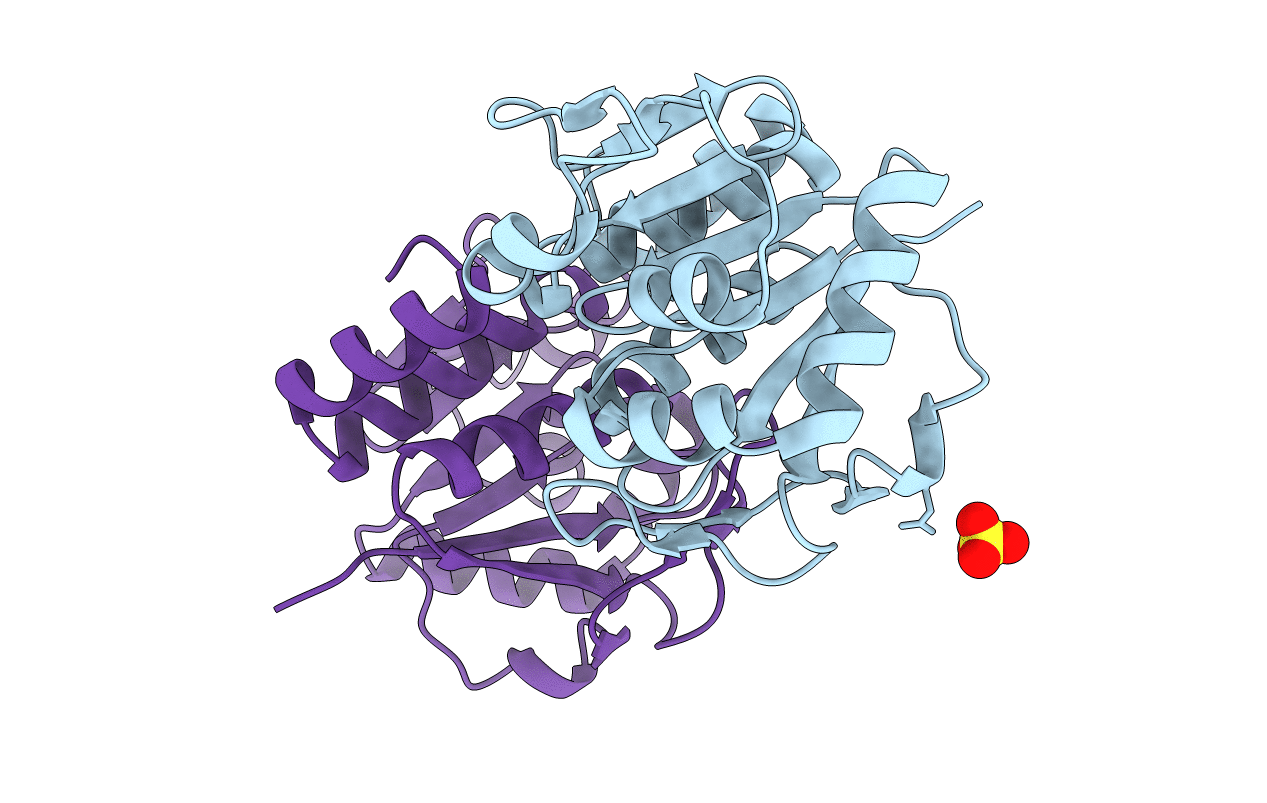
4E08 image
Deposition Date 2012-03-02
Release Date 2012-03-21
Last Version Date 2023-09-13
Entry Detail
PDB ID:
4E08
Keywords:
Title:
Crystal structure of Drosophila melanogaster DJ-1beta
Biological Source:
Source Organism(s):
Expression System(s):
Method Details:
Experimental Method:
Resolution:
2.00 Å
R-Value Free:
0.24
R-Value Work:
0.19
R-Value Observed:
0.19
Space Group:
P 32 2 1

Macromolecular Entities
Polymer Type:polypeptide(L)
Molecule:DJ-1 beta
Gene (Uniprot):dj-1beta
Chain IDs:A, B
Chain Length:190
Number of Molecules:2
Biological Source:Drosophila melanogaster
Ligand Molecules
Primary Citation
Conservation of Oxidative Protein Stabilization in an Insect Homologue of Parkinsonism-Associated Protein DJ-1.
Biochemistry 51 3799 3807 (2012)
PMID: 22515803 DOI: 10.1021/bi3003296

Abstact

DJ-1 is a conserved, disease-associated protein that protects against oxidative stress and mitochondrial damage in multiple organisms. Human DJ-1 contains a functionally essential cysteine residue (Cys106) whose oxidation is important for regulating protein function by an unknown mechanism. This residue is well-conserved in other DJ-1 homologues, including two (DJ-1α and DJ-1β) in Drosophila melanogaster. Because D. melanogaster is a powerful model system for studying DJ-1 function, we have determined the crystal structure and impact of cysteine oxidation on Drosophila DJ-1β. The structure of D. melanogaster DJ-1β is similar to that of human DJ-1, although two important residues in the human protein, Met26 and His126, are not conserved in DJ-1β. His126 in human DJ-1 is substituted with a tyrosine in DJ-1β, and this residue is not able to compose a putative catalytic dyad with Cys106 that was proposed to be important in the human protein. The reactive cysteine in DJ-1 is oxidized readily to the cysteine-sulfinic acid in both flies and humans, and this may regulate the cytoprotective function of the protein. We show that the oxidation of this conserved cysteine residue to its sulfinate form (Cys-SO(2)(-)) results in considerable thermal stabilization of both Drosophila DJ-1β and human DJ-1. Therefore, protein stabilization is one potential mechanism by which cysteine oxidation may regulate DJ-1 function in vivo. More generally, most close DJ-1 homologues are likely stabilized by cysteine-sulfinic acid formation but destabilized by further oxidation, suggesting that they are biphasically regulated by oxidative modification.

Legend

Protein

Chemical

Disease

Primary Citation of related structures
Feedback Form
Name
Email
Institute
Feedback