

4AWX image
Deposition Date 2012-06-06
Release Date 2013-03-06
Last Version Date 2023-12-20
Entry Detail
PDB ID:
4AWX
Keywords:
Title:
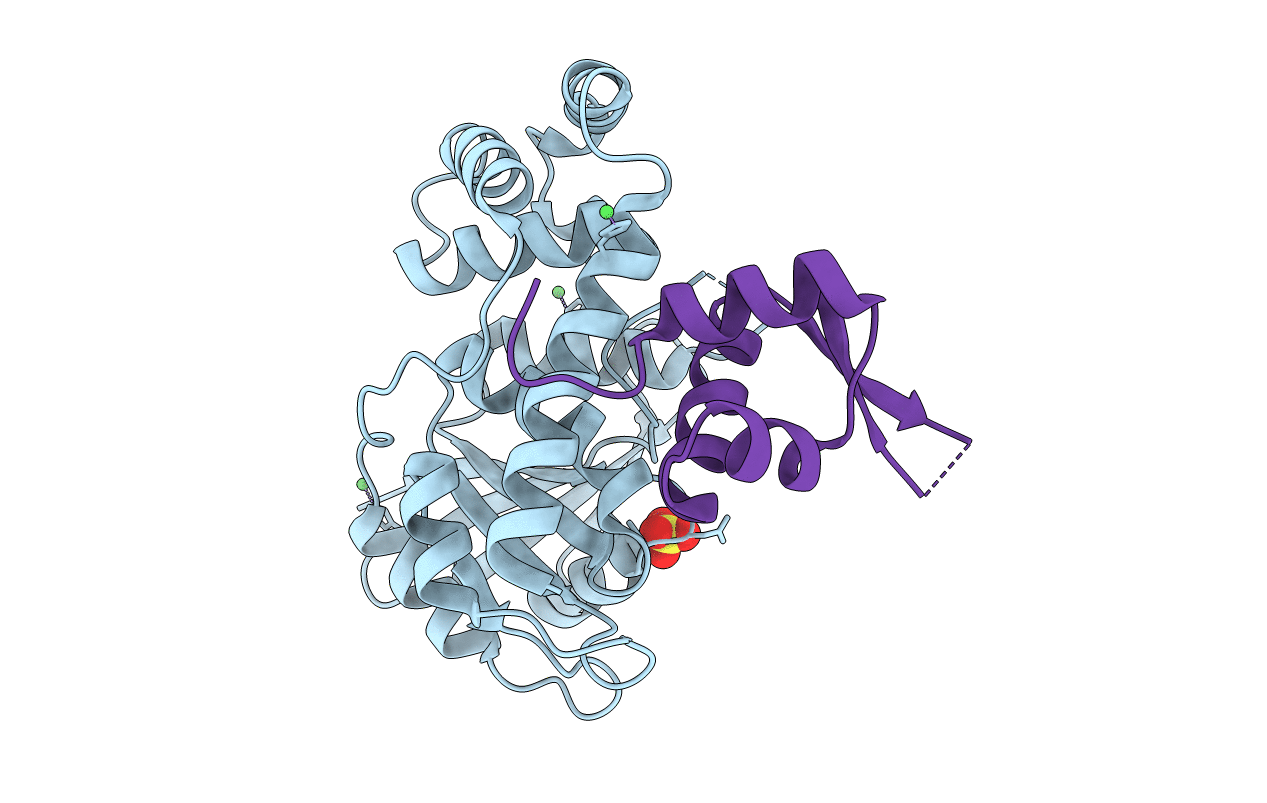
Moonlighting functions of FeoC in the regulation of ferrous iron transport in Feo
Biological Source:
Source Organism(s):
Expression System(s):
Method Details:
Experimental Method:
Resolution:
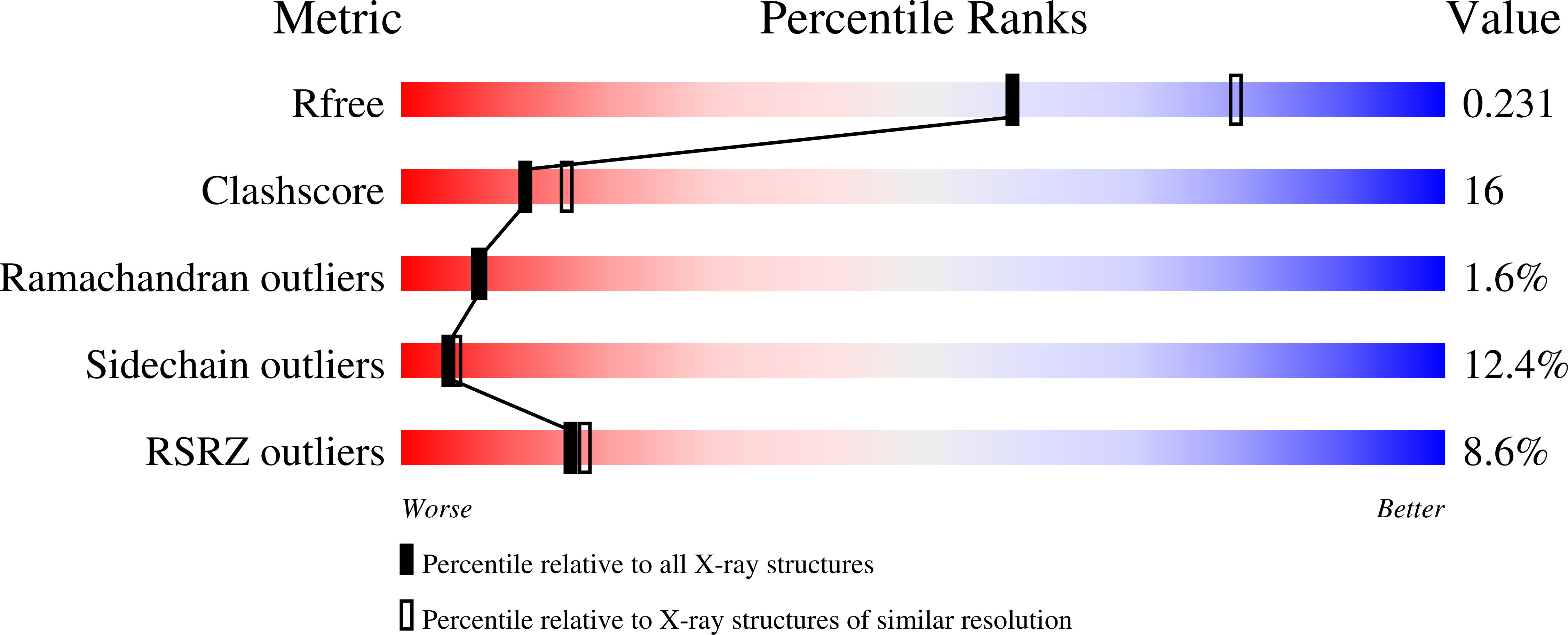
2.30 Å
R-Value Free:
0.22
R-Value Work:
0.21
R-Value Observed:
0.21
Space Group:
P 43
Macromolecular Entities
Polymer Type:polypeptide(L)
Molecule:FERROUS IRON TRANSPORT PROTEI
Chain IDs:A
Chain Length:267
Number of Molecules:1
Biological Source:KLEBSIELLA PNEUMONIAE
Polymer Type:polypeptide(L)
Molecule:FERROUS IRON TRANSPORT PROTEI
Gene (Uniprot):feoC
Chain IDs:B
Chain Length:84
Number of Molecules:1
Biological Source:KLEBSIELLA PNEUMONIAE
Primary Citation
Crystal Structure of the Klebsiella Pneumoniae Nfeob/Feoc Complex and Roles of Feoc in Regulation of Fe2+ Transport by the Bacterial Feo System.
J. Bacteriol. 194 6518 ? (2012)
PMID: 23024345 DOI: 10.1128/JB.01228-12

Abstact

Feo is a transport system commonly used by bacteria to acquire environmental Fe(2+). It consists of three proteins: FeoA, FeoB, and FeoC. FeoB is a large protein with a cytosolic N-terminal domain (NFeoB) that contains a regulatory G protein domain and a helical S domain. The C-terminal region of FeoB is a transmembrane domain that likely acts as the Fe(2+) permease. NFeoB has been shown to form a trimer pore that may function as an Fe(2+) gate. FeoC is a small winged-helix protein that possesses four conserved cysteine residues with a consensus sequence that likely provides binding sites for the [Fe-S] cluster. Therefore, FeoC is presumed to be an [Fe-S] cluster-dependent regulator that directly controls transcription of the feo operon. Despite the apparent significance of the Feo system, however, the function of FeoC has not been experimentally demonstrated. Here, we show that Klebsiella pneumoniae FeoC (KpFeoC) forms a tight complex with the intracellular N-terminal domain of FeoB (KpNFeoB). The crystal structure of the complex reveals that KpFeoC binds to KpNFeoB between the switch II region of the G protein domain and the effector S domain and that the long KpFeoC W1 loop lies above the KpNFeoB nucleotide-binding site. These interactions suggest that KpFeoC modulates the guanine nucleotide-mediated signal transduction process. Moreover, we showed that binding of KpFeoC disrupts pore formation by interfering with KpNFeoB trimerization. These results provide strong evidence suggesting that KpFeoC plays a crucial role in regulating Fe(2+) transport in Klebsiella pneumonia in addition to the presumed gene regulator role.

Legend

Protein

Chemical

Disease

Primary Citation of related structures
Feedback Form
Name
Email
Institute
Feedback