

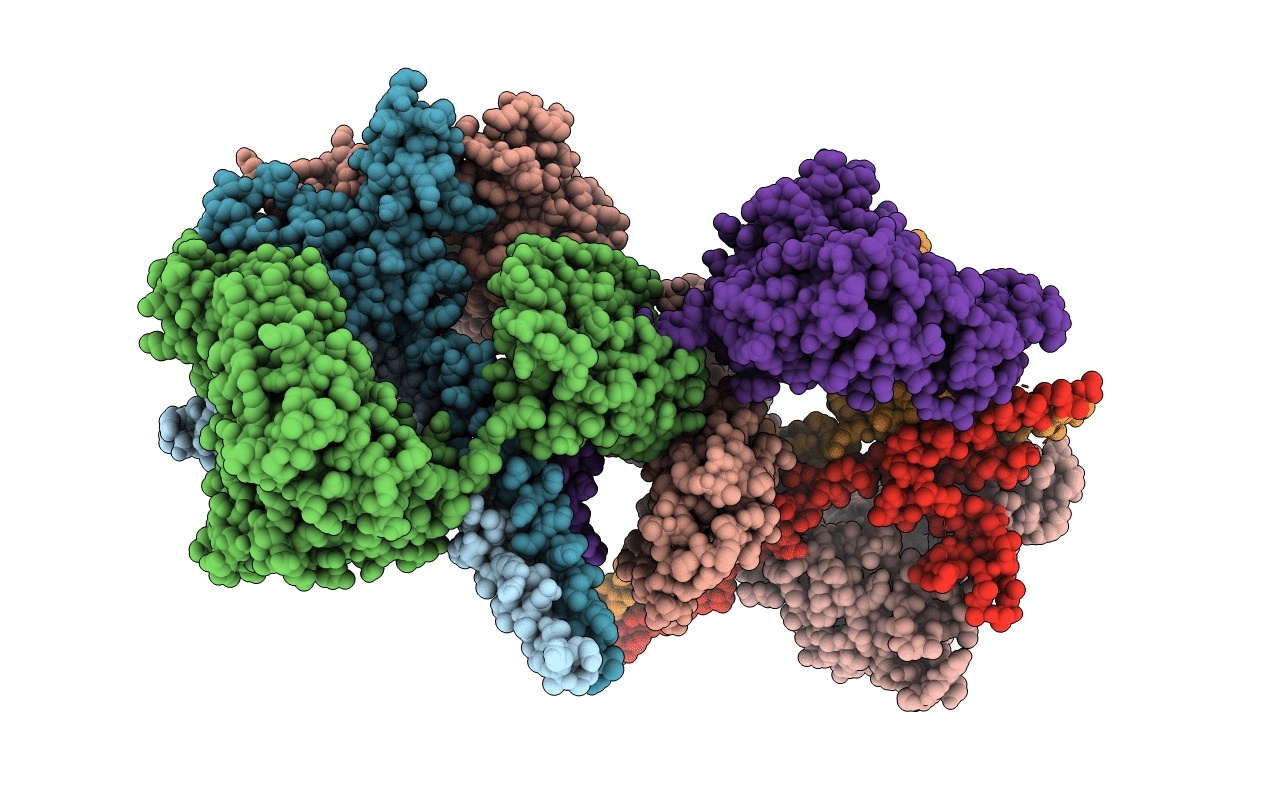
4ANI image
Deposition Date 2012-03-19
Release Date 2012-05-23
Last Version Date 2024-05-08
Entry Detail
PDB ID:
4ANI
Keywords:
Title:
Structural basis for the intermolecular communication between DnaK and GrpE in the DnaK chaperone system from Geobacillus kaustophilus HTA426
Biological Source:
Source Organism(s):
Expression System(s):
Method Details:
Experimental Method:
Resolution:
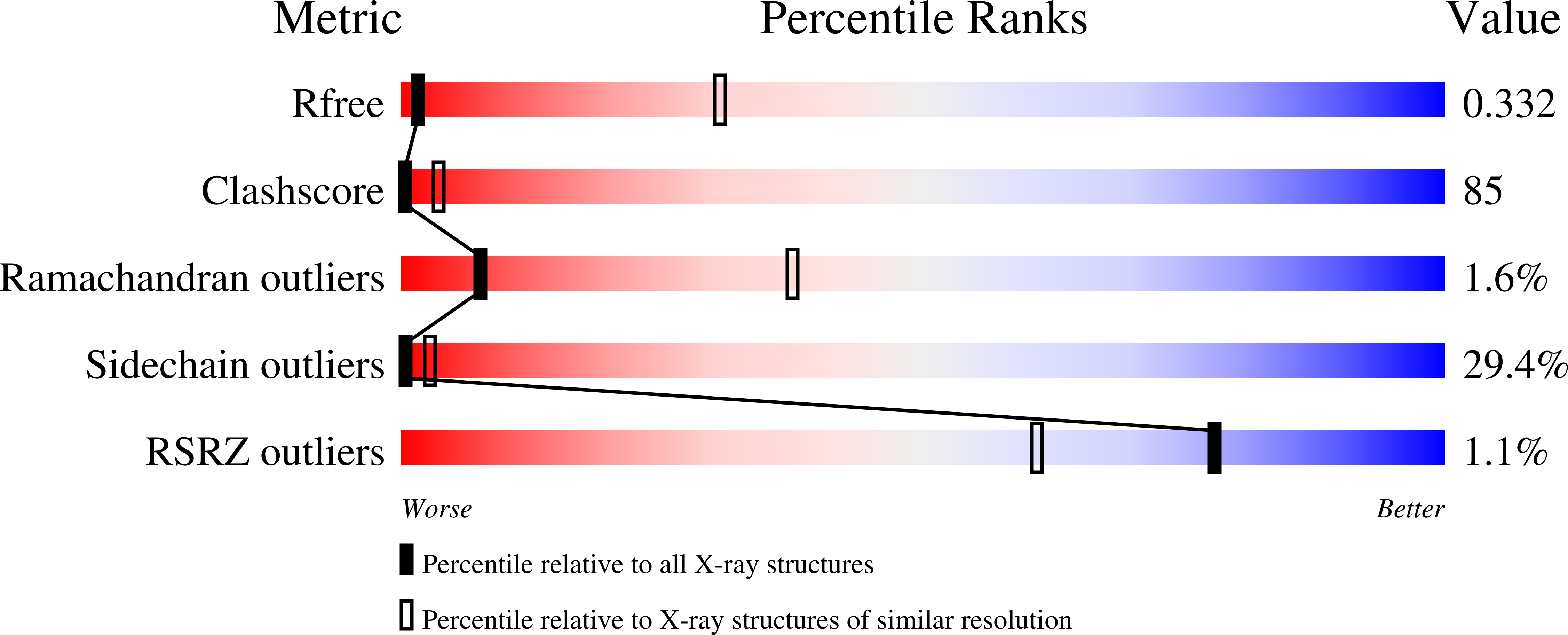
4.09 Å
R-Value Free:
0.34
R-Value Work:
0.27
R-Value Observed:
0.27
Space Group:
I 41 2 2
Macromolecular Entities
Polymer Type:polypeptide(L)
Molecule:PROTEIN GRPE
Gene (Uniprot):grpE
Chain IDs:A, B, E, F
Chain Length:0
Number of Molecules:4
Biological Source:GEOBACILLUS KAUSTOPHILUS
Polymer Type:polypeptide(L)
Molecule:CHAPERONE PROTEIN DNAK
Gene (Uniprot):dnaK
Chain IDs:C, D, G, H
Chain Length:0
Number of Molecules:4
Biological Source:GEOBACILLUS KAUSTOPHILUS
Ligand Molecules
Primary Citation
Crystal Structure of Dnak Protein Complexed with Nucleotide Exchange Factor Grpe in Dnak Chaperone System: Insight Into Intermolecular Communication.
J. Biol. Chem. 287 21461 ? (2012)
PMID: 22544739 DOI: 10.1074/JBC.M112.344358

Abstact

The conserved, ATP-dependent bacterial DnaK chaperones process client substrates with the aid of the co-chaperones DnaJ and GrpE. However, in the absence of structural information, how these proteins communicate with each other cannot be fully delineated. For the study reported here, we solved the crystal structure of a full-length Geobacillus kaustophilus HTA426 GrpE homodimer in complex with a nearly full-length G. kaustophilus HTA426 DnaK that contains the interdomain linker (acting as a pseudo-substrate), and the N-terminal nucleotide-binding and C-terminal substrate-binding domains at 4.1-Å resolution. Each complex contains two DnaKs and two GrpEs, which is a stoichiometry that has not been found before. The long N-terminal GrpE α-helices stabilize the linker of DnaK in the complex. Furthermore, interactions between the DnaK substrate-binding domain and the N-terminal disordered region of GrpE may accelerate substrate release from DnaK. These findings provide molecular mechanisms for substrate binding, processing, and release during the Hsp70 chaperone cycle.

Legend

Protein

Chemical

Disease

Primary Citation of related structures
Feedback Form
Name
Email
Institute
Feedback