

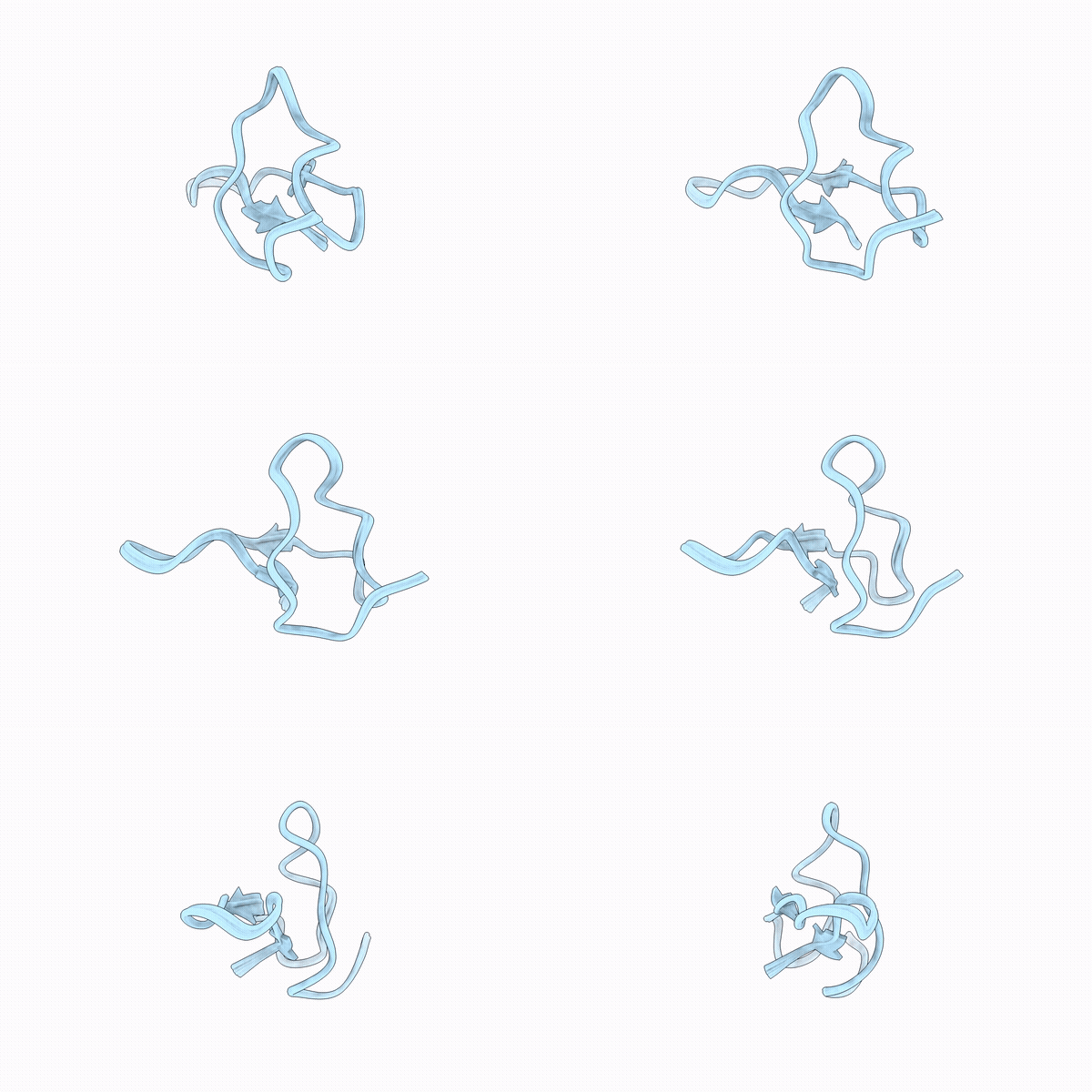
45JF image
Deposition Date 2026-08-31
Release Date 2026-10-14
Last Version Date 2026-10-21
Entry Detail
PDB ID:
45JF
Title:
Discovery of Ribosomally Synthesized and Post-translationally Modified Knottin from the Deep-Sea Sponge Stryphnus fortis
Biological Source:
Source Organism(s):
Method Details:
Experimental Method:
Conformers Calculated:
50
Conformers Submitted:
20
Selection Criteria:
structures with the least restraint violations
Macromolecular Entities
Structural Superimposition Protein Blast
Polymer Type:polypeptide(L)
Molecule:Stryphnine A
Chain IDs:A
Chain Length:32
Number of Molecules:1
Biological Source:Stryphnus fortis
Ligand Molecules
Primary Citation
Discovery of Ribosomally Synthesized and Post-translationally Modified Knottins from the Deep-Sea Sponge Stryphnus fortis .
J.Nat.Prod. 89 2118 2132 (2026)
PMID: 42261690 DOI: 10.1021/acs.jnatprod.6c00501

Abstact

Knottins are stable, structurally constrained mini-proteins with diverse bioactivities. This work presents the first report of a novel family of knottins, 'stryphnines', from the deep-sea sponge Stryphnus fortis. Peptidomic and transcriptomic analysis revealed a rich peptide repertoire and confirmed their ribosomal and sponge origin. This led to the isolation of two novel knottins containing a side-chain to side-chain ester linkage between serine 10/11 and glutamic acid 29/30, respectively, alongside one of their counterpart peptides devoid of the ester bond. The cryptic ester linkage was difficult to resolve due to beta-elimination occurring at the serine side-chain ester. However, a combination of NMR, pH incubation studies, and MS/MS analysis facilitated their complete identification. Both stryphnines with and without the ester linkage exhibited no cytotoxicity and genotoxicity to mammalian cells. In contrast, stryphnines with the ester linkage strongly inhibited biofouling by barnacle larvae Amphibalanus improvisus and inhibited bacterial sialidase from Clostridium perfringens. The core knottin framework remained extremely stable in human serum at physiological conditions, despite ester bond hydrolysis occurring at high temperature and different pH treatments. The positive attributes of nontoxicity and biological stability, alongside demonstrated bioactivities, open up opportunities to further investigate the true ecological role and biosynthetic mechanisms of stryphnines.

Legend

Protein

Chemical

Disease

Primary Citation of related structures
Feedback Form
Name
Email
Institute
Feedback