

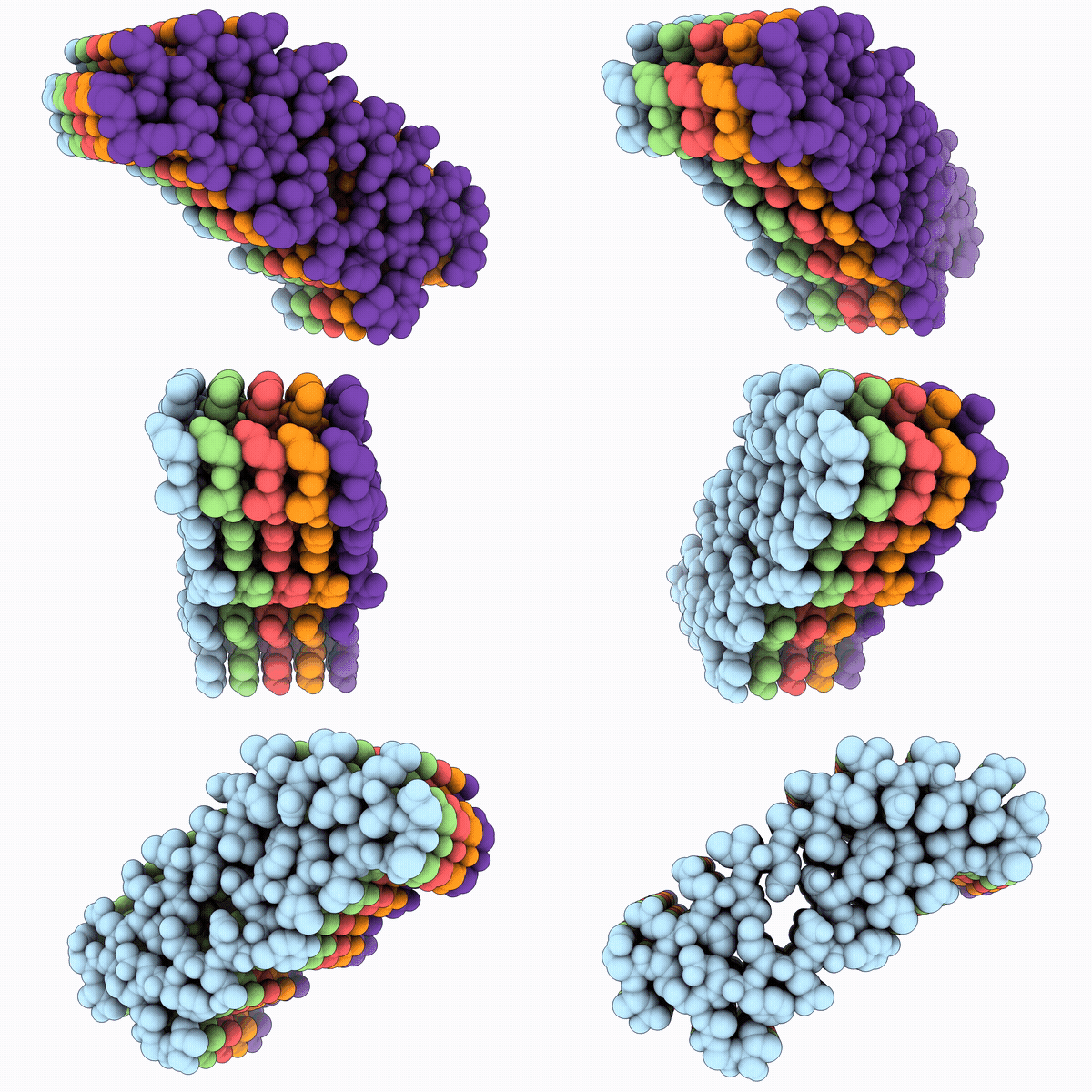
44ZG image
Deposition Date 2026-08-19
Release Date 2026-10-07
Last Version Date 2026-10-07
Entry Detail
PDB ID:
44ZG
Keywords:
Title:
Sunflower protein amyloid fibrils - PM2
Biological Source:
Source Organism(s):
Expression System(s):
Method Details:
Experimental Method:
Resolution:
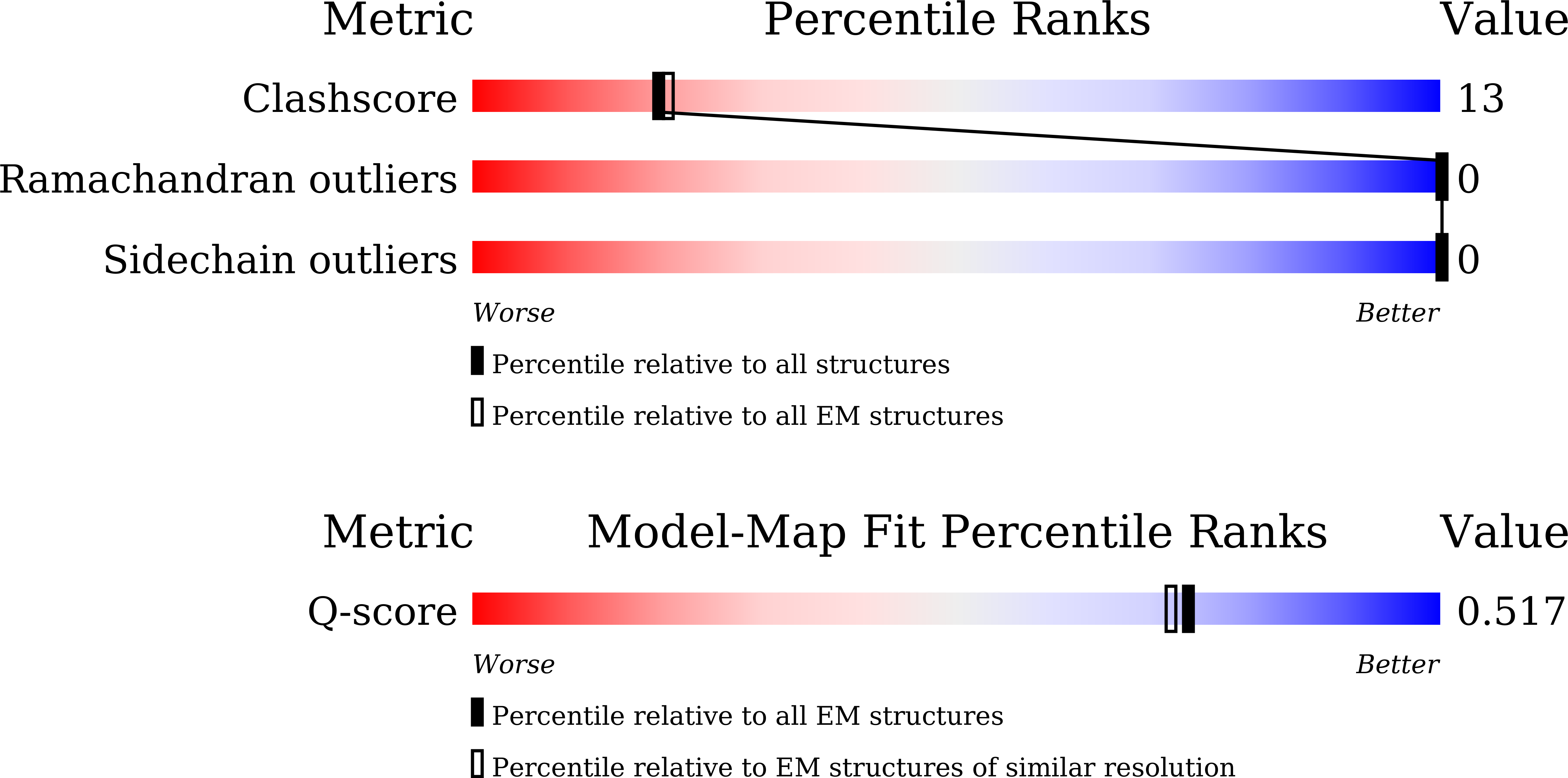
3.20 Å
Aggregation State:
FILAMENT
Reconstruction Method:
HELICAL
Macromolecular Entities
Polymer Type:polypeptide(L)
Molecule:11-S seed storage protein, pl
Gene (Uniprot):HannXRQ_Chr10g0288971, HannXRQ_Chr10g0301281, HanXRQr2_Chr10g0447881, HanXRQr2_Chr10g0447931
Chain IDs:A, B, C, D, E
Chain Length:39
Number of Molecules:5
Biological Source:Helianthus annuus
Ligand Molecules
Primary Citation
Cryo-EM Structures of Sunflower Amyloid Fibrils Reveal Two Distinct Disulfide‐Linked Assembly Modes.
Small ? e75987 e75987 (2026)
PMID: 42801496 DOI: 10.1002/smll.75987

Abstact

Sunflower meal is an abundant but underutilized plant protein source. Recent studies have demonstrated that its amyloid fibrils exhibit exceptional functional properties, yet the atomic-level structural basis remains unknown. The first cryo‑electron microscopy (cryo‑EM) structures of sunflower amyloid fibrils prepared under acidic heating conditions are presented. Two distinct polymorphs (PM1 and PM2) are resolved at 3.05 and 3.18 A, respectively. They differ markedly in both helical half-pitch (389 A for PM1 vs. 1087 A for PM2) and handedness (left-handed for PM1 vs. right-handed for PM2). High-resolution atomic modeling reveals that they adopt distinct assembly modes. PM1 is assembled from the acidic (Leu94-Phe115) and basic (Val333-Phe344) subunits of 11S globulin, covalently linked by an inter-subunit disulfide bond (Cys111-Cys338); whereas PM2 is formed by an acidic-subunit segment (Asn30-Val68) and stabilized by an intra-subunit disulfide bond (Cys32-Cys65). Comparison of the PM1 structure with the apricot globulin fibril reveals divergent assembly strategies, most strikingly an opposite orientation of the basic subunit relative to the acidic fragment despite high sequence homology. These structural insights provide a molecular foundation for understanding and engineering sunflower amyloid fibrils for diverse applications in food, agriculture, and nanotechnology.

Legend

Protein

Chemical

Disease

Primary Citation of related structures
Feedback Form
Name
Email
Institute
Feedback