

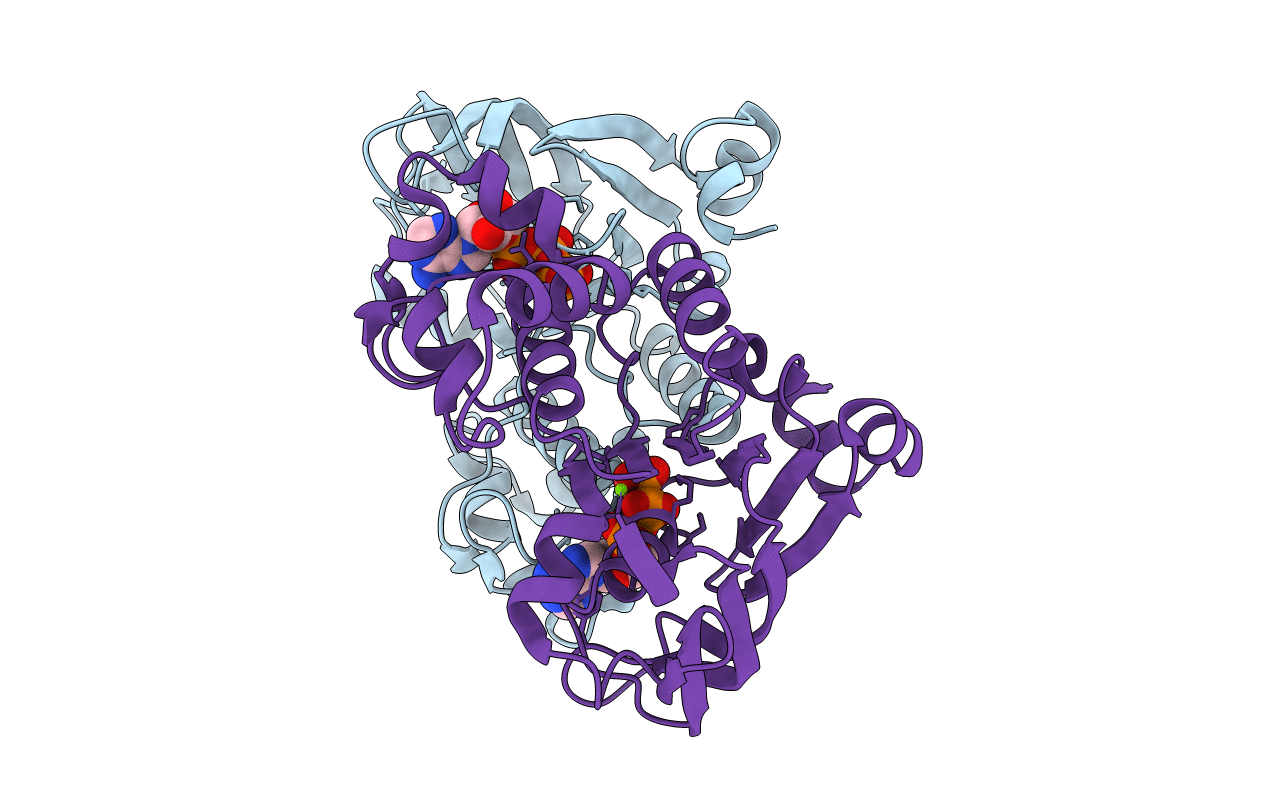
3VX4 image
Deposition Date 2012-09-11
Release Date 2013-04-17
Last Version Date 2023-11-08
Entry Detail
PDB ID:
3VX4
Title:
Crystal Structure of the Nucleotide-Binding Domain of S. mutans ComA, a Bifunctional ATP-binding Cassette Transporter Involved in the Quorum-sensing Pathway
Biological Source:
Source Organism(s):
Expression System(s):
Method Details:
Experimental Method:
Resolution:
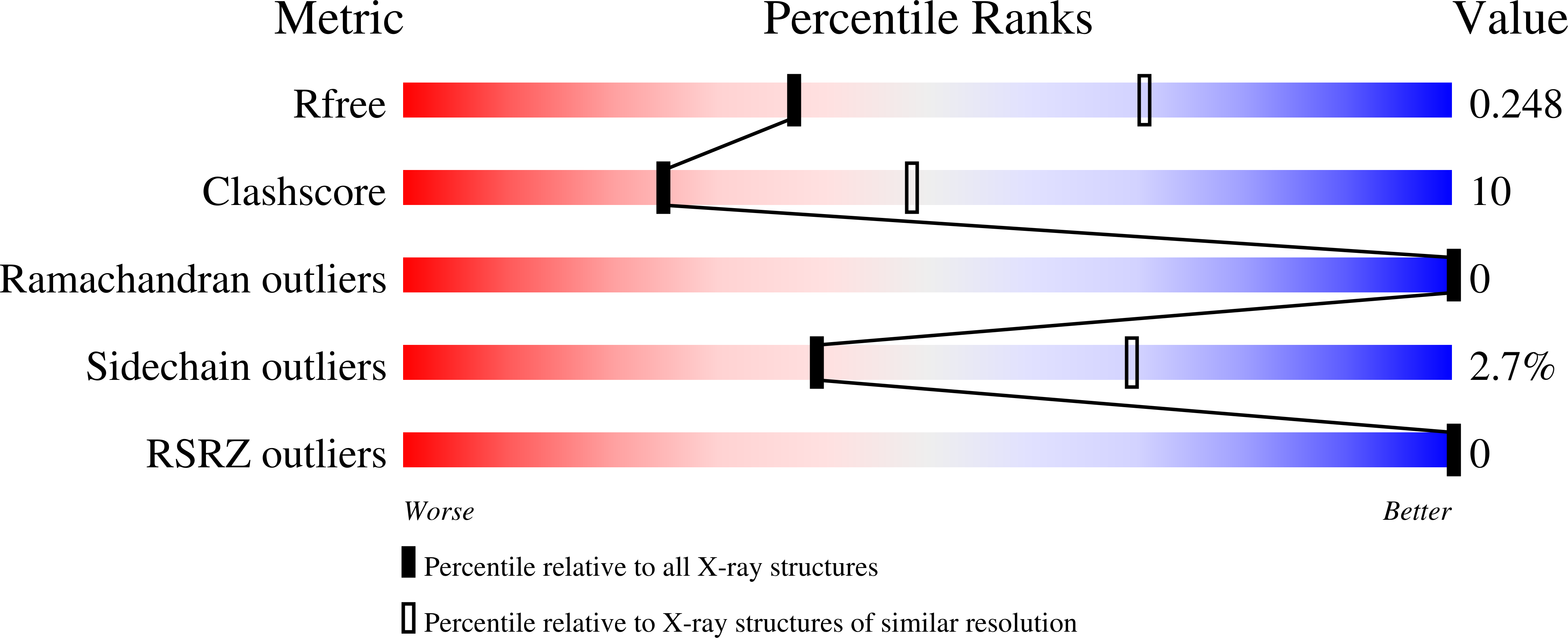
2.69 Å
R-Value Free:
0.24
R-Value Work:
0.19
R-Value Observed:
0.19
Space Group:
P 62
Macromolecular Entities
Polymer Type:polypeptide(L)
Molecule:Putative ABC transporter, ATP
Gene (Uniprot):SMU_286
Mutagens:E690A
Chain IDs:A, B (auth: D)
Chain Length:273
Number of Molecules:2
Biological Source:Streptococcus mutans
Primary Citation
Boundary of the Nucleotide-Binding Domain of Streptococcus ComA Based on Functional and Structural Analysis
Biochemistry 52 2545 2555 (2013)
PMID: 23534432 DOI: 10.1021/bi3017069

Abstact

The ATP-binding cassette (ABC) transporter ComA is a key molecule essential for the first step of the quorum-sensing system of Streptococcus. The nucleotide binding domains (NBD) of Streptococcus mutans ComA with different N termini, NBD1 (amino acid residues 495-760), NBD2 (517-760), and NBD3 (528-760), were expressed, purified, and characterized. The shortest NBD3 corresponds to the region commonly defined as NBD in the database searches of ABC transporters. A kinetic analysis showed that the extra N-terminal region conferred a significantly higher ATP hydrolytic activity on the NBD at a neutral pH. Gel-filtration, X-ray crystallography, and mutational analyses suggest that at least four to five residues beyond the N-terminal boundary of NBD3 indeed participate in stabilizing the protein scaffold of the domain structure, thereby facilitating the ATP-dependent dimerization of NBD which is a prerequisite to the catalysis. These findings, together with the presence of a highly conserved glycine residue in this region, support the redefinition of the N-terminal boundary of the NBD of these types of ABC exporters.

Legend

Protein

Chemical

Disease

Primary Citation of related structures
Feedback Form
Name
Email
Institute
Feedback