

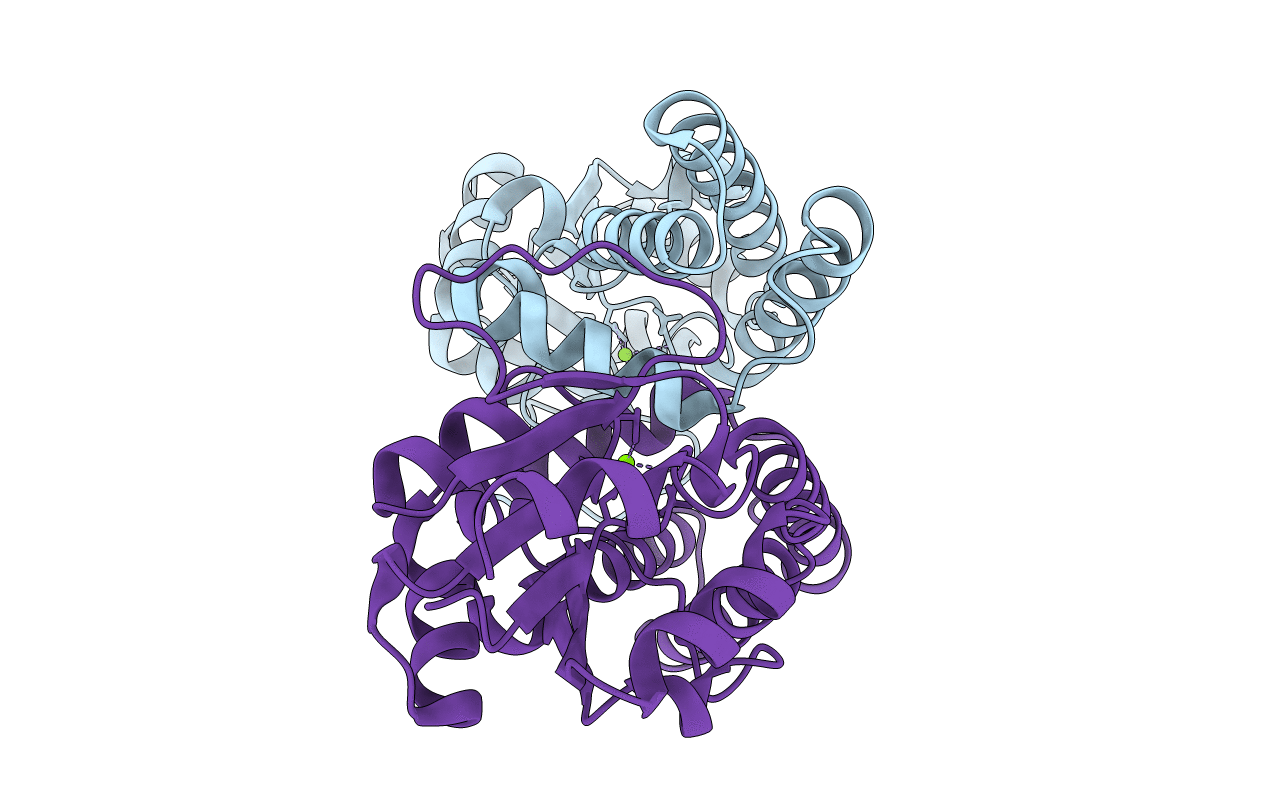
3VAY image
Deposition Date 2011-12-30
Release Date 2013-01-02
Last Version Date 2024-03-20
Entry Detail
PDB ID:
3VAY
Keywords:
Title:
Crystal structure of 2-Haloacid Dehalogenase from Pseudomonas syringae pv. Tomato DC3000
Biological Source:
Source Organism(s):
Expression System(s):
Method Details:
Experimental Method:
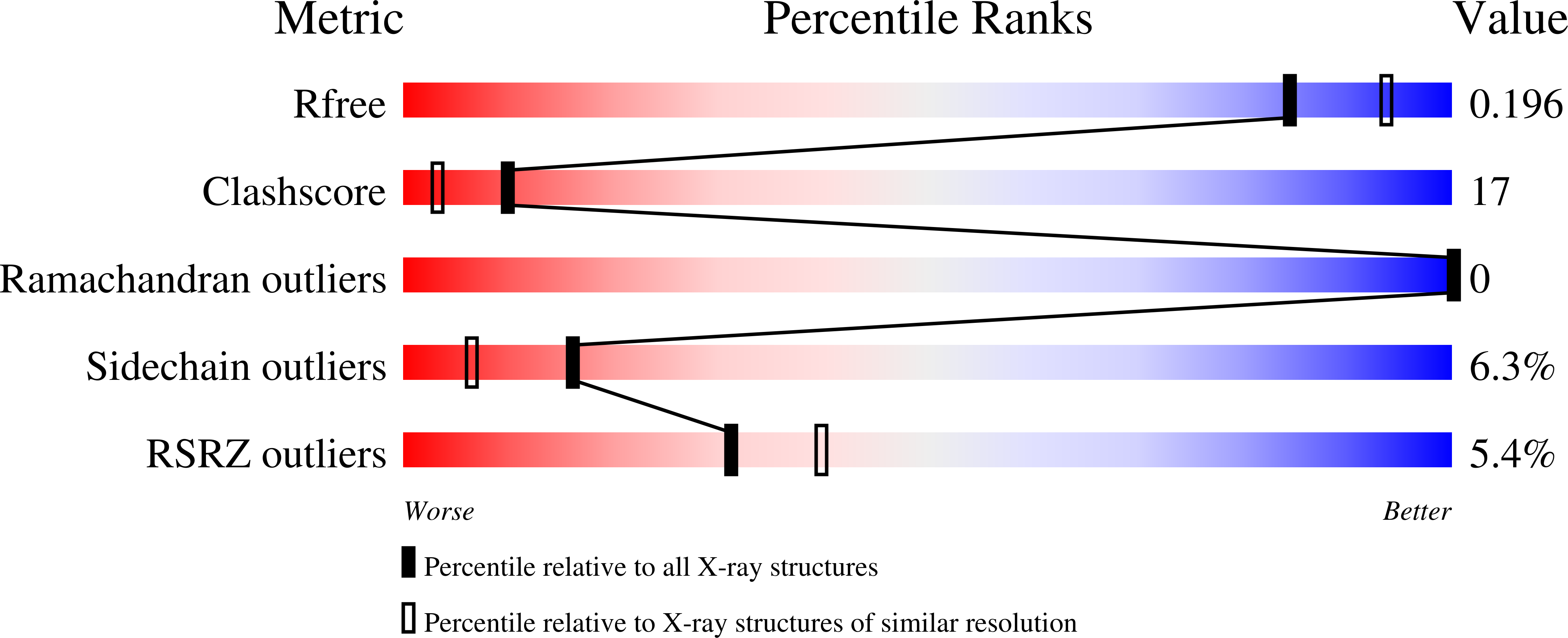
Resolution:
1.98 Å
R-Value Free:
0.22
R-Value Work:
0.19
R-Value Observed:
0.19
Space Group:
P 1 21 1
Macromolecular Entities
Polymer Type:polypeptide(L)
Molecule:HAD-superfamily hydrolase
Gene (Uniprot):PSPTO_0221
Chain IDs:A, B
Chain Length:230
Number of Molecules:2
Biological Source:Pseudomonas syringae pv. tomato
Primary Citation
Structure of 2-haloacid dehalogenase from Pseudomonas syringae pv. tomato DC3000
Acta Crystallogr. D Biol. Crystallogr. 69 1108 1114 (2013)
PMID: 23695255 DOI: 10.1107/S0907444913006021

Abstact

2-Haloacid dehalogenases (2-HADs) catalyse the hydrolytic dehalogenation of 2-haloalkanoic acids, cleaving the carbon-halide bond at the C(α)-atom position and releasing a halogen atom. These enzymes are of interest for their potential use in bioremediation and in the synthesis of industrial chemicals. Here, the crystal structure of 2-HAD from Pseudomonas syringae pv. tomato DC3000 (ps-2-HAD) at 1.98 Å resolution solved using the single-wavelength anomalous dispersion method is reported. The ps-2-HAD molecule consists of two structurally distinct domains: the core domain and the subdomain. Enzymatic activity analysis of ps-2-HAD revealed its capacity to catalyse the dehalogenation of both L- and D-substrates; however, the structure of ps-2-HAD is completely different from that of DehI, which is the only DL-2-HAD enzyme that has been structurally characterized, but shows similar overall folding to L-HADs. Single mutations of four amino-acid residues at the putative active site showed that they are related to its enzymatic activity, yet three of them are nonconserved among HADs. These observations imply that ps-2-HAD has a novel active site and a unique catalytic behaviour compared with other HADs. This study provides a structural basis and biochemical evidence for further elucidation of the catalytic mechanism of 2-HAD.

Legend

Protein

Chemical

Disease

Primary Citation of related structures
Feedback Form
Name
Email
Institute
Feedback