

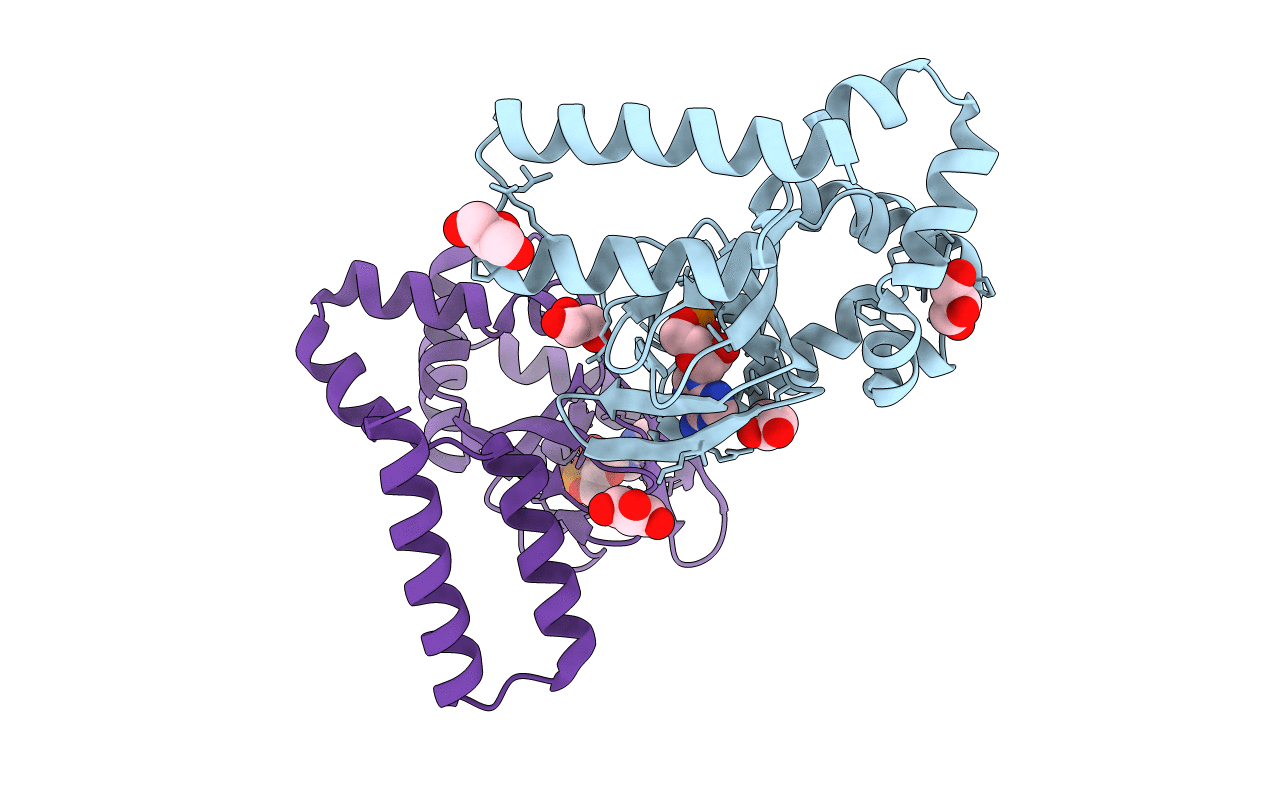
3U11 image
Deposition Date 2011-09-29
Release Date 2011-10-26
Last Version Date 2024-10-30
Entry Detail
PDB ID:
3U11
Title:
Tetramerization dynamics of the C-terminus underlies isoform-specific cAMP-gating in HCN channels
Biological Source:
Source Organism(s):
Homo sapiens (Taxon ID: 9606)
Expression System(s):
Method Details:
Experimental Method:
Resolution:
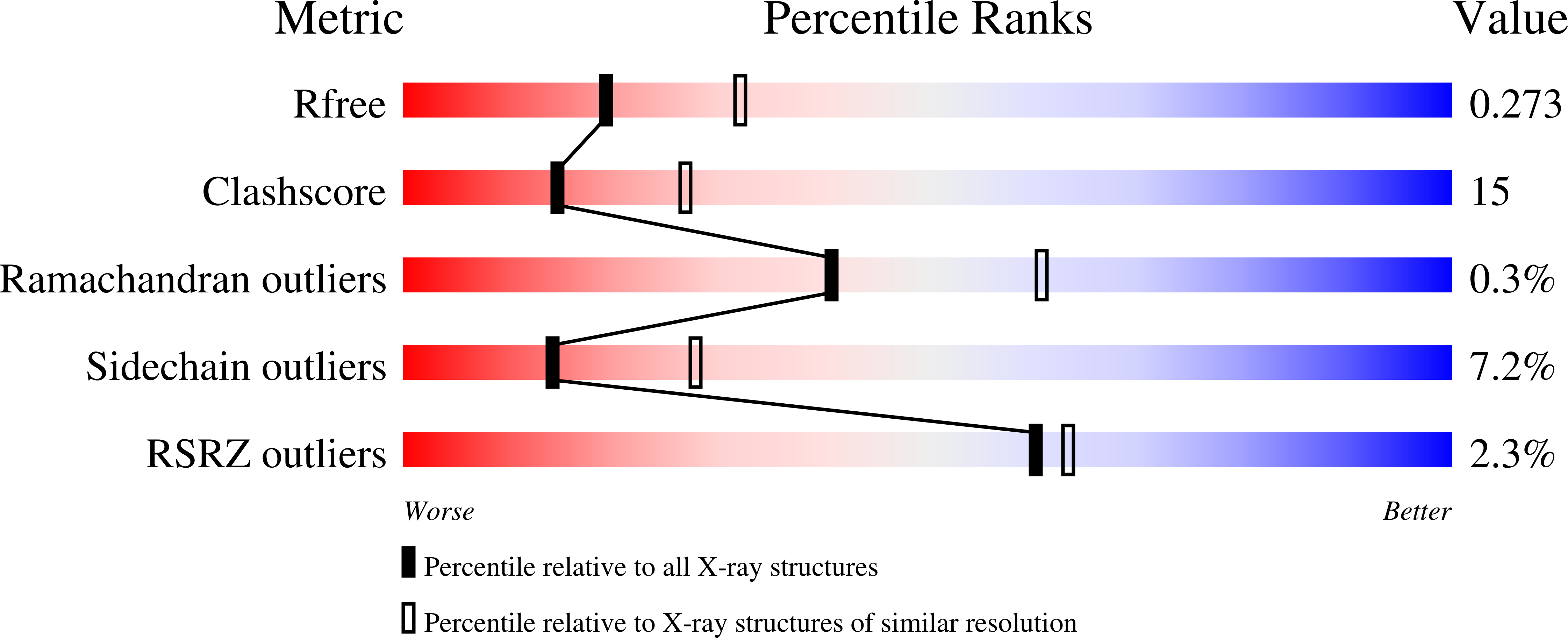
2.50 Å
R-Value Free:
0.27
R-Value Work:
0.19
R-Value Observed:
0.19
Space Group:
P 4
Macromolecular Entities
Structures with similar UniProt ID
Protein Blast
Polymer Type:polypeptide(L)
Molecule:Potassium/sodium hyperpolariz
Gene (Uniprot):HCN4
Chain IDs:A, B
Chain Length:210
Number of Molecules:2
Biological Source:Homo sapiens
Modified Residue
Compound ID Chain ID Parent Comp ID Details 2D Image
CSO A CYS S-HYDROXYCYSTEINE
Primary Citation
Tetramerization dynamics of C-terminal domain underlies isoform-specific cAMP gating in hyperpolarization-activated cyclic nucleotide-gated channels.
J. Biol. Chem. 286 44811 44820 (2011)
PMID: 22006928 DOI: 10.1074/jbc.M111.297606

Abstact

Hyperpolarization-activated cyclic nucleotide-gated (HCN) channels are dually activated by hyperpolarization and binding of cAMP to their cyclic nucleotide binding domain (CNBD). HCN isoforms respond differently to cAMP; binding of cAMP shifts activation of HCN2 and HCN4 by 17 mV but shifts that of HCN1 by only 2-4 mV. To explain the peculiarity of HCN1, we solved the crystal structures and performed a biochemical-biophysical characterization of the C-terminal domain (C-linker plus CNBD) of the three isoforms. Our main finding is that tetramerization of the C-terminal domain of HCN1 occurs at basal cAMP concentrations, whereas those of HCN2 and HCN4 require cAMP saturating levels. Therefore, HCN1 responds less markedly than HCN2 and HCN4 to cAMP increase because its CNBD is already partly tetrameric. This is confirmed by voltage clamp experiments showing that the right-shifted position of V(½) in HCN1 is correlated with its propensity to tetramerize in vitro. These data underscore that ligand-induced CNBD tetramerization removes tonic inhibition from the pore of HCN channels.

Legend

Protein

Chemical

Disease

Primary Citation of related structures
Feedback Form
Name
Email
Institute
Feedback