

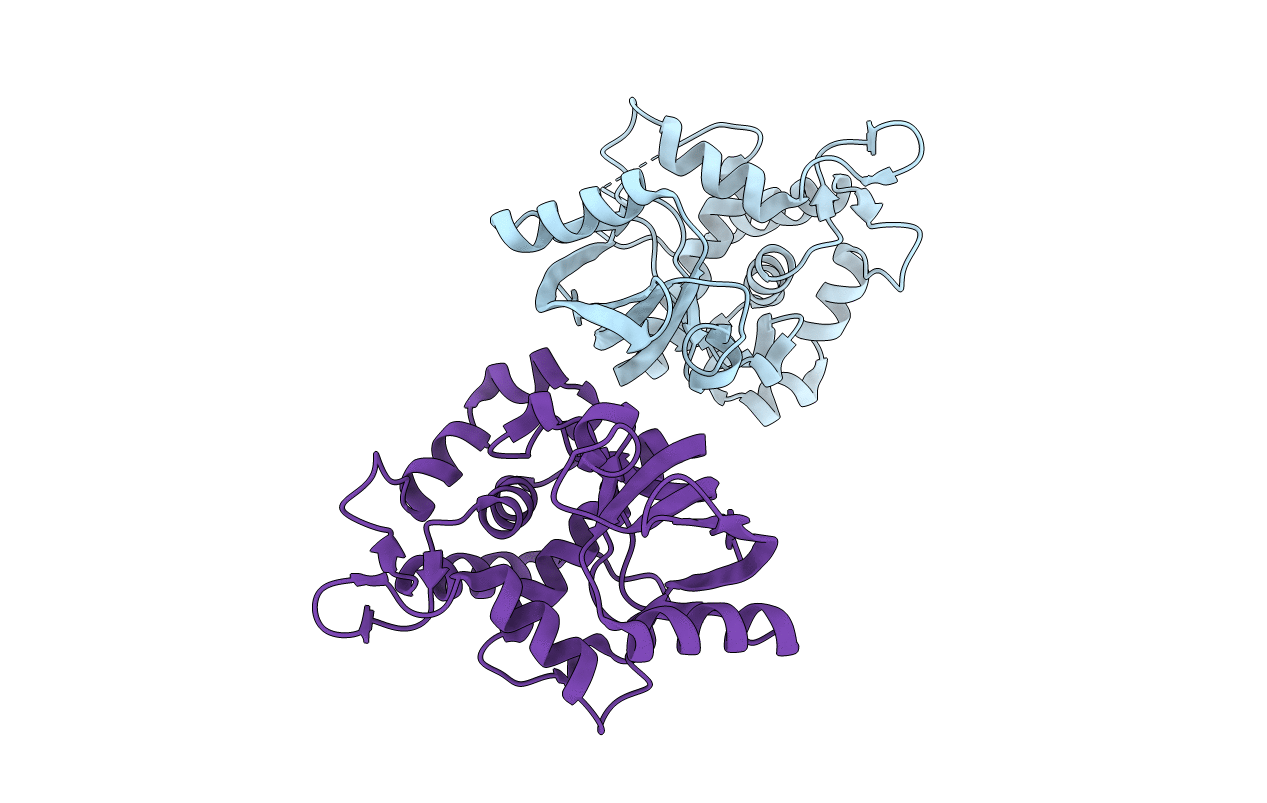
3U0J image
Deposition Date 2011-09-28
Release Date 2011-11-02
Last Version Date 2024-03-20
Entry Detail
PDB ID:
3U0J
Keywords:
Title:
Crystal structure of ADP-ribosyltransferase HopU1 of Pseudomonas syringae pv. Tomato DC3000
Biological Source:
Source Organism(s):
Expression System(s):
Method Details:
Experimental Method:
Resolution:
2.70 Å
R-Value Free:
0.21
R-Value Work:
0.17
R-Value Observed:
0.18
Space Group:
P 43

Macromolecular Entities
Polymer Type:polypeptide(L)
Molecule:Type III effector HopU1
Gene (Uniprot):hopU1
Chain IDs:A (auth: B), B (auth: A)
Chain Length:270
Number of Molecules:2
Biological Source:Pseudomonas syringae pv. tomato
Primary Citation
Structure function analysis of an ADP-ribosyltransferase type III effector and its RNA-binding target in plant immunity
J. Biol. Chem. 286 43272 43281 (2011)
PMID: 22013065 DOI: 10.1074/jbc.M111.290122

Abstact

The Pseudomonas syringae type III effector HopU1 is a mono-ADP-ribosyltransferase that is injected into plant cells by the type III protein secretion system. Inside the plant cell it suppresses immunity by modifying RNA-binding proteins including the glycine-rich RNA-binding protein GRP7. The crystal structure of HopU1 at 2.7-Å resolution reveals two unique protruding loops, L1 and L4, not found in other mono-ADP-ribosyltransferases. Site-directed mutagenesis demonstrates that these loops are essential for substrate recognition and enzymatic activity. HopU1 ADP-ribosylates the conserved arginine 49 of GRP7, and this reduces the ability of GRP7 to bind RNA in vitro. In vivo, expression of GRP7 with Arg-49 replaced with lysine does not complement the reduced immune responses of the Arabidopsis thaliana grp7-1 mutant demonstrating the importance of this residue for GRP7 function. These data provide mechanistic details how HopU1 recognizes this novel type of substrate and highlights the role of GRP7 in plant immunity.

Legend

Protein

Chemical

Disease

Primary Citation of related structures
Feedback Form
Name
Email
Institute
Feedback