

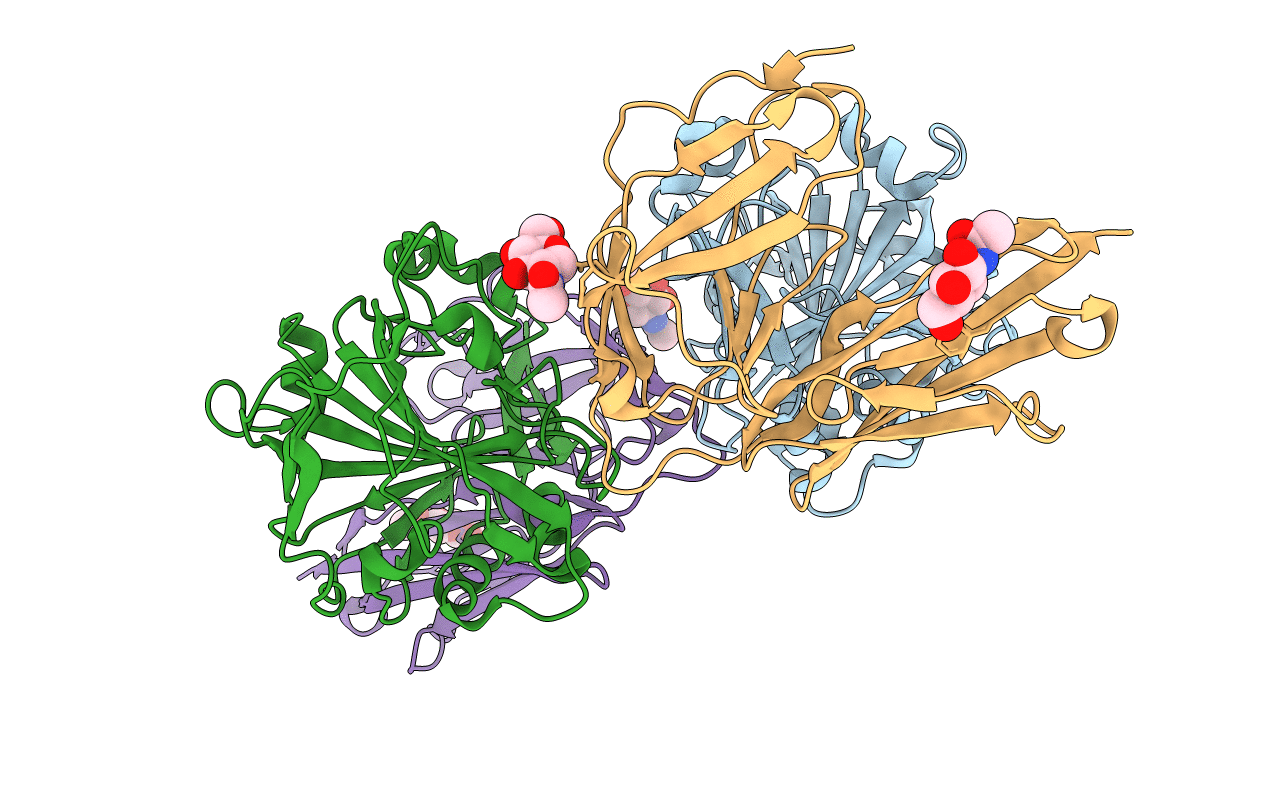
3S97 image
Deposition Date 2011-05-31
Release Date 2011-09-28
Last Version Date 2024-11-06
Entry Detail
PDB ID:
3S97
Keywords:
Title:
PTPRZ CNTN1 complex
Biological Source:
Source Organism(s):
Homo sapiens (Taxon ID: 9606)
Expression System(s):
Method Details:
Experimental Method:
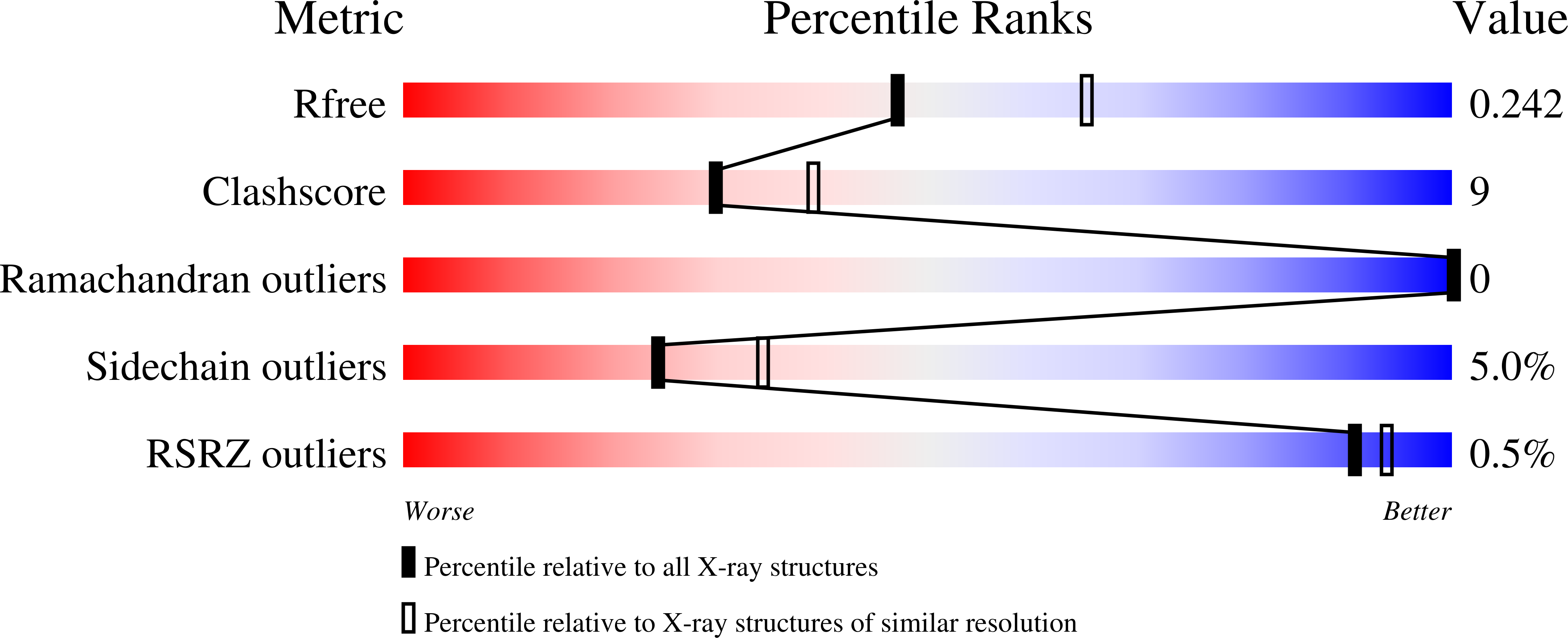
Resolution:
2.30 Å
R-Value Free:
0.25
R-Value Work:
0.20
R-Value Observed:
0.20
Space Group:
C 1 2 1
Macromolecular Entities
Structures with similar UniProt ID
Protein Blast
Polymer Type:polypeptide(L)
Molecule:Receptor-type tyrosine-protei
Gene (Uniprot):PTPRZ1
Chain IDs:A, B
Chain Length:273
Number of Molecules:2
Biological Source:Homo sapiens
Structures with similar UniProt ID
Protein Blast
Polymer Type:polypeptide(L)
Molecule:Contactin-1
Gene (Uniprot):CNTN1
Chain IDs:C, D
Chain Length:201
Number of Molecules:2
Biological Source:Homo sapiens
Modified Residue
Compound ID Chain ID Parent Comp ID Details 2D Image
ASN C ASN GLYCOSYLATION SITE
Ligand Molecules
Primary Citation
A complex between contactin-1 and the protein tyrosine phosphatase PTPRZ controls the development of oligodendrocyte precursor cells.
Proc. Natl. Acad. Sci. U.S.A. 108 17498 17503 (2011)
PMID: 21969550 DOI: 10.1073/pnas.1108774108

Abstact

The six members of the contactin (CNTN) family of neural cell adhesion molecules are involved in the formation and maintenance of the central nervous system (CNS) and have been linked to mental retardation and neuropsychiatric disorders such as autism. Five of the six CNTNs bind to the homologous receptor protein tyrosine phosphatases gamma (PTPRG) and zeta (PTPRZ), but the biological roles of these interactions remain unclear. We report here the cocrystal structure of the carbonic anhydrase-like domain of PTPRZ bound to tandem Ig repeats of CNTN1 and combine these structural data with binding assays to show that PTPRZ binds specifically to CNTN1 expressed at the surface of oligodendrocyte precursor cells. Furthermore, analyses of glial cell populations in wild-type and PTPRZ-deficient mice show that the binding of PTPRZ to CNTN1 expressed at the surface of oligodendrocyte precursor cells inhibits their proliferation and promotes their development into mature oligodendrocytes. Overall, these results implicate the PTPRZ/CNTN1 complex as a previously unknown modulator of oligodendrogenesis.

Legend

Protein

Chemical

Disease

Primary Citation of related structures
Feedback Form
Name
Email
Institute
Feedback