

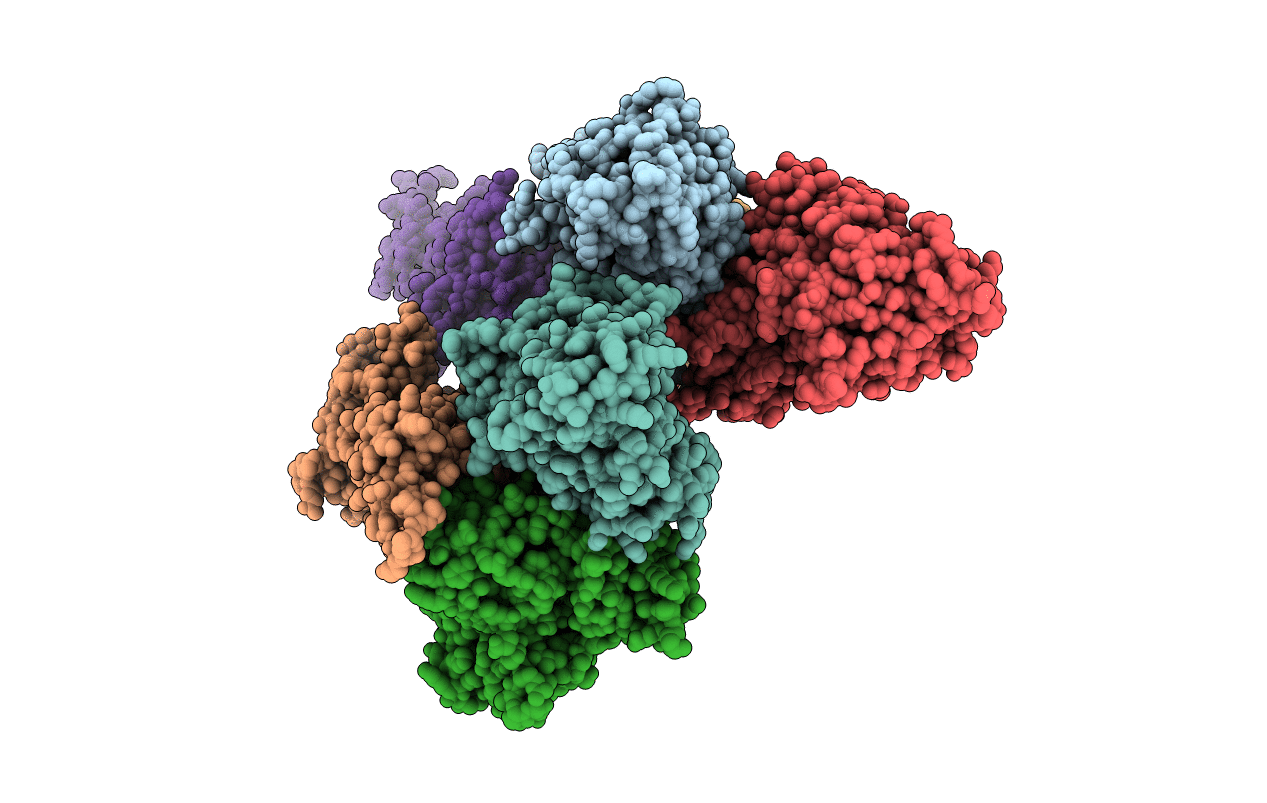
3S24 image
Deposition Date 2011-05-16
Release Date 2011-06-15
Last Version Date 2023-09-13
Entry Detail
PDB ID:
3S24
Title:
Crystal structure of human mRNA guanylyltransferase
Biological Source:
Source Organism(s):
Homo sapiens (Taxon ID: 9606)
Expression System(s):
Method Details:
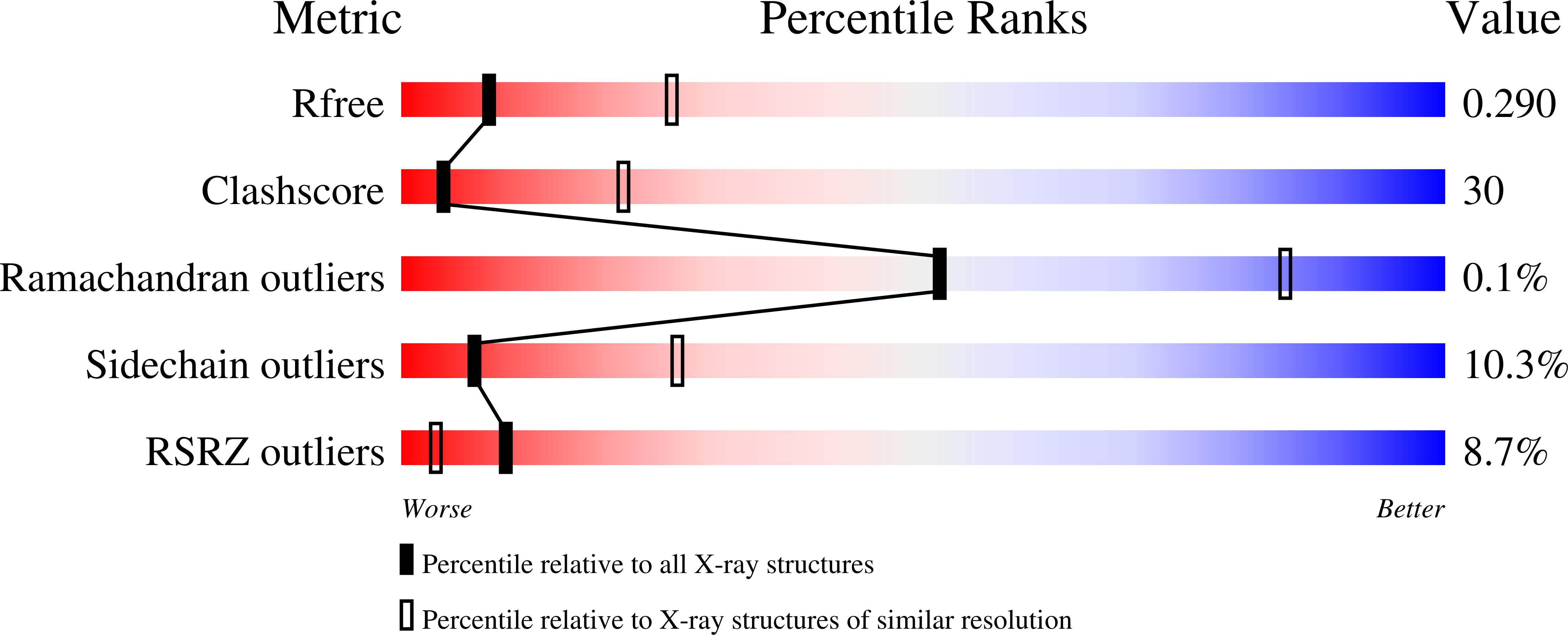
Experimental Method:
Resolution:
3.01 Å
R-Value Free:
0.29
R-Value Work:
0.25
R-Value Observed:
0.25
Space Group:
P 1 21 1
Macromolecular Entities
Structures with similar UniProt ID
Protein Blast
Polymer Type:polypeptide(L)
Molecule:mRNA-capping enzyme
Gene (Uniprot):RNGTT
Chain IDs:A, B, C, D, E, F (auth: G), G (auth: F)
Chain Length:347
Number of Molecules:7
Biological Source:Homo sapiens
Ligand Molecules
Primary Citation
Structure of the guanylyltransferase domain of human mRNA capping enzyme.
Proc. Natl. Acad. Sci. U.S.A. 108 10104 10108 (2011)
PMID: 21636784 DOI: 10.1073/pnas.1106610108

Abstact

The enzyme guanylyltransferase (GTase) plays a central role in the three-step catalytic process of adding an (m7)GpppN cap cotranscriptionally to nascent mRNA (pre-mRNAs). The 5'-mRNA capping process is functionally and evolutionarily conserved from unicellular organisms to human. However, the GTases from viruses and yeast have low amino acid sequence identity (∼25%) with GTases from mammals that, in contrast, are highly conserved (∼98%). We have defined by limited proteolysis of human capping enzyme residues 229-567 as comprising the minimum enzymatically active human GTase (hGTase) domain and have determined the structure by X-ray crystallography. Seven related conformational states of hGTase exist in the crystal. The GTP-binding site is evolutionarily and structurally conserved. The positional variations of the oligonucleotide/oligosaccharide binding fold lid domain over the GTP-binding site provide snapshots of the opening and closing of the active site cleft through a swivel motion. The pattern of conserved surface residues in mammals, but not in yeast, supports the finding that the recognition of the capping apparatus by RNA polymerase II and associated transcription factors is highly conserved in mammals, and the mechanism may differ somewhat from that in yeast. The hGTase structure should help in the design of biochemical and molecular biology experiments to explore the proteinprotein and proteinRNA interactions that ensure regulated transcription of genes in humans and other mammals.

Legend

Protein

Chemical

Disease

Primary Citation of related structures
Feedback Form
Name
Email
Institute
Feedback