

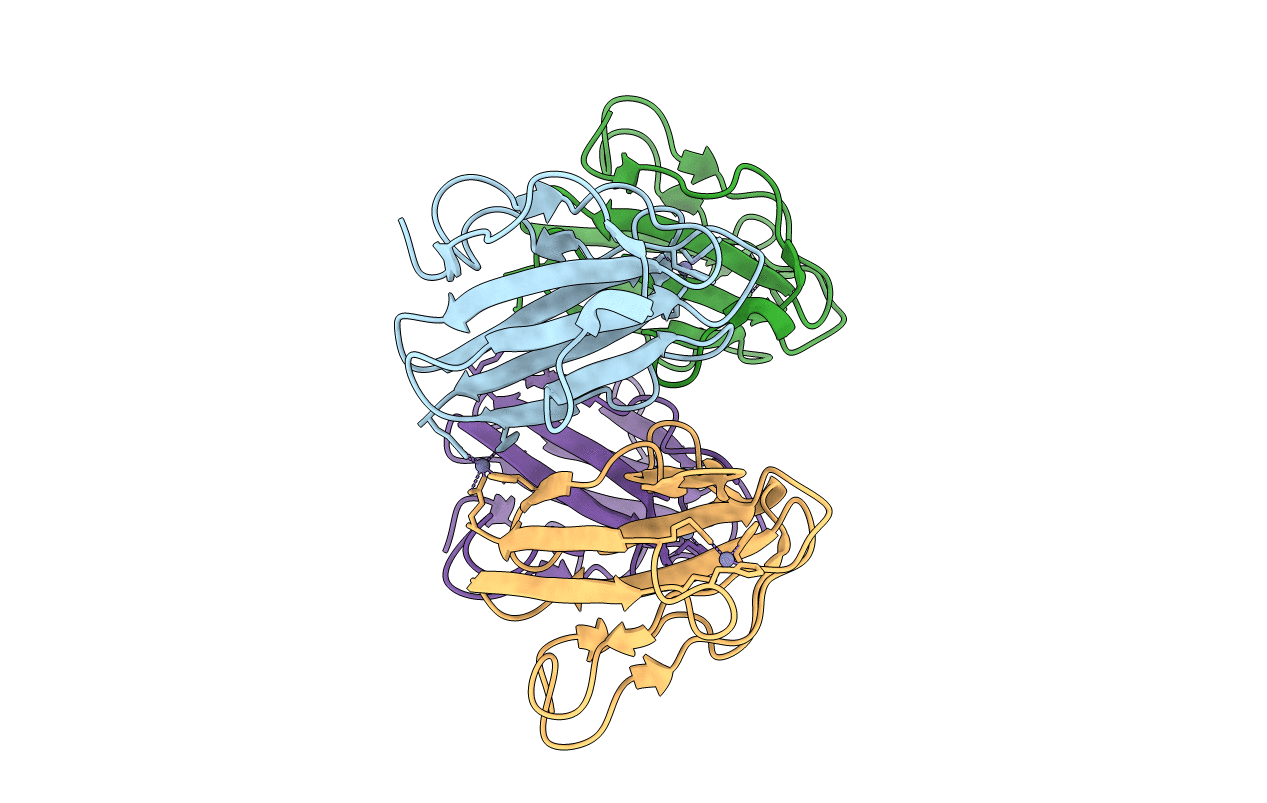
3RYM image
Deposition Date 2011-05-11
Release Date 2011-11-23
Last Version Date 2023-09-13
Entry Detail
PDB ID:
3RYM
Title:
Structure of Oxidized M98K mutant of Amicyanin
Biological Source:
Source Organism(s):
Expression System(s):
Method Details:
Experimental Method:
Resolution:
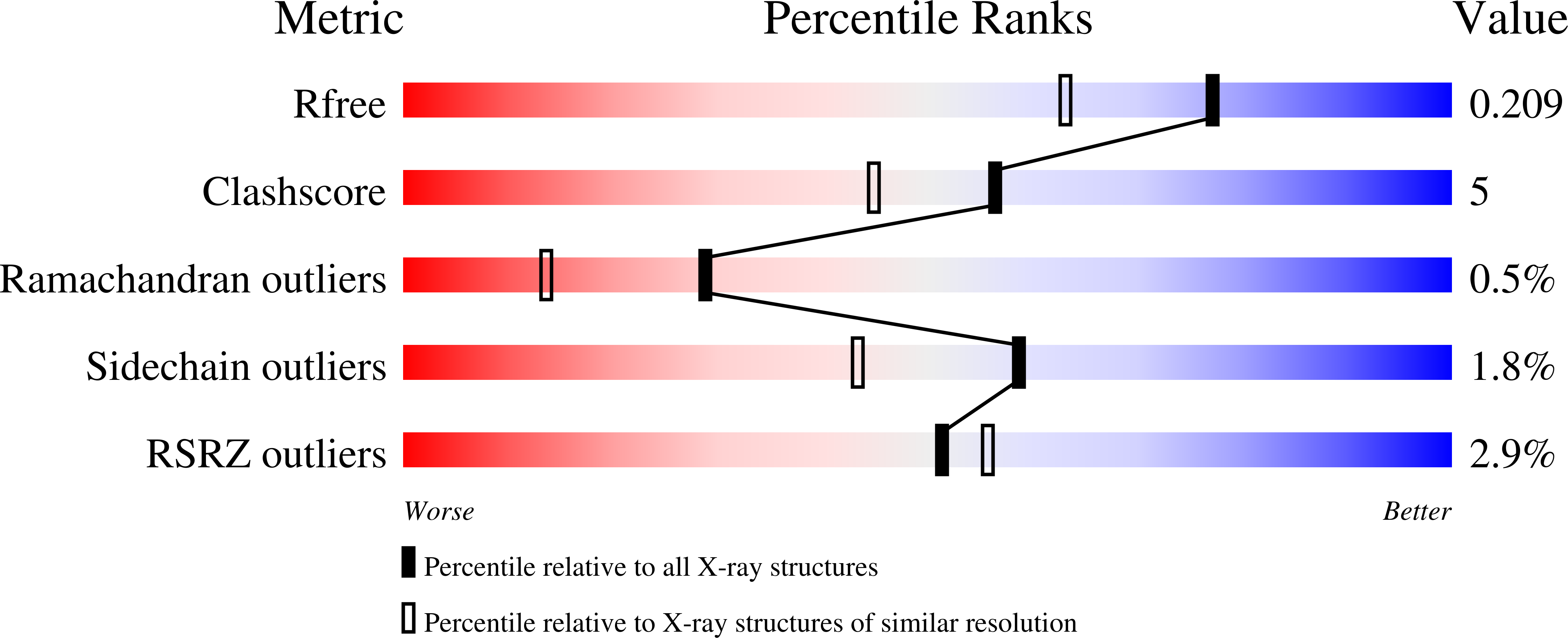
1.70 Å
R-Value Free:
0.21
R-Value Work:
0.19
R-Value Observed:
0.19
Space Group:
P 1
Macromolecular Entities
Polymer Type:polypeptide(L)
Molecule:Amicyanin
Gene (Uniprot):mauC
Mutagens:M98K
Chain IDs:A, B, C, D
Chain Length:105
Number of Molecules:4
Biological Source:Paracoccus denitrificans
Ligand Molecules
Primary Citation
Replacement of the axial copper ligand methionine with lysine in amicyanin converts it to a zinc-binding protein that no longer binds copper.
J. Inorg. Biochem. 105 1638 1644 (2011)
PMID: 22071089 DOI: 10.1016/j.jinorgbio.2011.08.002

Abstact

The mutation of the axial ligand of the type I copper protein amicyanin from Met to Lys results in a protein that is spectroscopically invisible and redox inactive. M98K amicyanin acts as a competitive inhibitor in the reaction of native amicyanin with methylamine dehydrogenase indicating that the M98K mutation has not affected the affinity for its natural electron donor. The crystal structure of M98K amicyanin reveals that its overall structure is very similar to native amicyanin but that the type I binding site is occupied by zinc. Anomalous difference Fourier maps calculated using the data collected around the absorption edges of copper and zinc confirm the presence of Zn(2+) at the type I site. The Lys98 NZ donates a hydrogen bond to a well-ordered water molecule at the type I site which enhances the ability of Lys98 to provide a ligand for Zn(2+). Attempts to reconstitute M98K apoamicyanin with copper resulted in precipitation of the protein. The fact that the M98K mutation generated such a selective zinc-binding protein was surprising as ligation of zinc by Lys is rare and this ligand set is unique for zinc.

Legend

Protein

Chemical

Disease

Primary Citation of related structures
Feedback Form
Name
Email
Institute
Feedback