

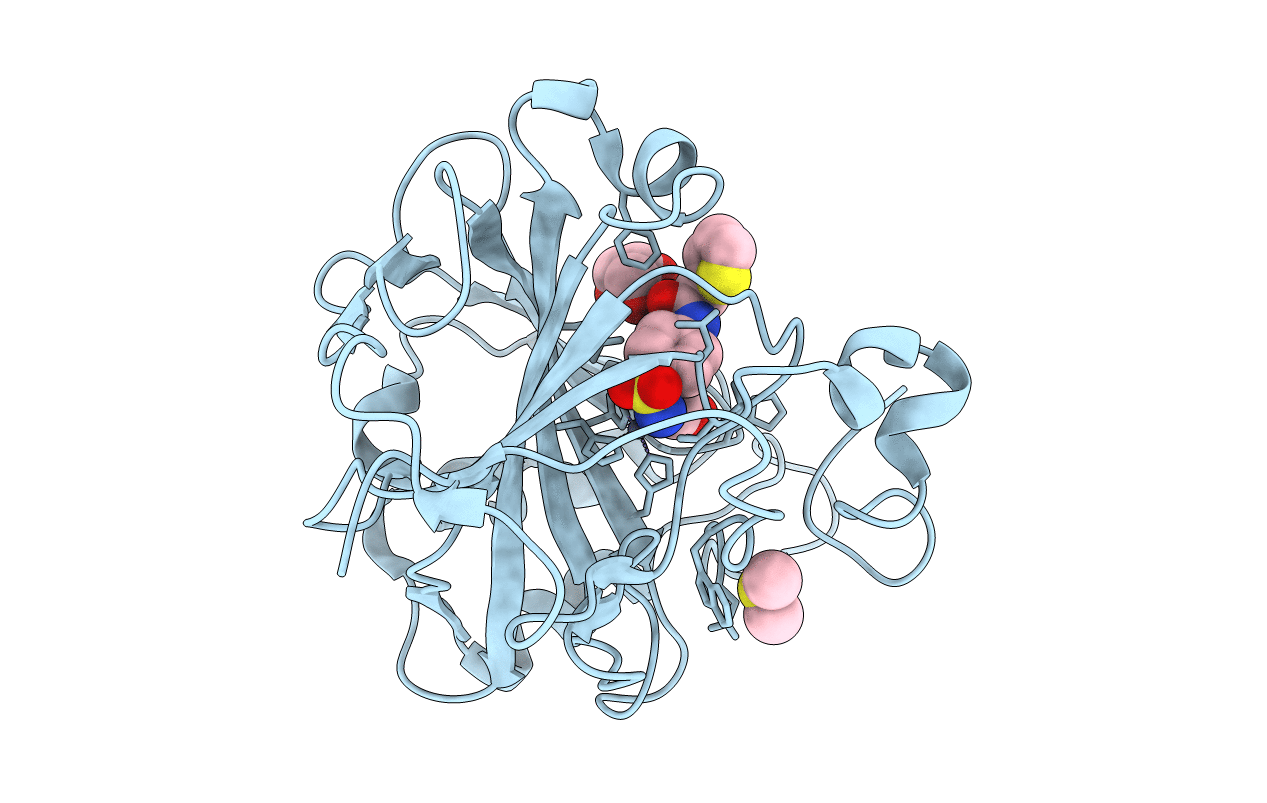
3R16 image
Deposition Date 2011-03-09
Release Date 2011-05-25
Last Version Date 2024-02-21
Entry Detail
PDB ID:
3R16
Keywords:
Title:
Human CAII bound to N-(4-sulfamoylphenyl)-2-(thiophen-2-yl) acetamide
Biological Source:
Source Organism(s):
Homo sapiens (Taxon ID: 9606)
Expression System(s):
Method Details:
Experimental Method:
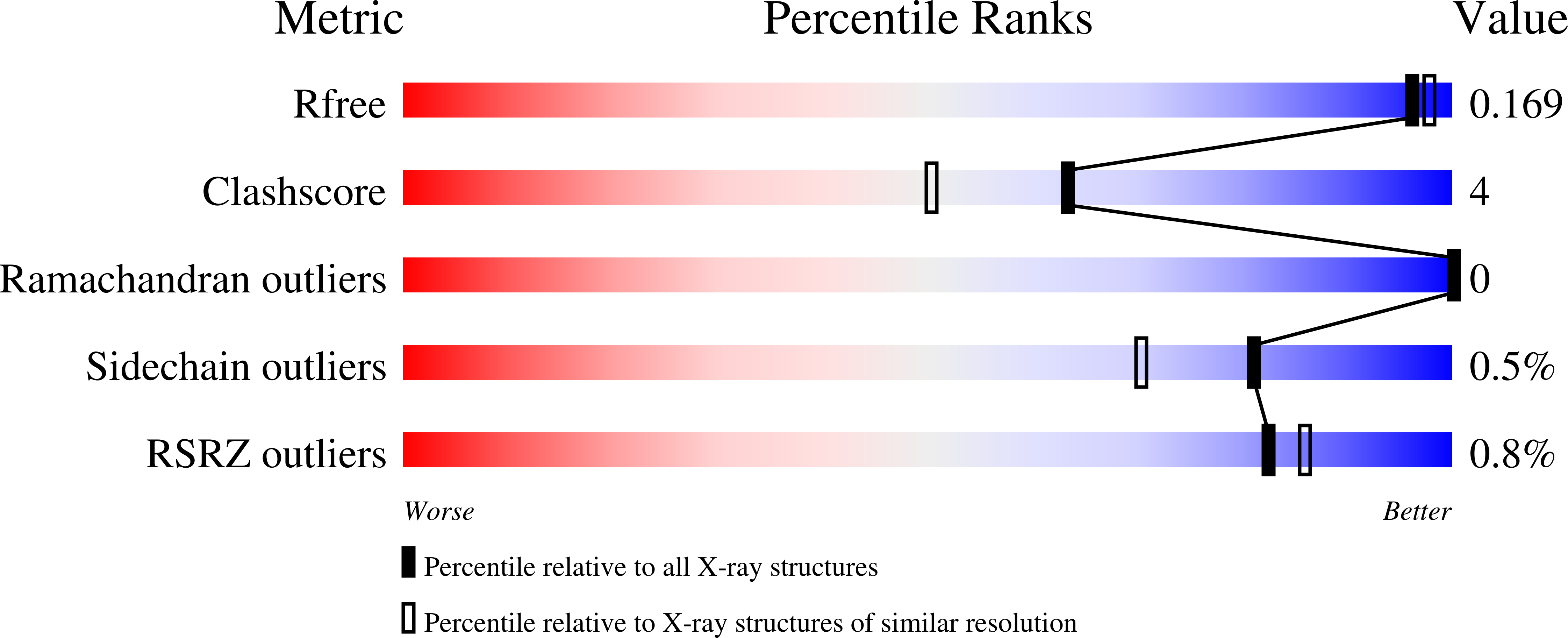
Resolution:
1.60 Å
R-Value Free:
0.17
R-Value Work:
0.15
R-Value Observed:
0.15
Space Group:
P 1 21 1
Macromolecular Entities
Polymer Type:polypeptide(L)
Molecule:Carbonic anhydrase 2
Gene (Uniprot):CA2
Chain IDs:A
Chain Length:257
Number of Molecules:1
Biological Source:Homo sapiens
Primary Citation
Conformational variability of different sulfonamide inhibitors with thienyl-acetamido moieties attributes to differential binding in the active site of cytosolic human carbonic anhydrase isoforms.
Bioorg. Med. Chem. 19 3732 3738 (2011)
PMID: 21620713 DOI: 10.1016/j.bmc.2011.05.006

Abstact

The X-ray crystal structures of the adducts of human carbonic anhydrase (hCA, EC 4.2.1.1) II complexed with two aromatic sulfonamides incorporating 2-thienylacetamido moieties are reported here. Although, the two inhibitors only differ by the presence of an additional 3-fluoro substituent on the 4-amino-benzenesulfonamide scaffold, their inhibition profiles against the cytosolic isoforms hCA I, II, III, VII and XIII are quite different. These differences were rationalized based on the obtained X-ray crystal structures, and their comparison with other sulfonamide CA inhibitors with clinical applications, such as acetazolamide, methazolamide and dichlorophenamide. The conformations of the 2-thienylacetamido tails in the hCA II adducts of the two sulfonamides were highly different, although the benzenesulfonamide parts were superimposable. Specific interactions between structurally different inhibitors and amino acid residues present only in some considered isoforms have thus been evidenced. These findings can explain the high affinity of the 2-thienylacetamido benzenesulfonamides for some pharmacologically relevant CAs (i.e., isoforms II and VII) being also useful to design high affinity, more selective sulfonamide inhibitors of various CAs.

Legend

Protein

Chemical

Disease

Primary Citation of related structures
Feedback Form
Name
Email
Institute
Feedback