

3PVC image
Deposition Date 2010-12-06
Release Date 2011-04-13
Last Version Date 2024-11-20
Entry Detail
PDB ID:
3PVC
Title:
Crystal structure of apo MnmC from Yersinia Pestis
Biological Source:
Source Organism(s):
Yersinia pestis (Taxon ID: 632)
Expression System(s):
Method Details:
Experimental Method:
Resolution:
2.31 Å
R-Value Free:
0.23
R-Value Work:
0.16
R-Value Observed:
0.17
Space Group:
P 1 21 1
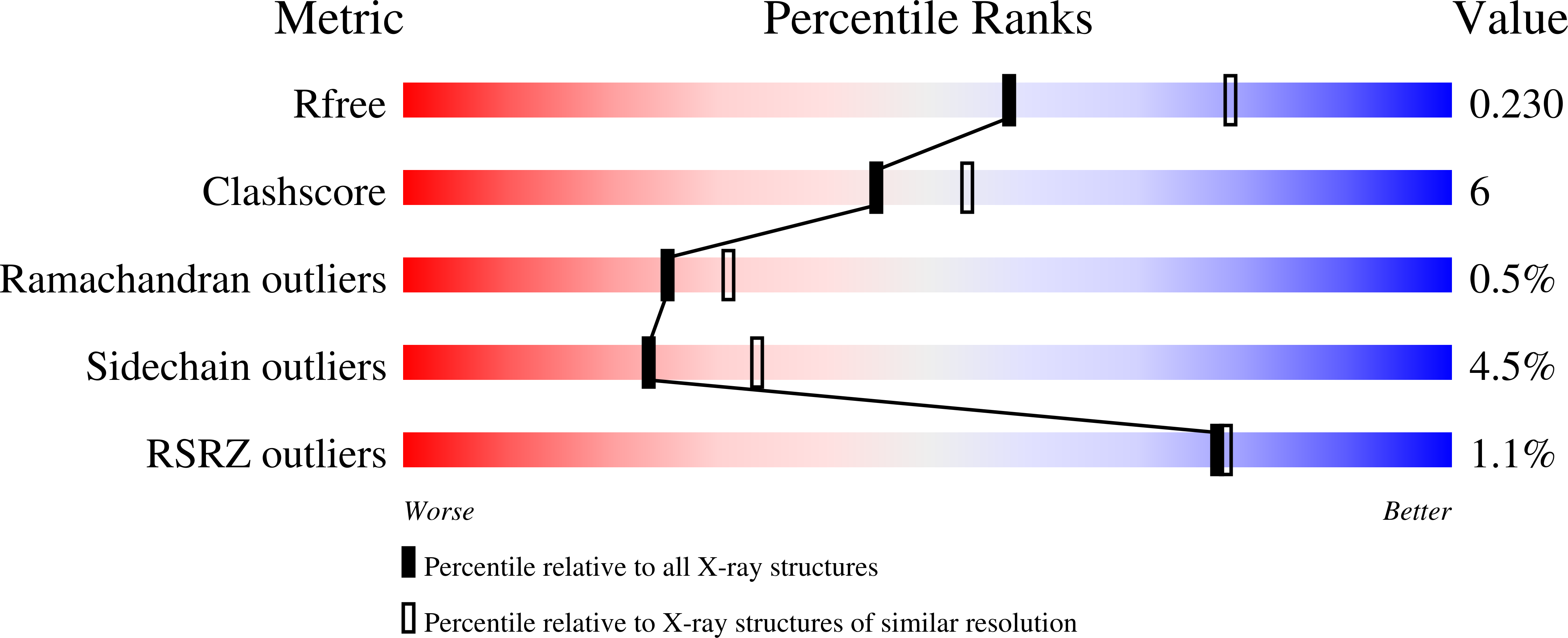
Macromolecular Entities
Structures with similar UniProt ID
Protein Blast
Polymer Type:polypeptide(L)
Molecule:tRNA 5-methylaminomethyl-2-th
Gene (Uniprot):mnmC
Chain IDs:A
Chain Length:689
Number of Molecules:1
Biological Source:Yersinia pestis
Modified Residue
Compound ID Chain ID Parent Comp ID Details 2D Image
MSE A MET SELENOMETHIONINE
Primary Citation
Structural basis for hypermodification of the wobble uridine in tRNA by bifunctional enzyme MnmC.
BMC Struct. Biol. 13 5 5 (2013)
PMID: 23617613 DOI: 10.1186/1472-6807-13-5

Abstact

BACKGROUND Methylaminomethyl modification of uridine or 2-thiouridine (mnm5U34 or mnm5s2U34) at the wobble position of tRNAs specific for glutamate, lysine and arginine are observed in Escherichia coli and allow for specific recognition of codons ending in A or G. In the biosynthetic pathway responsible for this post-transcriptional modification, the bifunctional enzyme MnmC catalyzes the conversion of its hypermodified substrate carboxymethylaminomethyl uridine (cmnm5U34) to mnm5U34. MnmC catalyzes the flavin adenine dinucleotide (FAD)-dependent oxidative cleavage of carboxymethyl group from cmnm5U34 via an imine intermediate to generate aminomethyl uridine (nm5U34), which is subsequently methylated by S-adenosyl-L-methionine (SAM) to yield methylaminomethyl uridine (mnm5U34). RESULTS The X-ray crystal structures of SAM/FAD-bound bifunctional MnmC from Escherichia coli and Yersinia pestis, and FAD-bound bifunctional MnmC from Yersinia pestis were determined and the catalytic functions verified in an in vitro assay. CONCLUSION The crystal structures of MnmC from two Gram negative bacteria reveal the overall architecture of the enzyme and the relative disposition of the two independent catalytic domains: a Rossmann-fold domain containing the SAM binding site and an FAD containing domain structurally homologous to glycine oxidase from Bacillus subtilis. The structures of MnmC also reveal the detailed atomic interactions at the interdomain interface and provide spatial restraints relevant to the overall catalytic mechanism.

Legend

Protein

Chemical

Disease

Primary Citation of related structures
Feedback Form
Name
Email
Institute
Feedback