

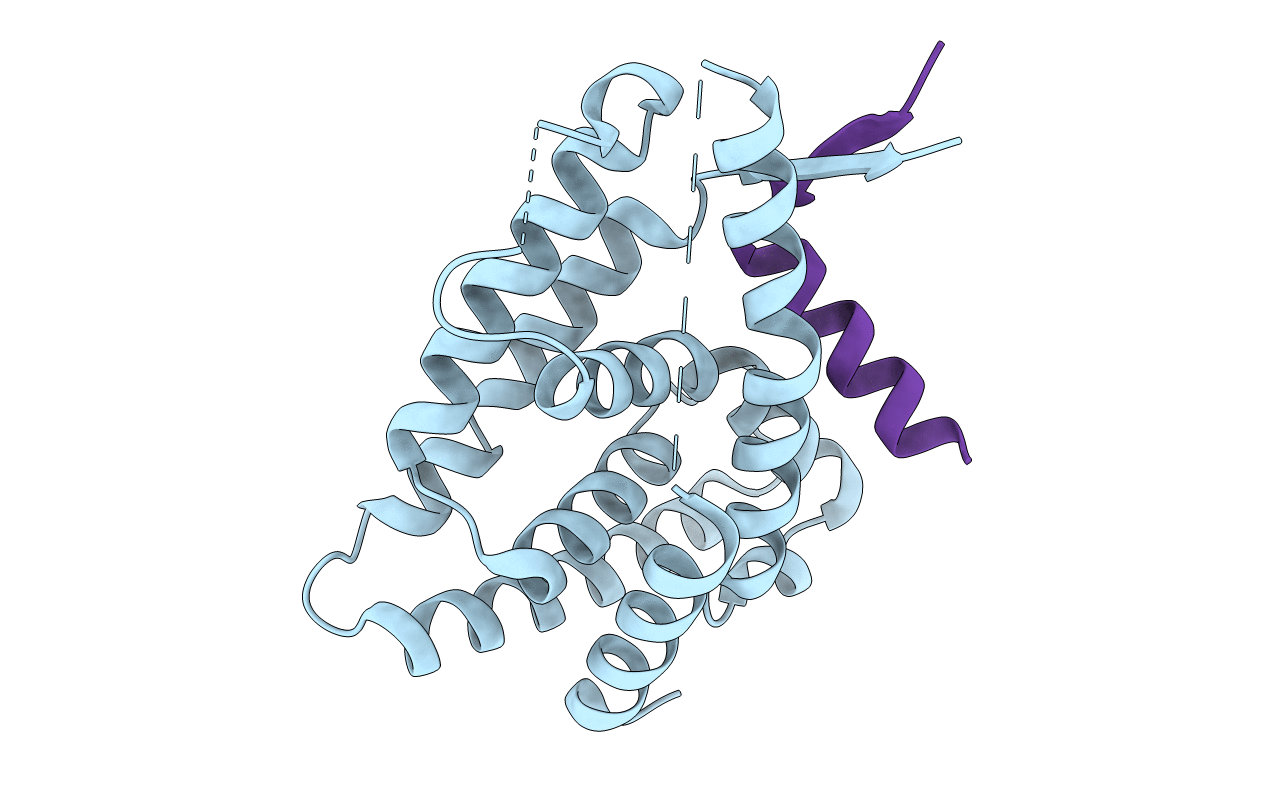
3N00 image
Deposition Date 2010-05-13
Release Date 2010-06-30
Last Version Date 2023-09-06
Entry Detail
PDB ID:
3N00
Title:
Crystal Structure of a deletion mutant of human Reverba ligand binding domain bound with an NCoR ID1 peptide determined to 2.60A
Biological Source:
Source Organism(s):
Homo sapiens (Taxon ID: 9606)
Expression System(s):
Method Details:
Experimental Method:
Resolution:
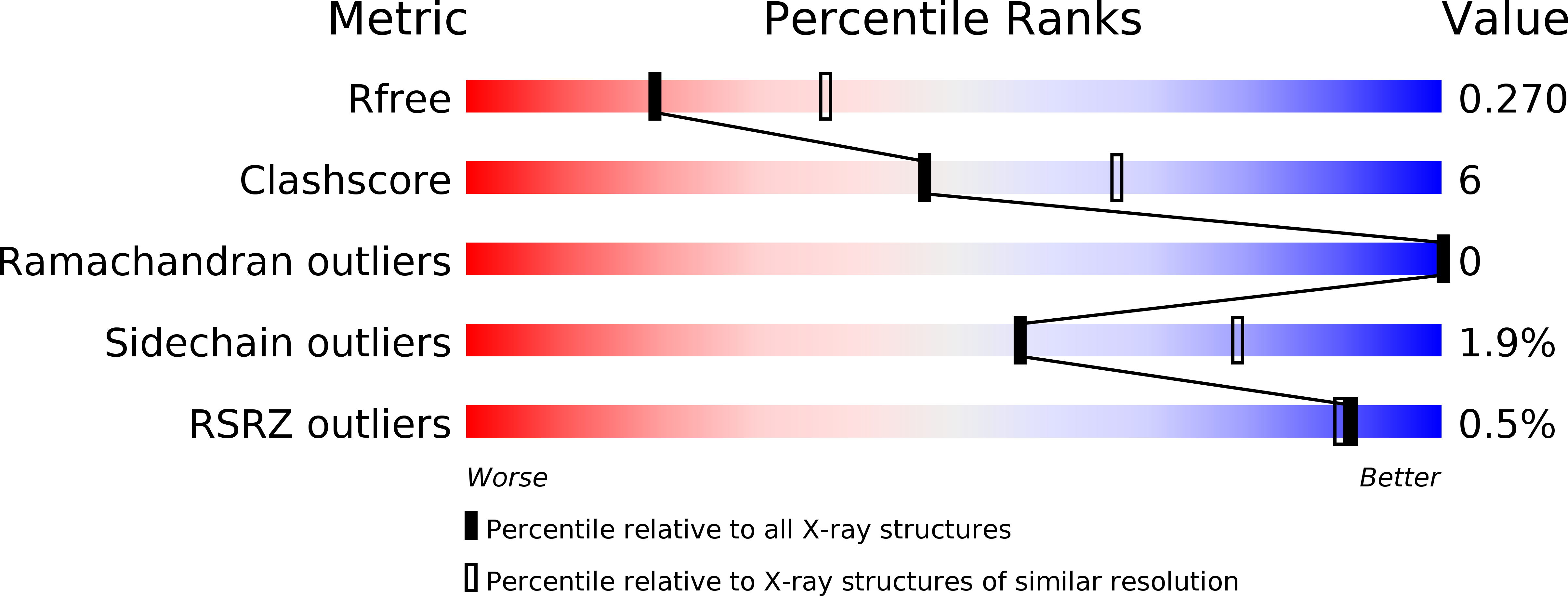
2.60 Å
R-Value Free:
0.26
R-Value Work:
0.19
R-Value Observed:
0.20
Space Group:
H 3 2
Macromolecular Entities
Structures with similar UniProt ID
Protein Blast
Polymer Type:polypeptide(L)
Molecule:Rev-erbA-alpha
Gene (Uniprot):NR1D1
Chain IDs:A
Chain Length:245
Number of Molecules:1
Biological Source:Homo sapiens
Structures with similar UniProt ID
Protein Blast
Polymer Type:polypeptide(L)
Molecule:Nuclear receptor corepressor
Gene (Uniprot):NCOR1
Chain IDs:B
Chain Length:21
Number of Molecules:1
Biological Source:Homo sapiens
Primary Citation
Structure of Rev-erbalpha bound to N-CoR reveals a unique mechanism of nuclear receptor-co-repressor interaction.
Nat. Struct. Mol. Biol. 17 808 814 (2010)
PMID: 20581824 DOI: 10.1038/nsmb.1860

Abstact

Repression of gene transcription by the nuclear receptor Rev-erbalpha plays an integral role in the core molecular circadian clock. We report the crystal structure of a nuclear receptor-co-repressor (N-CoR) interaction domain 1 (ID1) peptide bound to truncated human Rev-erbalpha ligand-binding domain (LBD). The ID1 peptide forms an unprecedented antiparallel beta-sheet with Rev-erbalpha, as well as an alpha-helix similar to that seen in nuclear receptor ID2 crystal structures but out of register by four residues. Comparison with the structure of Rev-erbbeta bound to heme indicates that ID1 peptide and heme induce substantially different conformational changes in the LBD. Although heme is involved in Rev-erb repression, the structure suggests that Rev-erbalpha could also mediate repression via ID1 binding in the absence of heme. The previously uncharacterized secondary structure induced by ID1 peptide binding advances our understanding of nuclear receptor-co-repressor interactions.

Legend

Protein

Chemical

Disease

Primary Citation of related structures
Feedback Form
Name
Email
Institute
Feedback