

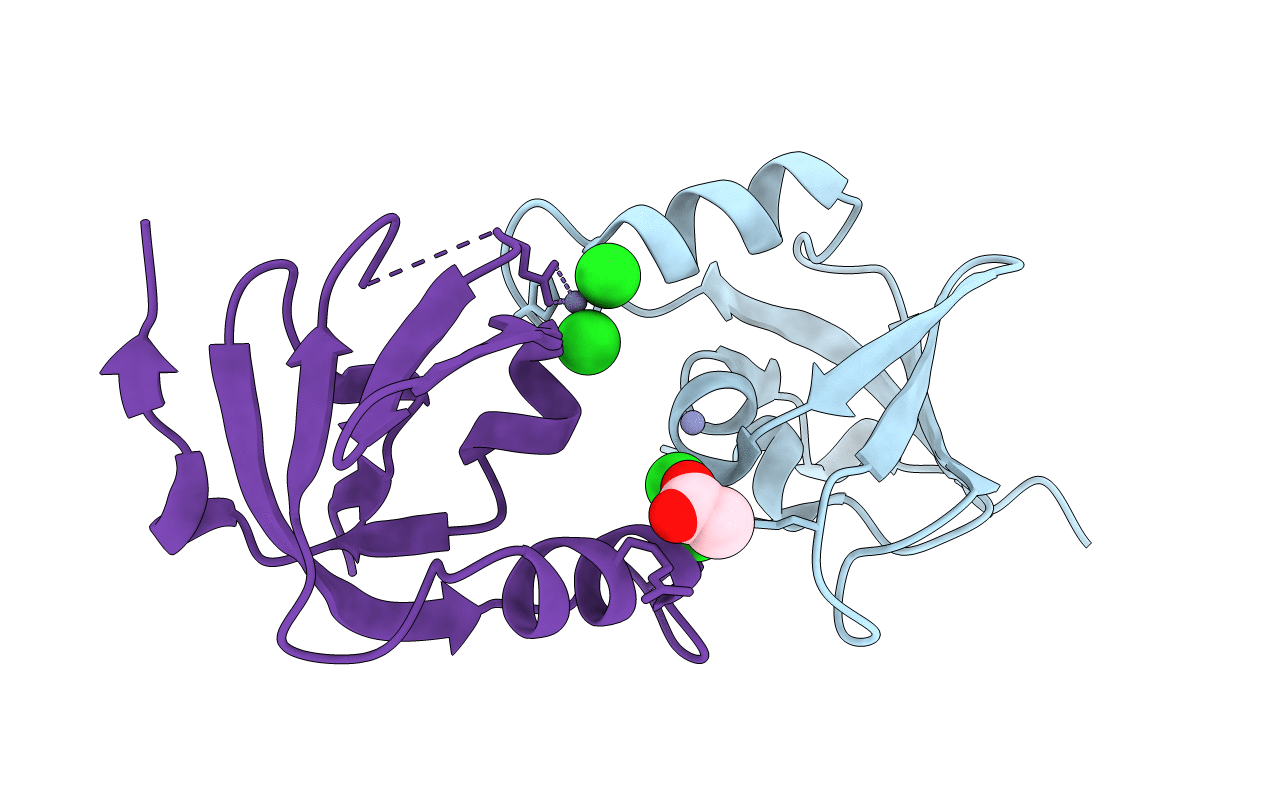
3MHX image
Deposition Date 2010-04-09
Release Date 2010-06-23
Last Version Date 2024-03-20
Entry Detail
PDB ID:
3MHX
Keywords:
Title:
Crystal Structure of Stenotrophomonas maltophilia FeoA complexed with Zinc: A Unique Procaryotic SH3 Domain Protein Possibly Acting as a Bacterial Ferrous Iron Transport Activating Factor
Biological Source:
Source Organism(s):
Expression System(s):
Method Details:
Experimental Method:
Resolution:
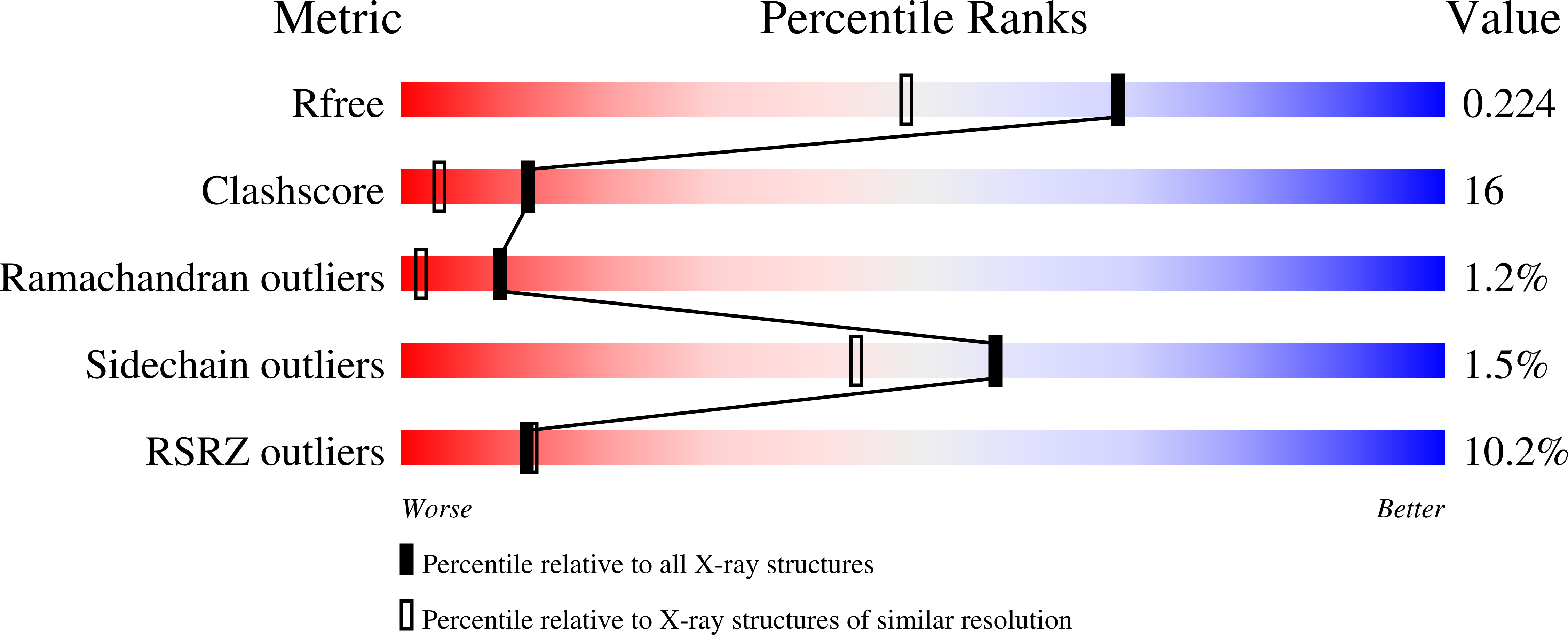
1.70 Å
R-Value Free:
0.22
R-Value Work:
0.19
Space Group:
P 21 21 21
Macromolecular Entities
Polymer Type:polypeptide(L)
Molecule:Putative ferrous iron transpo
Gene (Uniprot):feoA
Mutagens:L43M
Chain IDs:A, B
Chain Length:85
Number of Molecules:2
Biological Source:Stenotrophomonas maltophilia
Primary Citation
Structure of Stenotrophomonas maltophilia FeoA complexed with zinc: a unique prokaryotic SH3-domain protein that possibly acts as a bacterial ferrous iron-transport activating factor
Acta Crystallogr. Sect. F Struct. Biol. Cryst. Commun. 66 636 642 (2010)
PMID: 20516589 DOI: 10.1107/S1744309110013941

Abstact

Iron is vital to the majority of prokaryotes, with ferrous iron believed to be the preferred form for iron uptake owing to its much better solubility. The major route for bacterial ferrous iron uptake is found to be via an Feo (ferrous iron-transport) system comprising the three proteins FeoA, FeoB and FeoC. Although the structure and function of FeoB have received much attention recently, the roles played by FeoA and FeoC have been little investigated to date. Here, the tertiary structure of FeoA from Stenotrophomonas maltophilia (Sm), a vital opportunistic pathogen in immunodepressed hosts, is reported. The crystal structure of SmFeoA has been determined to a resolution of 1.7 A using an Se single-wavelength anomalous dispersion (Se-SAD) approach. Although SmFeoA bears low sequence identity to eukaryotic proteins, its structure is found to adopt a eukaryotic SH3-domain-like fold. It also bears weak similarity to the C-terminal SH3 domain of bacterial DtxR (diphtheria toxin regulator), with some unique characteristics. Intriguingly, SmFeoA is found to adopt a unique dimer cross-linked by two zinc ions and six anions (chloride ions). Since FeoB has been found to contain a G-protein-like domain with low GTPase activity, FeoA may interact with FeoB through the SH3-G-protein domain interaction to act as a ferrous iron-transport activating factor.

Legend

Protein

Chemical

Disease

Primary Citation of related structures
Feedback Form
Name
Email
Institute
Feedback