

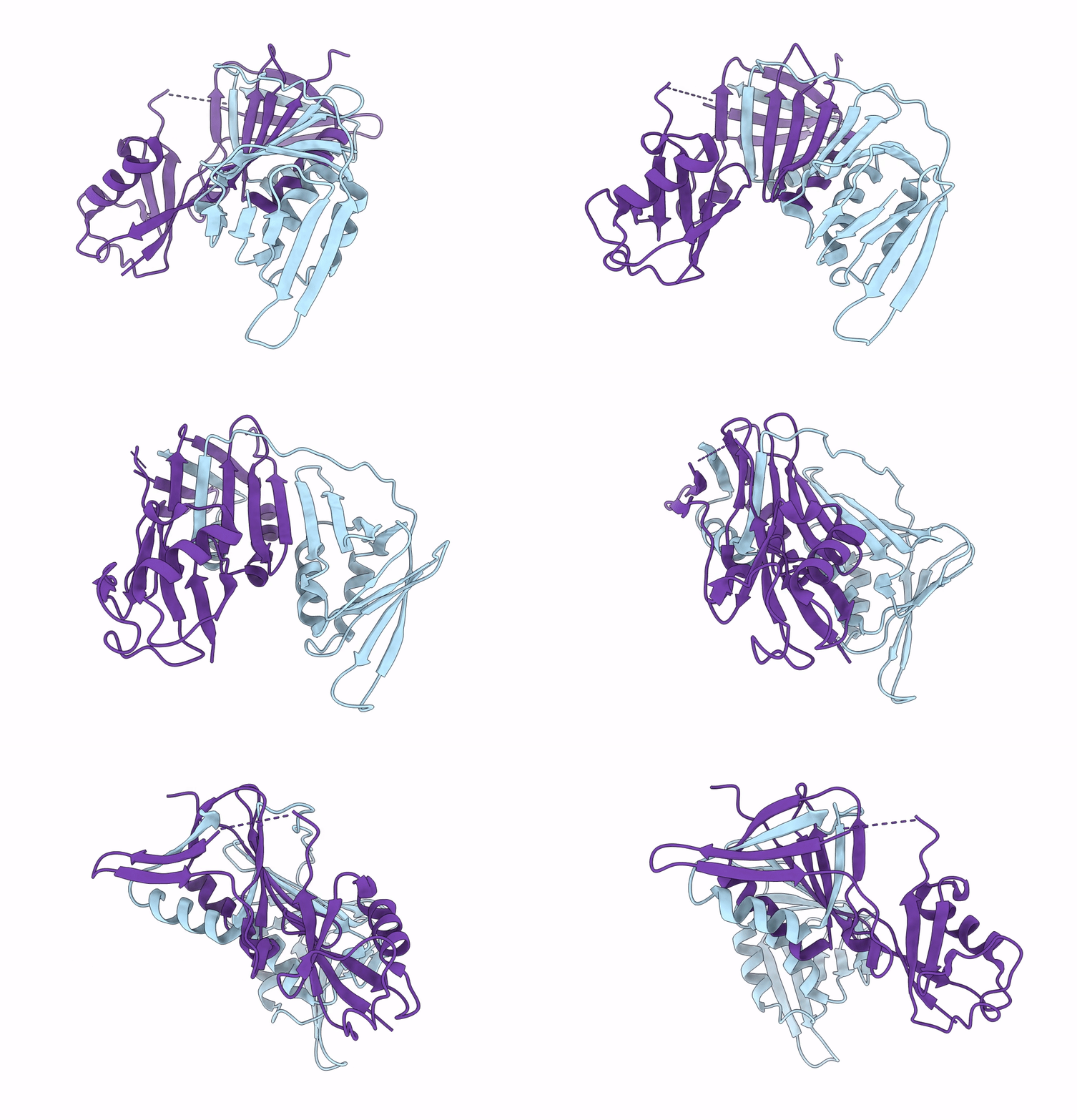
3L10 image
Deposition Date 2009-12-10
Release Date 2010-03-23
Last Version Date 2023-09-06
Entry Detail
PDB ID:
3L10
Keywords:
Title:
Structure of split monoubiquitinated PCNA with ubiquitin in position one
Biological Source:
Source Organism(s):
Expression System(s):
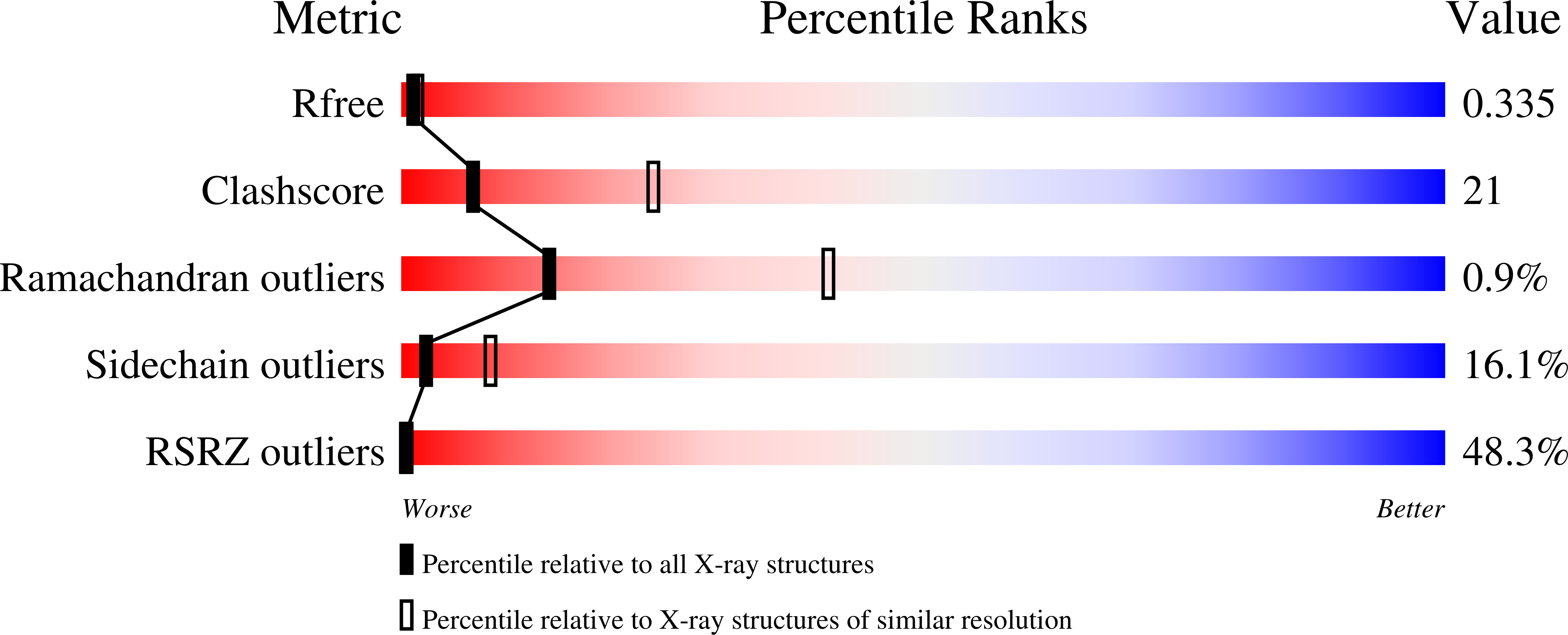
Method Details:
Experimental Method:
Resolution:
2.80 Å
R-Value Free:
0.31
R-Value Work:
0.27
R-Value Observed:
0.27
Space Group:
P 21 3
Macromolecular Entities
Polymer Type:polypeptide(L)
Molecule:Proliferating cell nuclear an
Gene (Uniprot):POL30
Chain IDs:A
Chain Length:169
Number of Molecules:1
Biological Source:Saccharomyces cerevisiae
Structural Superimposition Protein Blast
Polymer Type:polypeptide(L)
Molecule:Monoubiquitinated Proliferati
Gene (Uniprot):POL30
Chain IDs:B
Chain Length:169
Number of Molecules:1
Biological Source:Saccharomyces cerevisiae
Ligand Molecules
Primary Citation
Structure of monoubiquitinated PCNA and implications for translesion synthesis and DNA polymerase exchange.
Nat. Struct. Mol. Biol. 17 479 484 (2010)
PMID: 20305653 DOI: 10.1038/nsmb.1776

Abstact

DNA synthesis by classical polymerases can be blocked by many lesions. These blocks are overcome by translesion synthesis, whereby the stalled classical, replicative polymerase is replaced by a nonclassical polymerase. In eukaryotes this polymerase exchange requires proliferating cell nuclear antigen (PCNA) monoubiquitination. To better understand the polymerase exchange, we developed a means of producing monoubiquitinated PCNA, by splitting the protein into two self-assembling polypeptides. We determined the X-ray crystal structure of monoubiquitinated PCNA and found that the ubiquitin moieties are located on the back face of PCNA and interact with it through their canonical hydrophobic surface. Moreover, the attachment of ubiquitin does not change PCNA's conformation. We propose that PCNA ubiquitination facilitates nonclassical polymerase recruitment to the back of PCNA by forming a new binding surface for nonclassical polymerases, consistent with a 'tool belt' model of the polymerase exchange.

Legend

Protein

Chemical

Disease

Primary Citation of related structures
Feedback Form
Name
Email
Institute
Feedback