

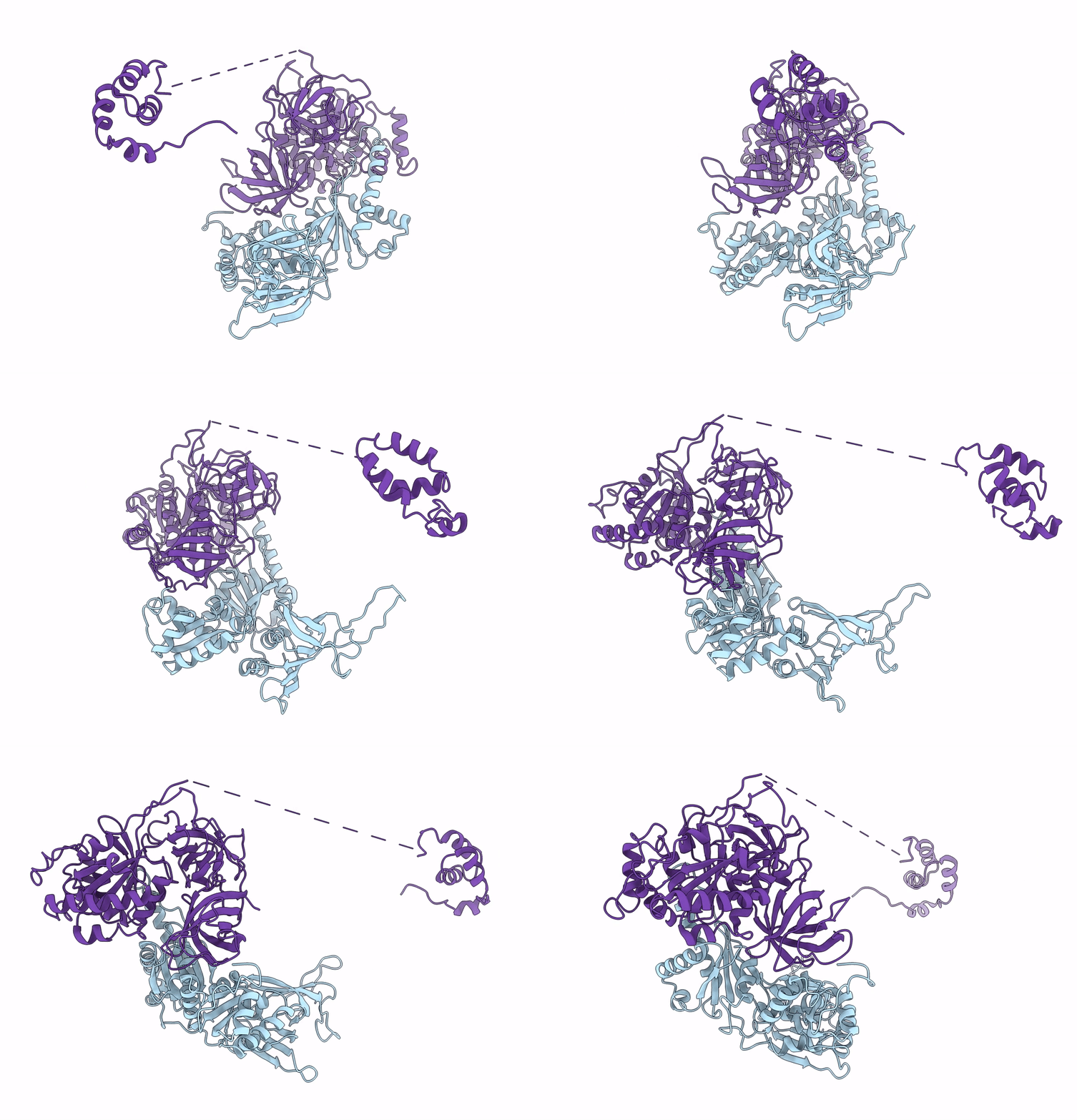
3IZQ image
Deposition Date 2010-11-30
Release Date 2011-06-01
Last Version Date 2024-02-21
Entry Detail
PDB ID:
3IZQ
Title:
Structure of the Dom34-Hbs1-GDPNP complex bound to a translating ribosome
Biological Source:
Source Organism(s):
Expression System(s):
Method Details:
Experimental Method:
Resolution:
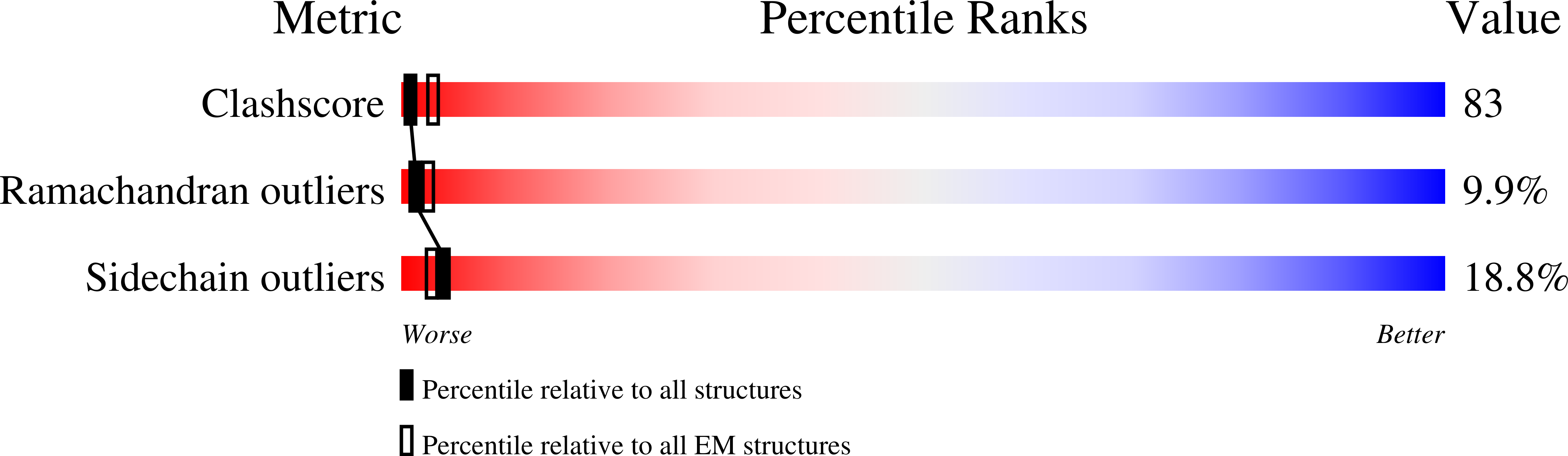
9.50 Å
Aggregation State:
PARTICLE
Reconstruction Method:
SINGLE PARTICLE
Macromolecular Entities
Structures with similar UniProt ID
Protein Blast
Polymer Type:polypeptide(L)
Molecule:Protein DOM34
Gene (Uniprot):DOM34
Chain IDs:A (auth: 0)
Chain Length:386
Number of Molecules:1
Biological Source:Saccharomyces cerevisiae
Structures with similar UniProt ID
Protein Blast
Polymer Type:polypeptide(L)
Molecule:Elongation factor 1 alpha-lik
Gene (Uniprot):HBS1
Chain IDs:B (auth: 1)
Chain Length:611
Number of Molecules:1
Biological Source:Saccharomyces cerevisiae
Ligand Molecules
Primary Citation
Structure of the no-go mRNA decay complex Dom34-Hbs1 bound to a stalled 80S ribosome.
Nat. Struct. Mol. Biol. 18 715 720 (2011)
PMID: 21623367 DOI: 10.1038/nsmb.2057

Abstact

No-go decay (NGD) is a mRNA quality-control mechanism in eukaryotic cells that leads to degradation of mRNAs stalled during translational elongation. The key factors triggering NGD are Dom34 and Hbs1. We used cryo-EM to visualize NGD intermediates resulting from binding of the Dom34-Hbs1 complex to stalled ribosomes. At subnanometer resolution, all domains of Dom34 and Hbs1 were identified, allowing the docking of crystal structures and homology models. Moreover, the close structural similarity of Dom34 and Hbs1 to eukaryotic release factors (eRFs) enabled us to propose a model for the ribosome-bound eRF1-eRF3 complex. Collectively, our data provide structural insights into how stalled mRNA is recognized on the ribosome and how the eRF complex can simultaneously recognize stop codons and catalyze peptide release.

Legend

Protein

Chemical

Disease

Primary Citation of related structures
Feedback Form
Name
Email
Institute
Feedback