

3IXE image
Deposition Date 2009-09-03
Release Date 2009-12-15
Last Version Date 2023-09-06
Entry Detail
PDB ID:
3IXE
Title:
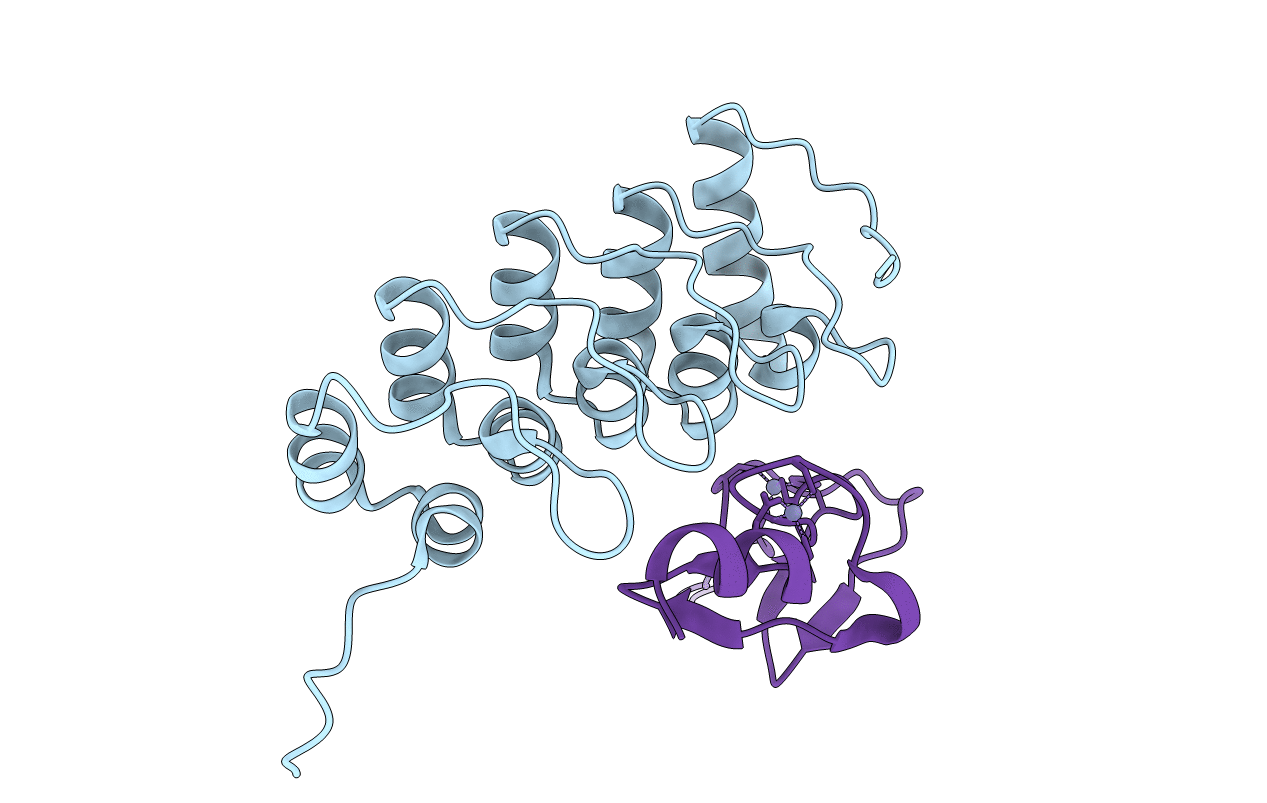
Structural basis of competition between PINCH1 and PINCH2 for binding to the ankyrin repeat domain of integrin-linked kinase
Biological Source:
Source Organism(s):
Homo sapiens (Taxon ID: 9606)
Expression System(s):
Method Details:
Experimental Method:
Resolution:
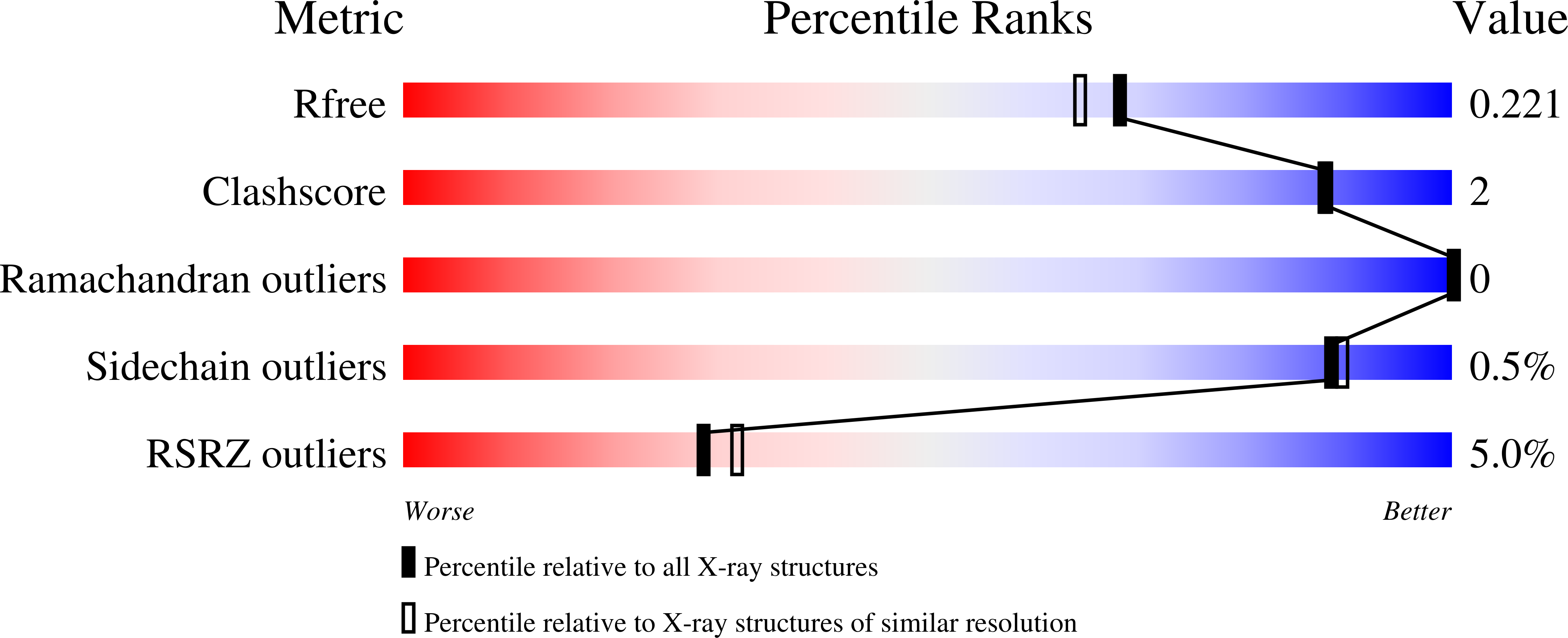
1.90 Å
R-Value Free:
0.21
R-Value Work:
0.16
R-Value Observed:
0.17
Space Group:
P 21 21 21
Macromolecular Entities
Structures with similar UniProt ID
Protein Blast
Polymer Type:polypeptide(L)
Molecule:Integrin-linked protein kinas
Gene (Uniprot):ILK
Chain IDs:A
Chain Length:179
Number of Molecules:1
Biological Source:Homo sapiens
Structures with similar UniProt ID
Protein Blast
Polymer Type:polypeptide(L)
Molecule:LIM and senescent cell antige
Gene (Uniprot):LIMS2
Chain IDs:B
Chain Length:72
Number of Molecules:1
Biological Source:Homo sapiens
Ligand Molecules
Primary Citation
Structural basis of competition between PINCH1 and PINCH2 for binding to the ankyrin repeat domain of integrin-linked kinase.
J. Struct. Biol. 170 157 163 (2010)
PMID: 19963065 DOI: 10.1016/j.jsb.2009.12.002

Abstact

Formation of a heterotrimeric IPP complex composed of integrin-linked kinase (ILK), the LIM domain protein PINCH, and parvin is important for signaling through integrin adhesion receptors. Mammals possess two PINCH genes that are expressed simultaneously in many tissues. PINCH1 and PINCH2 have overlapping functions and can compensate for one another in many settings; however, isoform-specific functions have been reported and it is proposed that association with a PINCH1- or PINCH2-containing IPP complex may provide a bifurcation point in integrin signaling promoting different cellular responses. Here we report that the LIM1 domains of PINCH1 and PINCH2 directly compete for the same binding site on the ankyrin repeat domain (ARD) of ILK. We determined the 1.9A crystal structure of the PINCH2 LIM1 domain complexed with the ARD of ILK, and show that disruption of this interface by point mutagenesis reduces binding in vitro and alters localization of PINCH2 in cells. These studies provide further evidence for the role of the PINCH LIM1 domain in association with ILK and highlight direct competition as one mechanism for regulating which PINCH isoform predominates in IPP complexes. Differential regulation of PINCH1 and PINCH2 expression may therefore provide a means for altering cellular integrin signaling pathways.

Legend

Protein

Chemical

Disease

Primary Citation of related structures
Feedback Form
Name
Email
Institute
Feedback