

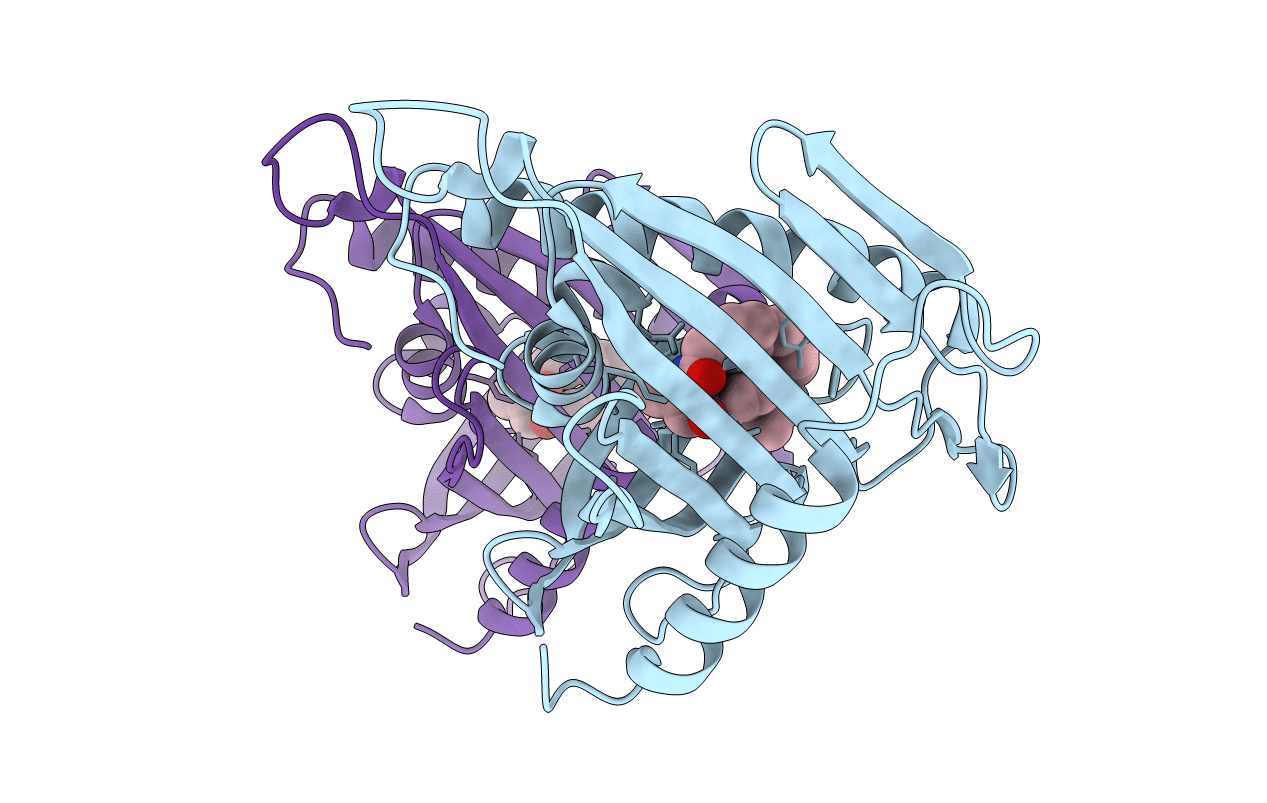
3H3S image
Deposition Date 2009-04-17
Release Date 2010-03-02
Last Version Date 2024-03-20
Entry Detail
PDB ID:
3H3S
Keywords:
Title:
Crystal structure of the CERT START domain in complex with HPA-15
Biological Source:
Source Organism(s):
Homo sapiens (Taxon ID: 9606)
Expression System(s):
Method Details:
Experimental Method:
Resolution:
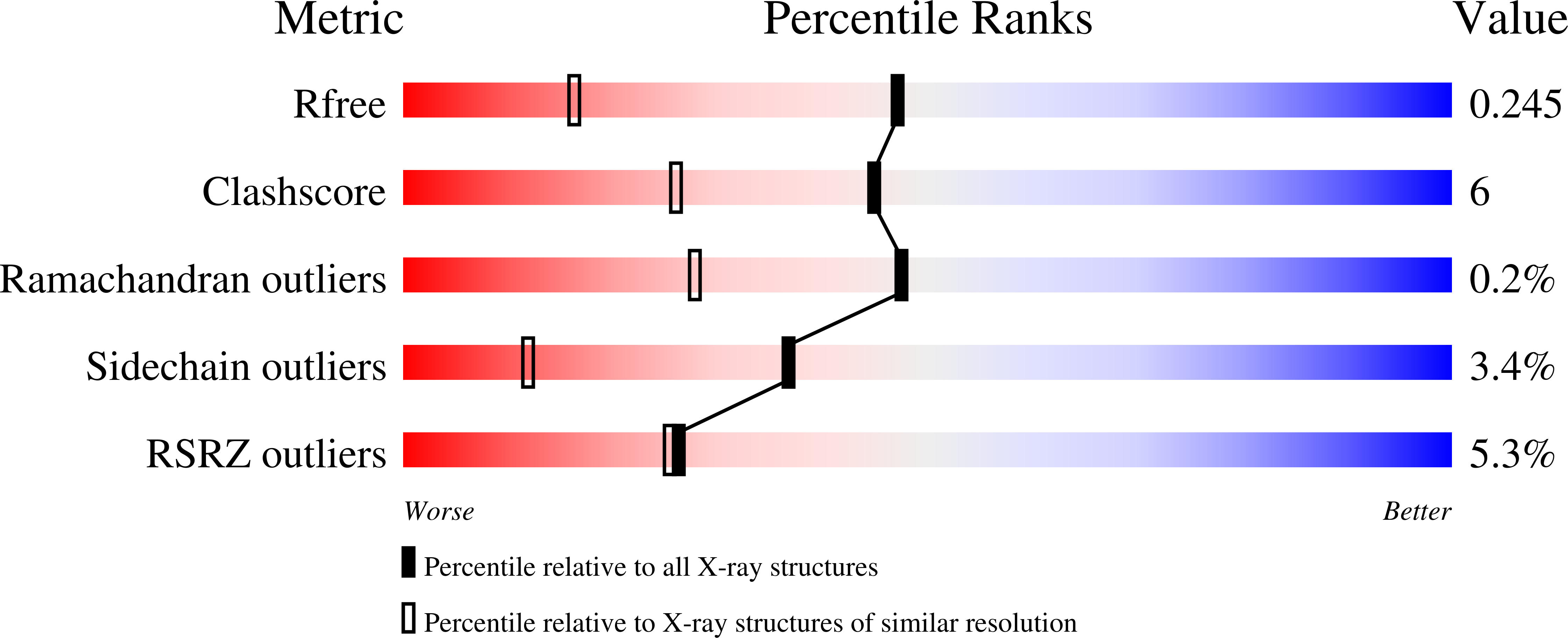
1.66 Å
R-Value Free:
0.24
R-Value Work:
0.20
R-Value Observed:
0.20
Space Group:
P 1 21 1
Macromolecular Entities
Structures with similar UniProt ID
Protein Blast
Polymer Type:polypeptide(L)
Molecule:Goodpasture antigen binding p
Chain IDs:A, B
Chain Length:255
Number of Molecules:2
Biological Source:Homo sapiens
Ligand Molecules
Primary Citation
Crystal structures of the CERT START domain with inhibitors provide insights into the mechanism of ceramide transfer.
J. Mol. Biol. 396 245 251 (2010)
PMID: 20036255 DOI: 10.1016/j.jmb.2009.12.029

Abstact

The cytosolic protein CERT transfers ceramide from the endoplasmic reticulum to the Golgi apparatus where ceramide is converted to SM. The C-terminal START (steroidogenic acute regulatory protein-related lipid transfer) domain of CERT binds one ceramide molecule in its central amphiphilic cavity. (1R,3R)-N-(3-Hydroxy-1-hydroxymethyl-3-phenylpropyl)alkanamide (HPA), a synthesized analogue of ceramide, inhibits ceramide transfer by CERT. Here we report crystal structures of the CERT START domain in complex with HPAs of varying acyl chain lengths. In these structures, one HPA molecule is buried in the amphiphilic cavity where the amide and hydroxyl groups of HPA form a hydrogen-bond network with specific amino acid residues. The Omega1 loop, which has been suggested to function as a gate of the cavity, adopts a different conformation when bound to HPA than when bound to ceramide. In the Omega1 loop region, Trp473 shows the largest difference between these two structures. This residue exists inside of the cavity in HPA-bound structures, while it is exposed to the outside of the protein in the apo-form and ceramide-bound complex structures. Surface plasmon resonance experiments confirmed that Trp473 is important for interaction with membranes. These results provide insights into not only the molecular mechanism of inhibition by HPAs but also possible mechanisms by which CERT interacts with ceramide.

Legend

Protein

Chemical

Disease

Primary Citation of related structures
Feedback Form
Name
Email
Institute
Feedback