

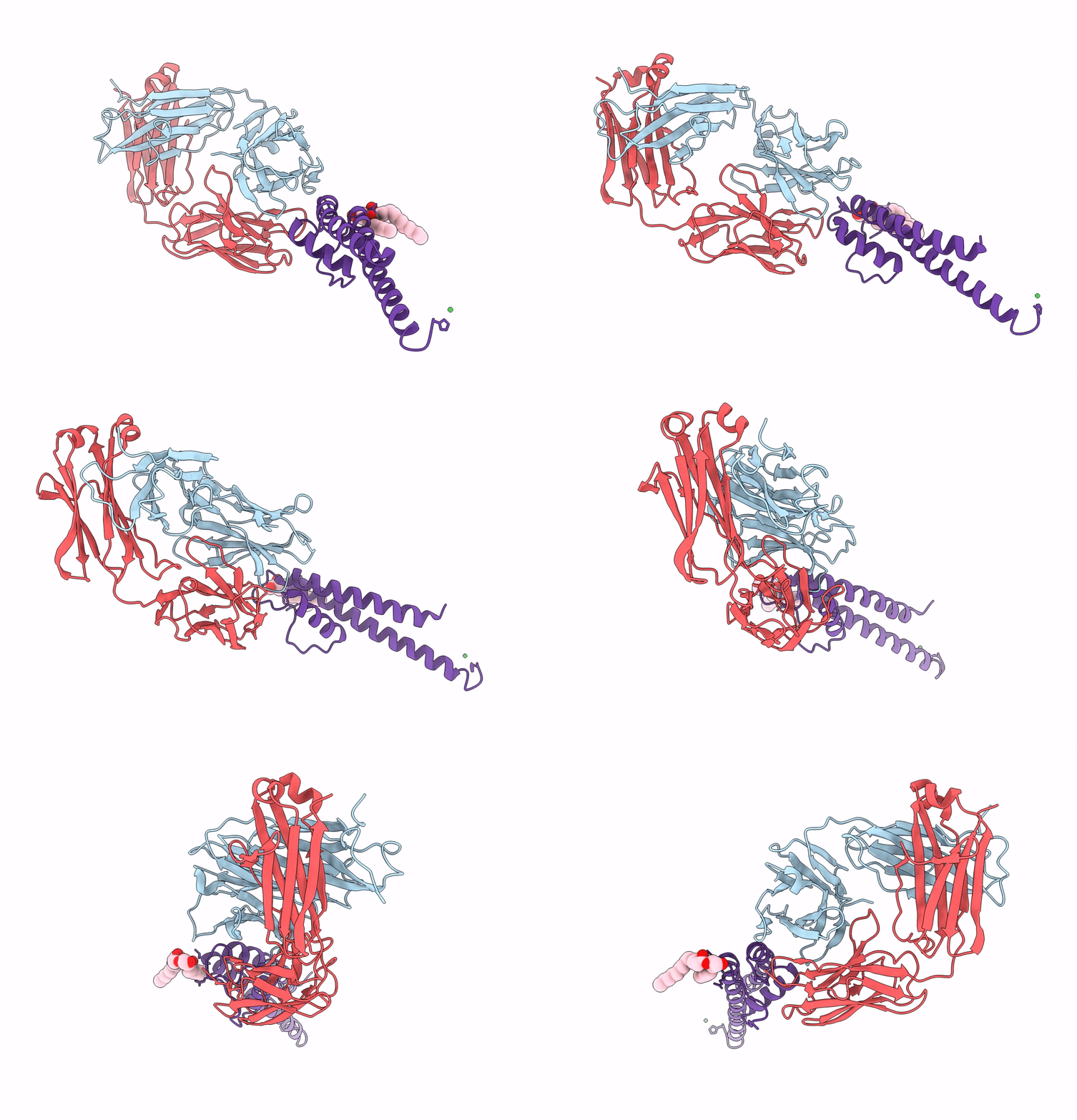
3GB7 image
Deposition Date 2009-02-18
Release Date 2009-11-17
Last Version Date 2024-10-16
Entry Detail
PDB ID:
3GB7
Title:
Potassium Channel KcsA-Fab complex in Li+
Biological Source:
Source Organism(s):
Expression System(s):
Method Details:
Experimental Method:
Resolution:
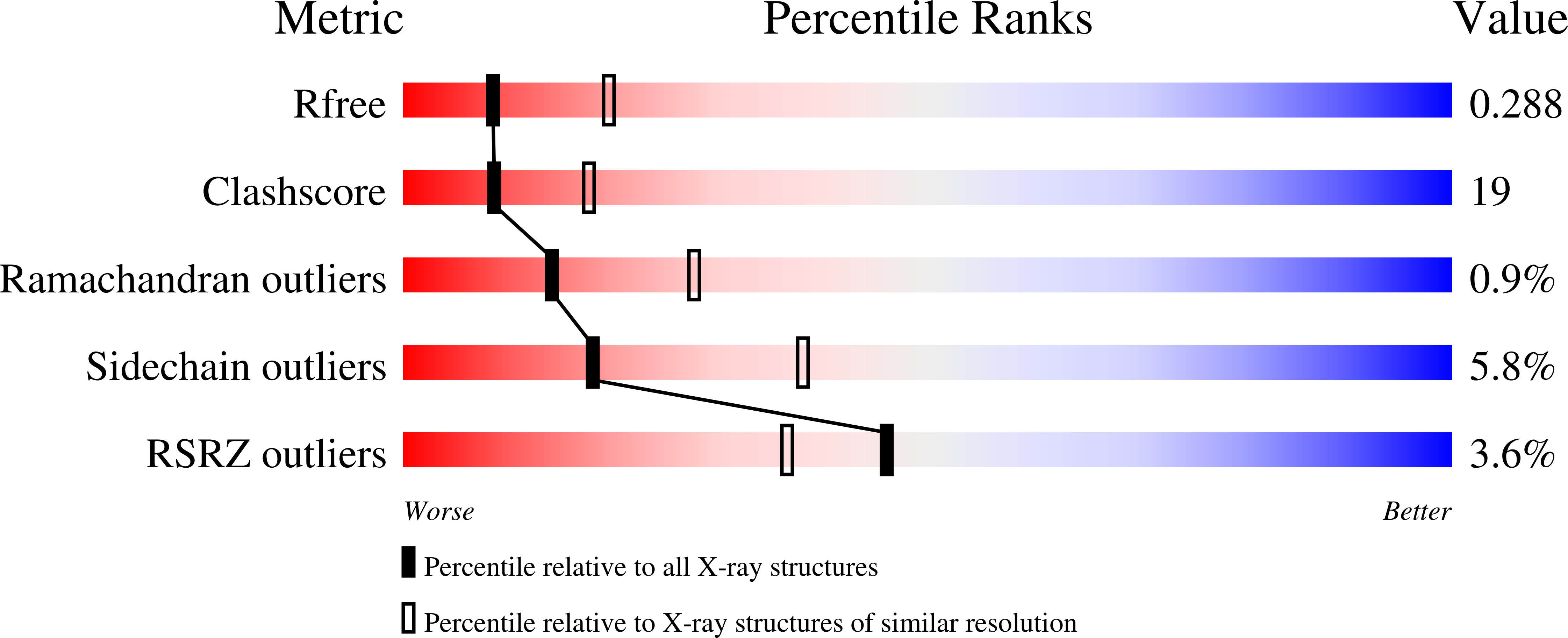
2.85 Å
R-Value Free:
0.28
R-Value Work:
0.23
R-Value Observed:
0.23
Space Group:
I 4
Macromolecular Entities
Polymer Type:polypeptide(L)
Molecule:antibody Fab fragment heavy c
Chain IDs:A
Chain Length:219
Number of Molecules:1
Biological Source:Mus musculus
Polymer Type:polypeptide(L)
Molecule:antibody Fab fragment light c
Chain IDs:B
Chain Length:212
Number of Molecules:1
Biological Source:Mus musculus
Polymer Type:polypeptide(L)
Molecule:Voltage-gated potassium chann
Gene (Uniprot):kcsA
Mutagens:P2A, L90C
Chain IDs:C
Chain Length:124
Number of Molecules:1
Biological Source:Streptomyces lividans
Primary Citation
Mechanism of potassium-channel selectivity revealed by Na(+) and Li(+) binding sites within the KcsA pore.
Nat. Struct. Mol. Biol. 16 1317 1324 (2009)
PMID: 19946269 DOI: 10.1038/nsmb.1703

Abstact

Potassium channels allow K(+) ions to diffuse through their pores while preventing smaller Na(+) ions from permeating. Discrimination between these similar, abundant ions enables these proteins to control electrical and chemical activity in all organisms. Selection occurs at the narrow selectivity filter containing structurally identified K(+) binding sites. Selectivity is thought to arise because smaller ions such as Na(+) do not bind to these K(+) sites in a thermodynamically favorable way. Using the model K(+) channel KcsA, we examined how intracellular Na(+) and Li(+) interact with the pore and the permeant ions using electrophysiology, molecular dynamics simulations and X-ray crystallography. Our results suggest that these small cations have a separate binding site within the K(+) selectivity filter. We propose that selective permeation from the intracellular side primarily results from a large energy barrier blocking filter entry for Na(+) and Li(+) in the presence of K(+), not from a difference of binding affinity between ions.

Legend

Protein

Chemical

Disease

Primary Citation of related structures
Feedback Form
Name
Email
Institute
Feedback