

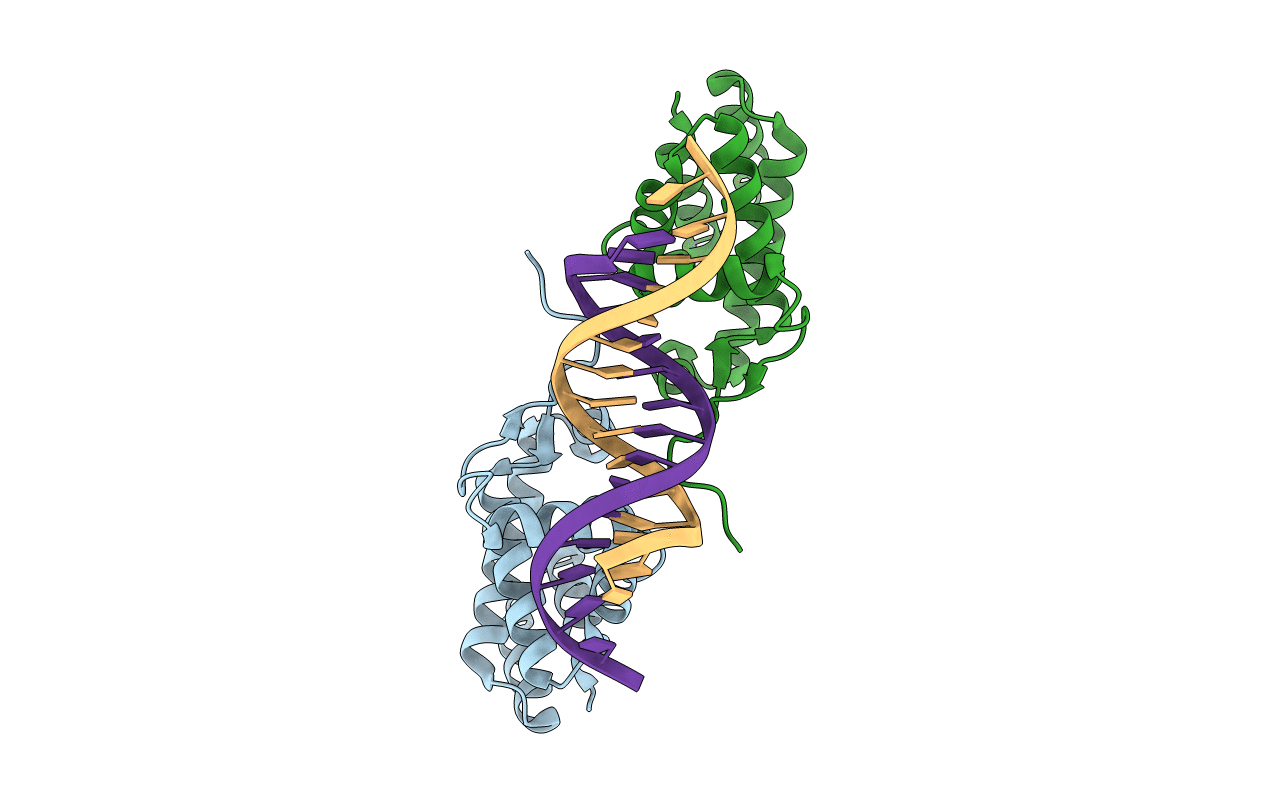
3FDQ image
Deposition Date 2008-11-26
Release Date 2009-06-02
Last Version Date 2023-12-27
Entry Detail
PDB ID:
3FDQ
Title:
Recognition of AT-rich DNA binding sites by the MogR Repressor
Biological Source:
Source Organism(s):
Expression System(s):
Method Details:
Experimental Method:
Resolution:
1.75 Å
R-Value Free:
0.23
R-Value Work:
0.21
R-Value Observed:
0.21
Space Group:
P 1 21 1
Macromolecular Entities
Polymer Type:polypeptide(L)
Molecule:Motility gene repressor mogR
Chain IDs:A, B
Chain Length:0
Number of Molecules:2
Biological Source:Listeria monocytogenes
Polymer Type:polydeoxyribonucleotide
Molecule:5'-D(*AP*TP*TP*TP*TP*TP*TP*AP
Chain IDs:C
Chain Length:0
Number of Molecules:1
Biological Source:
Polymer Type:polydeoxyribonucleotide
Molecule:5'-D(*TP*AP*TP*TP*TP*TP*TP*TP
Chain IDs:D
Chain Length:0
Number of Molecules:1
Biological Source:
Primary Citation
Recognition of AT-Rich DNA Binding Sites by the MogR Repressor.
Structure 17 769 777 (2009)
PMID: 19446532 DOI: 10.1016/j.str.2009.02.018

Abstact

The MogR transcriptional repressor of the intracellular pathogen Listeria monocytogenes recognizes AT-rich binding sites in promoters of flagellar genes to downregulate flagellar gene expression during infection. We describe here the 1.8 A resolution crystal structure of MogR bound to the recognition sequence 5' ATTTTTTAAAAAAAT 3' present within the flaA promoter region. Our structure shows that MogR binds as a dimer. Each half-site is recognized in the major groove by a helix-turn-helix motif and in the minor groove by a loop from the symmetry-related molecule, resulting in a "crossover" binding mode. This oversampling through minor groove interactions is important for specificity. The MogR binding site has structural features of A-tract DNA and is bent by approximately 52 degrees away from the dimer. The structure explains how MogR achieves binding specificity in the AT-rich genome of L. monocytogenes and explains the evolutionary conservation of A-tract sequence elements within promoter regions of MogR-regulated flagellar genes.

Legend

Protein

Chemical

Disease

Primary Citation of related structures
Feedback Form
Name
Email
Institute
Feedback