

3EW9 image
Deposition Date 2008-10-14
Release Date 2009-05-05
Last Version Date 2023-09-06
Entry Detail
PDB ID:
3EW9
Title:
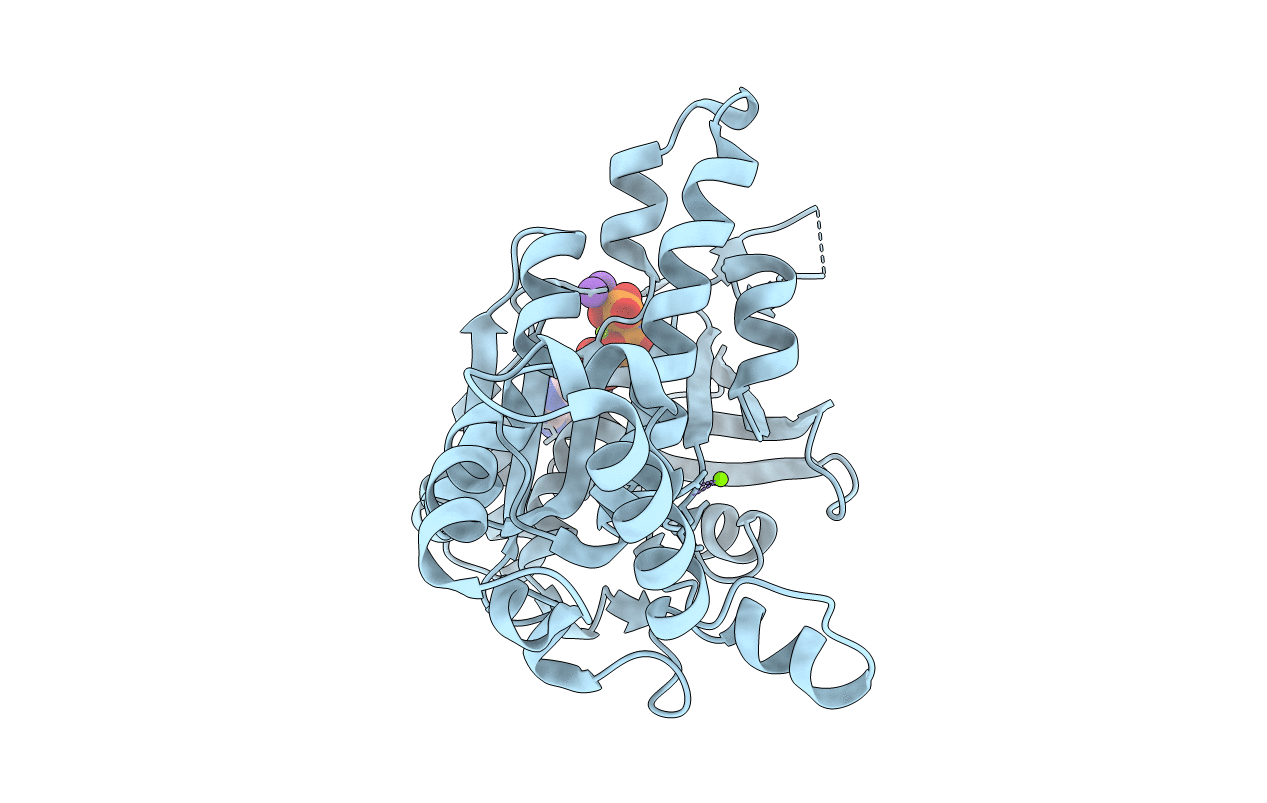
RADA recombinase from METHANOCOCCUS MARIPALUDIS in complex with AMPPNP and potassium ions
Biological Source:
Source Organism(s):
Expression System(s):
Method Details:
Experimental Method:
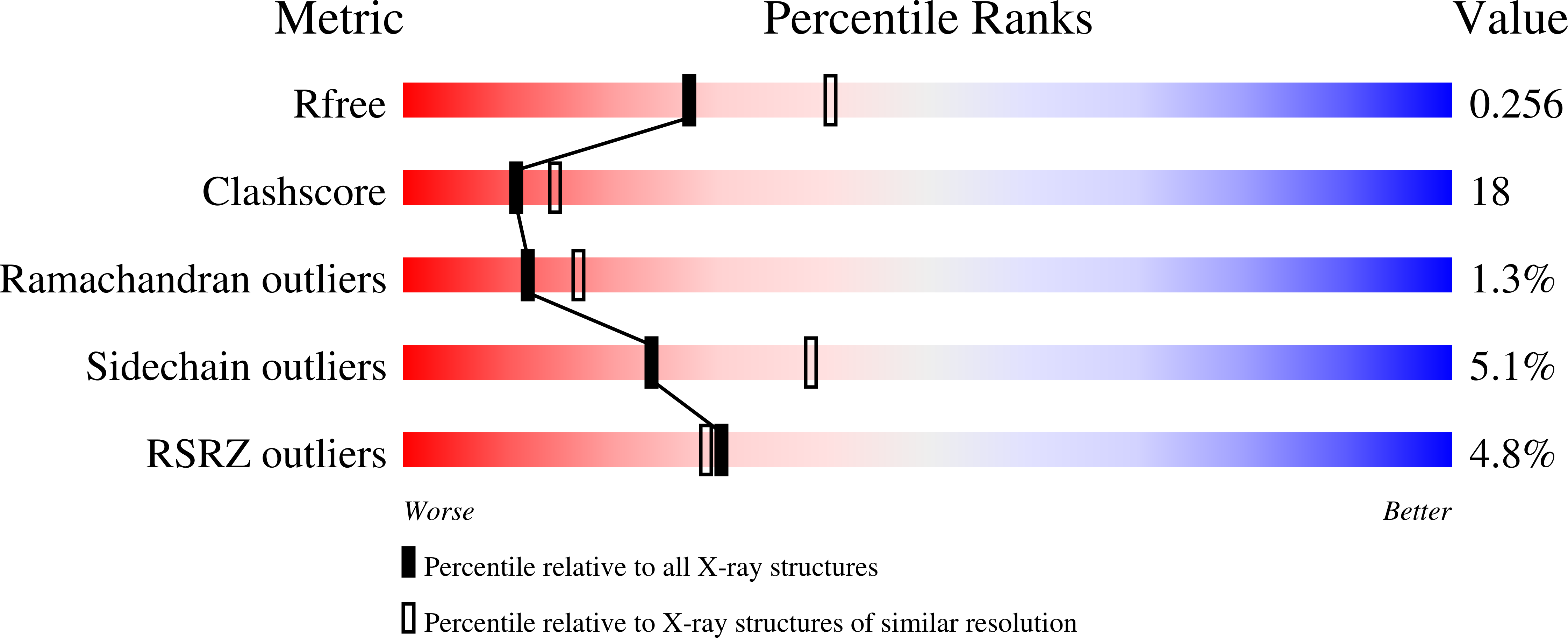
Resolution:
2.40 Å
R-Value Free:
0.26
R-Value Work:
0.21
R-Value Observed:
0.21
Space Group:
P 61
Macromolecular Entities
Structures with similar UniProt ID
Protein Blast
Polymer Type:polypeptide(L)
Molecule:DNA repair and recombination
Mutagens:I124M
Chain IDs:A
Chain Length:322
Number of Molecules:1
Biological Source:Methanococcus maripaludis
Primary Citation
Conservation of a conformational switch in RadA recombinase from Methanococcus maripaludis.
Acta Crystallogr. D Biol. Crystallogr. 65 602 610 (2009)
PMID: 19465774 DOI: 10.1107/S0907444909011871

Abstact

Archaeal RadAs are close homologues of eukaryal Rad51s (approximately 40% sequence identity). These recombinases promote ATP hydrolysis and a hallmark strand-exchange reaction between homologous single-stranded and double-stranded DNA substrates. Pairing of the 3'-overhangs located at the damaged DNA with a homologous double-stranded DNA enables the re-synthesis of the damaged region using the homologous DNA as the template. In recent studies, conformational changes in the DNA-interacting regions of Methanococcus voltae RadA have been correlated with the presence of activity-stimulating potassium or calcium ions in the ATPase centre. The series of crystal structures of M. maripaludis RadA presented here further suggest the conservation of an allosteric switch in the ATPase centre which controls the conformational status of DNA-interacting loops. Structural comparison with the distant Escherichia coli RecA homologue supports the notion that the conserved Lys248 and Lys250 residues in RecA play a role similar to that of cations in RadA. The conservation of a cationic bridge between the DNA-interacting L2 region and the terminal phosphate of ATP, together with the apparent stability of the nucleoprotein filament, suggests a gap-displacement model which may explain the advantage of ATP hydrolysis for DNA-strand exchange.

Legend

Protein

Chemical

Disease

Primary Citation of related structures
Feedback Form
Name
Email
Institute
Feedback