

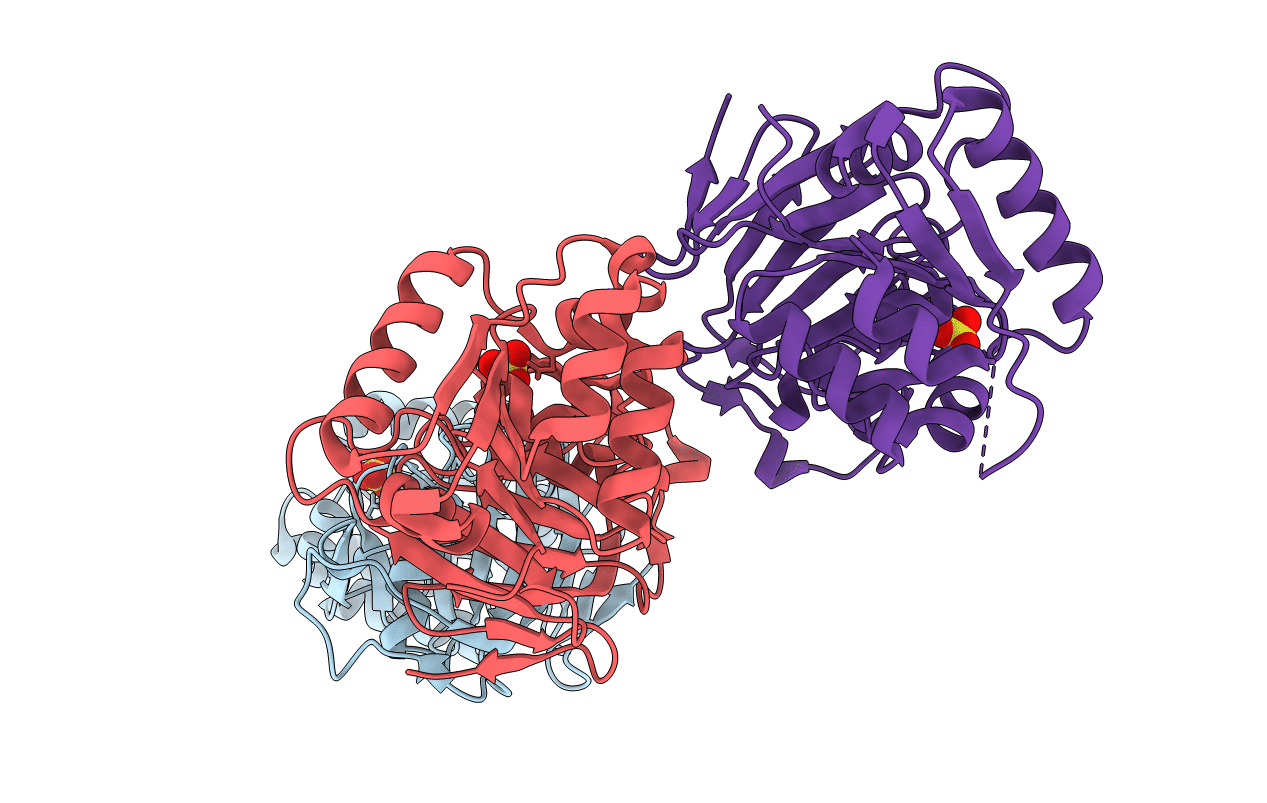
3EN0 image
Deposition Date 2008-09-25
Release Date 2009-07-28
Last Version Date 2024-02-21
Entry Detail
PDB ID:
3EN0
Keywords:
Title:
The Structure of Cyanophycinase
Biological Source:
Source Organism(s):
Expression System(s):
Method Details:
Experimental Method:
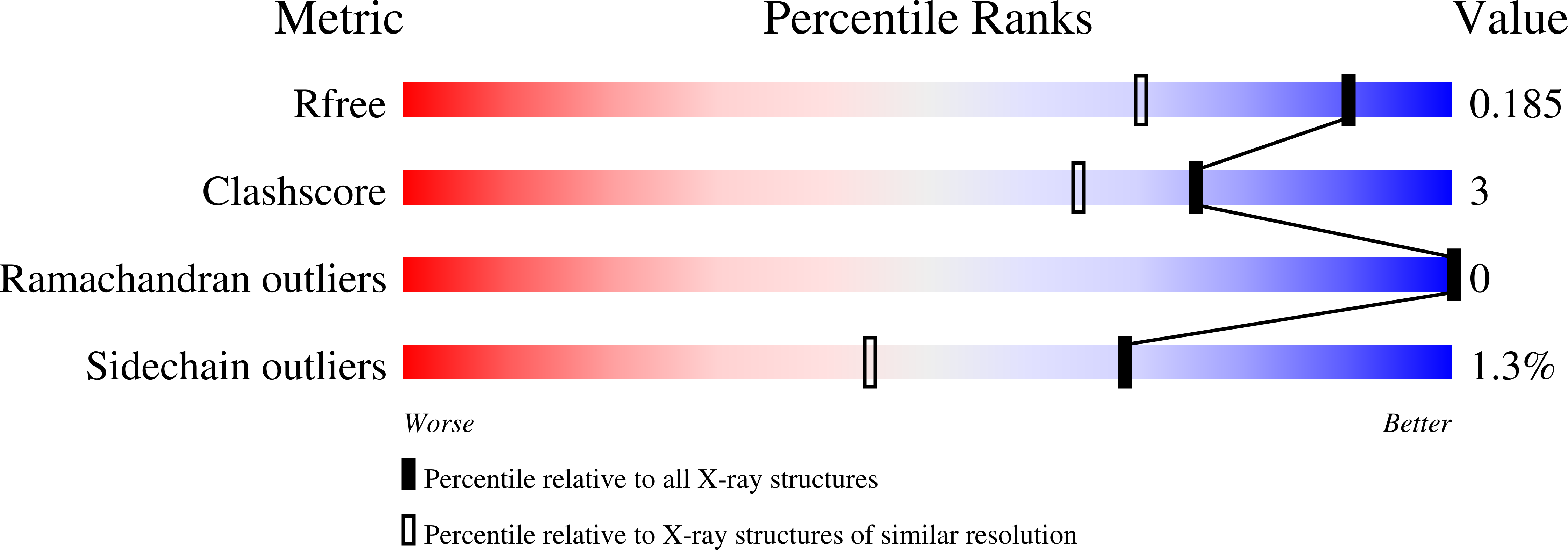
Resolution:
1.50 Å
R-Value Free:
0.17
R-Value Work:
0.15
R-Value Observed:
0.15
Space Group:
C 2 2 21
Macromolecular Entities
Structures with similar UniProt ID
Protein Blast
Polymer Type:polypeptide(L)
Molecule:Cyanophycinase
Gene (Uniprot):cphB
Chain IDs:A, B, C
Chain Length:291
Number of Molecules:3
Biological Source:Synechocystis sp.
Ligand Molecules
Primary Citation
The structural basis of beta-peptide-specific cleavage by the serine protease cyanophycinase.
J. Mol. Biol. 392 393 404 (2009)
PMID: 19591842 DOI: 10.1016/j.jmb.2009.07.001

Abstact

Cyanophycin, or poly-L-Asp-multi-L-Arg, is a non-ribosomally synthesized peptidic polymer that is used for nitrogen storage by cyanobacteria and other select eubacteria. Upon synthesis, it self-associates to form insoluble granules, the degradation of which is uniquely catalyzed by a carboxy-terminal-specific protease, cyanophycinase. We have determined the structure of cyanophycinase from the freshwater cyanobacterium Synechocystis sp. PCC6803 at 1.5-A resolution, showing that the structure is dimeric, with individual protomers resembling aspartyl dipeptidase. Kinetic characterization of the enzyme demonstrates that the enzyme displays Michaelis-Menten kinetics with a k(cat) of 16.5 s(-1) and a k(cat)/K(M) of 7.5x10(-6) M(-1) s(-1). Site-directed mutagenesis experiments confirm that cyanophycinase is a serine protease and that Gln101, Asp172, Gln173, Arg178, Arg180 and Arg183, which form a conserved pocket adjacent to the catalytic Ser132, are functionally critical residues. Modeling indicates that cyanophycinase binds the beta-Asp-Arg dipeptide residue immediately N-terminal to the scissile bond in an extended conformation in this pocket, primarily recognizing this penultimate beta-Asp-Arg residue of the polymeric chain. Because binding and catalysis depend on substrate features unique to beta-linked aspartyl peptides, cyanophycinase is able to act within the cytosol without non-specific cleavage events disrupting essential cellular processes.

Legend

Protein

Chemical

Disease

Primary Citation of related structures
Feedback Form
Name
Email
Institute
Feedback