

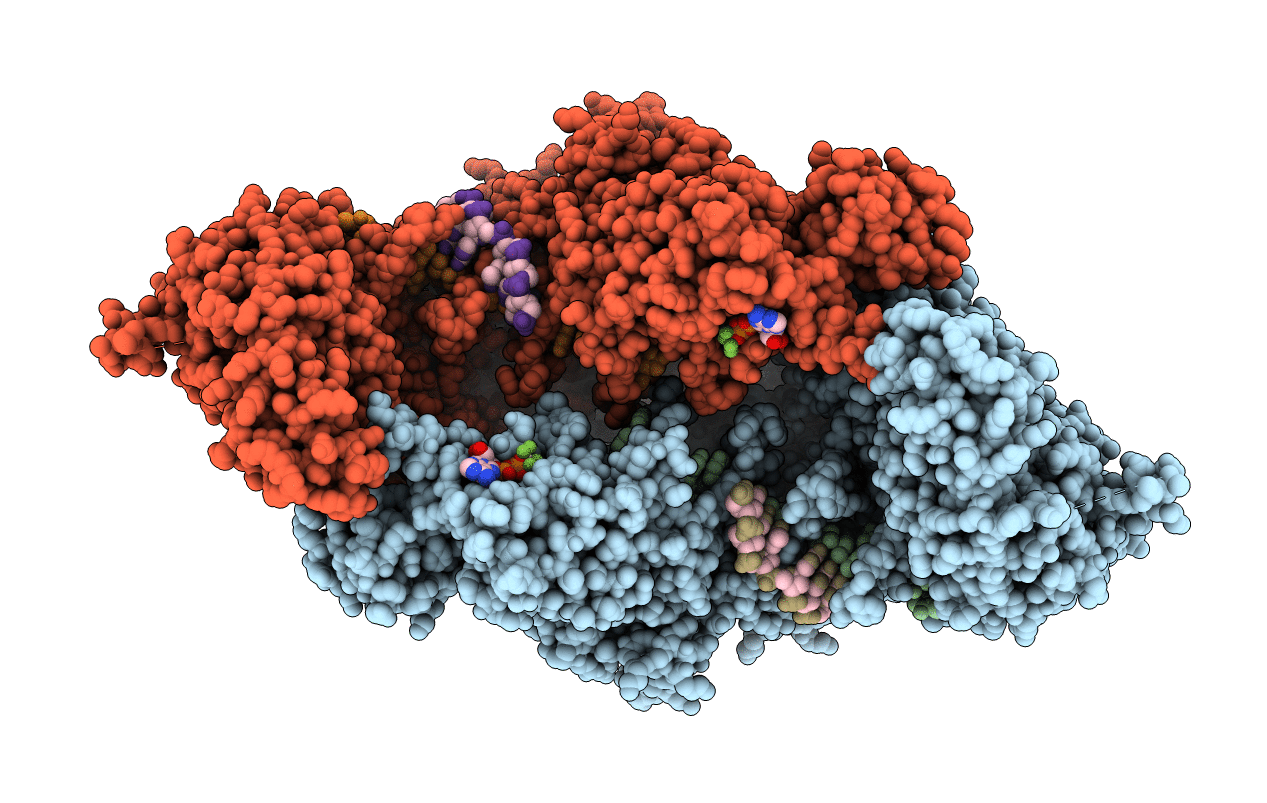
3CMT image
Deposition Date 2008-03-24
Release Date 2008-05-20
Last Version Date 2024-02-21
Entry Detail
PDB ID:
3CMT
Title:
Mechanism of homologous recombination from the RecA-ssDNA/dsDNA structures
Biological Source:
Source Organism(s):
Escherichia coli (Taxon ID: )
Method Details:
Experimental Method:
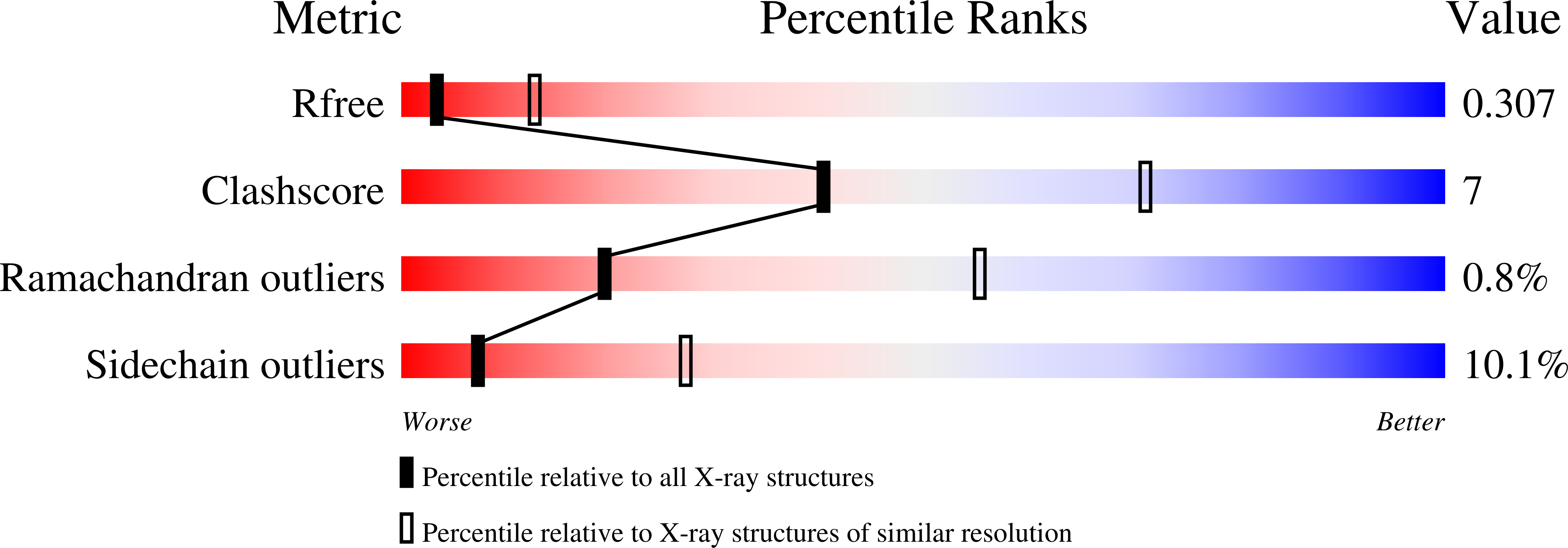
Resolution:
3.15 Å
R-Value Free:
0.24
R-Value Work:
0.21
R-Value Observed:
0.21
Space Group:
P 21 21 2
Macromolecular Entities
Structures with similar UniProt ID
Protein Blast
Polymer Type:polypeptide(L)
Molecule:Protein recA
Gene (Uniprot):recA
Chain IDs:E (auth: A), F (auth: D)
Chain Length:1706
Number of Molecules:2
Biological Source:Escherichia coli
Primary Citation
Mechanism of homologous recombination from the RecA-ssDNA/dsDNA structures.
Nature 453 489 494 (2008)
PMID: 18497818 DOI: 10.1038/nature06971

Abstact

The RecA family of ATPases mediates homologous recombination, a reaction essential for maintaining genomic integrity and for generating genetic diversity. RecA, ATP and single-stranded DNA (ssDNA) form a helical filament that binds to double-stranded DNA (dsDNA), searches for homology, and then catalyses the exchange of the complementary strand, producing a new heteroduplex. Here we have solved the crystal structures of the Escherichia coli RecA-ssDNA and RecA-heteroduplex filaments. They show that ssDNA and ATP bind to RecA-RecA interfaces cooperatively, explaining the ATP dependency of DNA binding. The ATP gamma-phosphate is sensed across the RecA-RecA interface by two lysine residues that also stimulate ATP hydrolysis, providing a mechanism for DNA release. The DNA is underwound and stretched globally, but locally it adopts a B-DNA-like conformation that restricts the homology search to Watson-Crick-type base pairing. The complementary strand interacts primarily through base pairing, making heteroduplex formation strictly dependent on complementarity. The underwound, stretched filament conformation probably evolved to destabilize the donor duplex, freeing the complementary strand for homology sampling.

Legend

Protein

Chemical

Disease

Primary Citation of related structures
Feedback Form
Name
Email
Institute
Feedback