

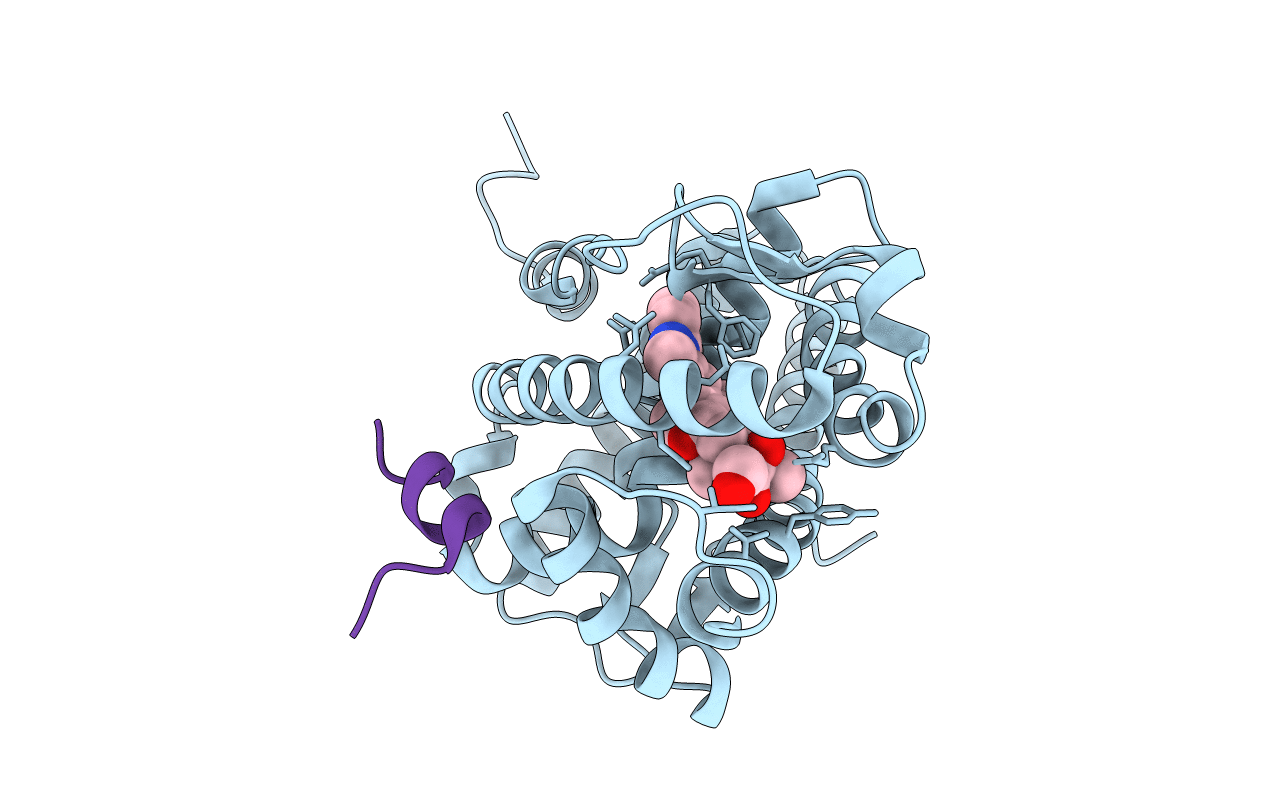
3BQD image
Deposition Date 2007-12-20
Release Date 2008-01-15
Last Version Date 2023-08-30
Entry Detail
PDB ID:
3BQD
Keywords:
Title:
Doubling the Size of the Glucocorticoid Receptor Ligand Binding Pocket by Deacylcortivazol
Biological Source:
Source Organism(s):
Homo sapiens (Taxon ID: 9606)
Expression System(s):
Method Details:
Experimental Method:
Resolution:
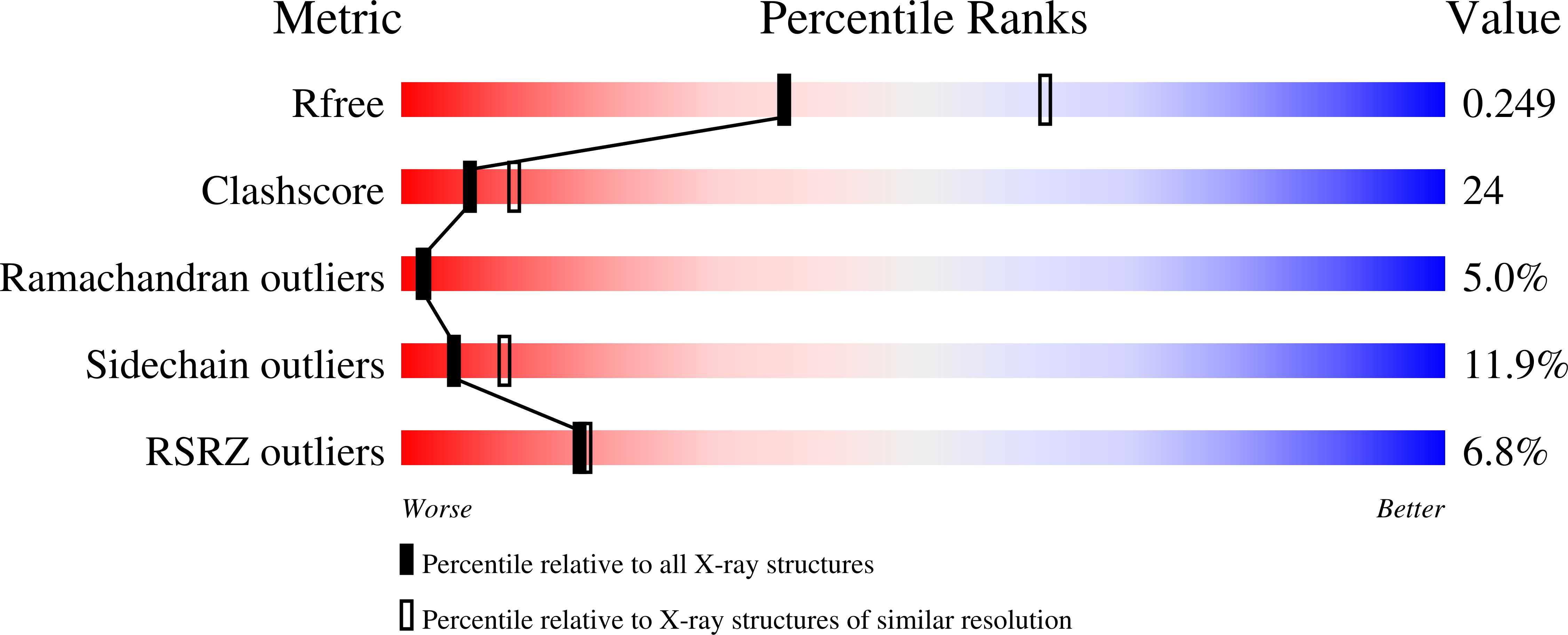
2.50 Å
R-Value Free:
0.26
R-Value Work:
0.23
R-Value Observed:
0.23
Space Group:
P 62
Macromolecular Entities
Structures with similar UniProt ID
Protein Blast
Polymer Type:polypeptide(L)
Molecule:Glucocorticoid receptor
Gene (Uniprot):NR3C1
Mutagens:F602S
Chain IDs:A
Chain Length:255
Number of Molecules:1
Biological Source:Homo sapiens
Structures with similar UniProt ID
Protein Blast
Polymer Type:polypeptide(L)
Molecule:Nuclear receptor coactivator
Gene (Uniprot):NCOA1
Chain IDs:B
Chain Length:13
Number of Molecules:1
Biological Source:
Ligand Molecules
Primary Citation
Doubling the size of the glucocorticoid receptor ligand binding pocket by deacylcortivazol.
Mol. Cell. Biol. 28 1915 1923 (2008)
PMID: 18160712 DOI: 10.1128/MCB.01541-07

Abstact

A common feature of nuclear receptor ligand binding domains (LBD) is a helical sandwich fold that nests a ligand binding pocket within the bottom half of the domain. Here we report that the ligand pocket of glucocorticoid receptor (GR) can be continuously extended into the top half of the LBD by binding to deacylcortivazol (DAC), an extremely potent glucocorticoid. It has been puzzling for decades why DAC, which contains a phenylpyrazole replacement at the conserved 3-ketone of steroid hormones that are normally required for activation of their cognate receptors, is a potent GR activator. The crystal structure of the GR LBD bound to DAC and the fourth LXXLL motif of steroid receptor coactivator 1 reveals that the GR ligand binding pocket is expanded to a size of 1,070 A(3), effectively doubling the size of the GR dexamethasone-binding pocket of 540 A(3) and yet leaving the structure of the coactivator binding site intact. DAC occupies only approximately 50% of the space of the pocket but makes intricate interactions with the receptor around the phenylpyrazole group that accounts for the high-affinity binding of DAC. The dramatic expansion of the DAC-binding pocket thus highlights the conformational adaptability of GR to ligand binding. The new structure also allows docking of various nonsteroidal ligands that cannot be fitted into the previous structures, thus providing a new rational template for drug discovery of steroidal and nonsteroidal glucocorticoids that can be specifically designed to reach the unoccupied space of the expanded pocket.

Legend

Protein

Chemical

Disease

Primary Citation of related structures
Feedback Form
Name
Email
Institute
Feedback