

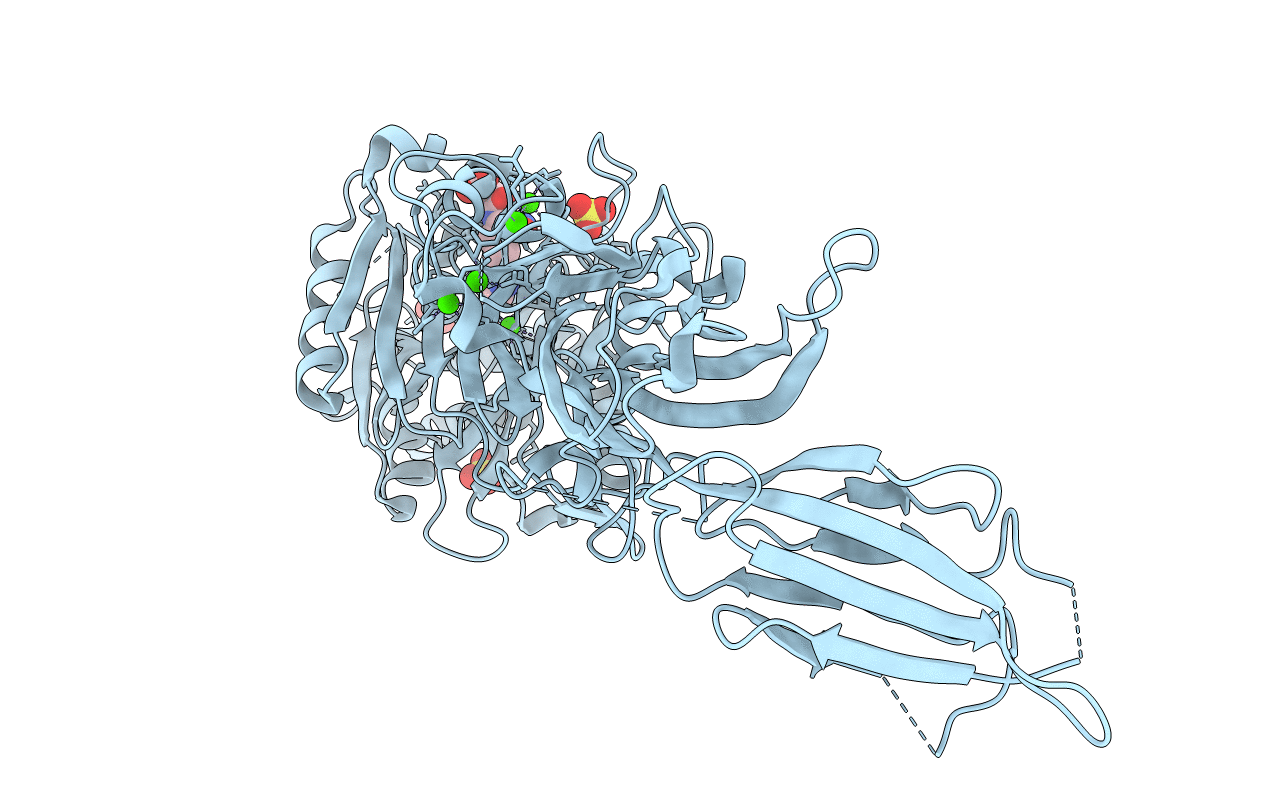
3B1T image
Deposition Date 2011-07-13
Release Date 2011-10-26
Last Version Date 2024-10-23
Entry Detail
PDB ID:
3B1T
Title:
Crystal structure of human peptidylarginine deiminase 4 in complex with o-Cl-amidine
Biological Source:
Source Organism(s):
Homo sapiens (Taxon ID: 9606)
Expression System(s):
Method Details:
Experimental Method:
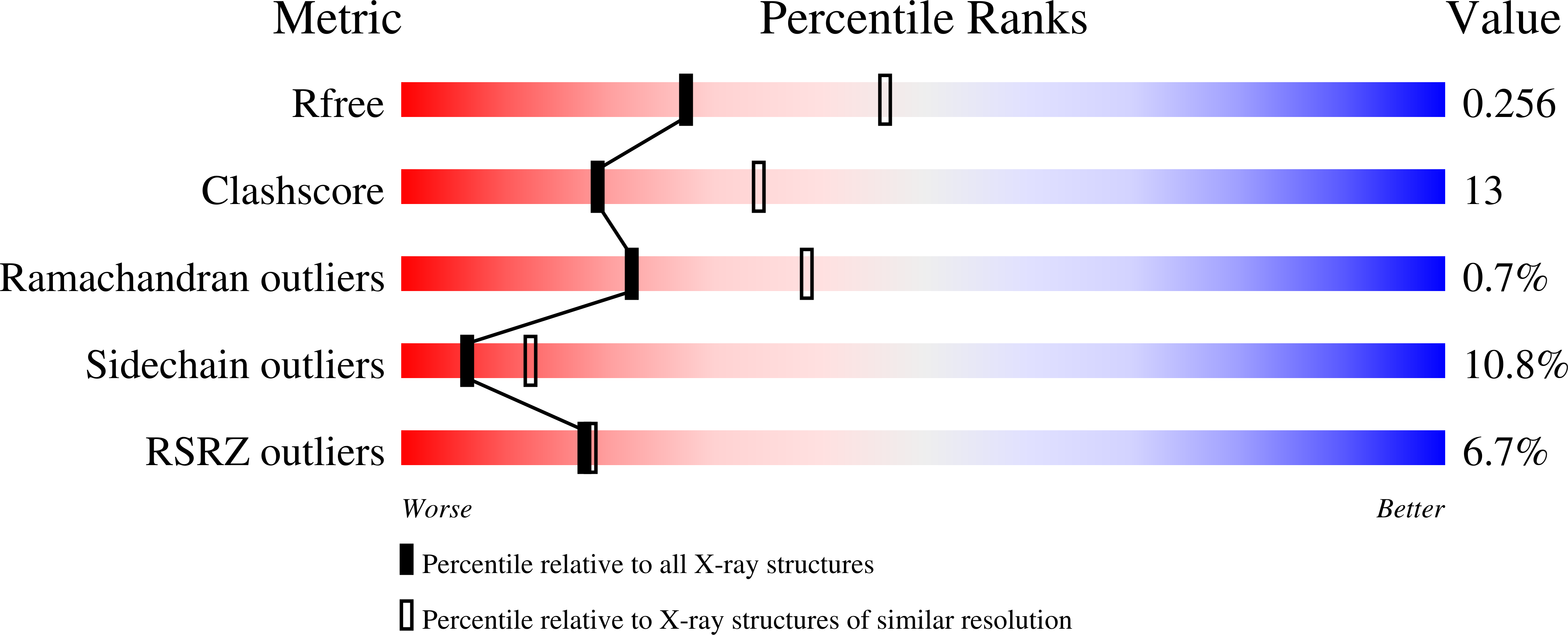
Resolution:
2.50 Å
R-Value Free:
0.26
R-Value Work:
0.21
R-Value Observed:
0.21
Space Group:
C 1 2 1
Macromolecular Entities
Structures with similar UniProt ID
Protein Blast
Polymer Type:polypeptide(L)
Molecule:Protein-arginine deiminase ty
Gene (Uniprot):PADI4
Chain IDs:A
Chain Length:671
Number of Molecules:1
Biological Source:Homo sapiens
Primary Citation
The Development of N-alpha-(2-Carboxyl)benzoyl-N(5)-(2-fluoro-1-iminoethyl)-l-ornithine Amide (o-F-amidine) and N-alpha-(2-Carboxyl)benzoyl-N(5)-(2-chloro-1-iminoethyl)-l-ornithine Amide (o-Cl-amidine) As Second Generation Protein Arginine Deiminase (PAD) Inhibitors
J. Med. Chem. 54 6919 6935 (2011)
PMID: 21882827 DOI: 10.1021/jm2008985

Abstact

Protein arginine deiminase (PAD) activity is upregulated in a number of human diseases, including rheumatoid arthritis, ulcerative colitis, and cancer. These enzymes, there are five in humans (PADs 1-4 and 6), regulate gene transcription, cellular differentiation, and the innate immune response. Building on our successful generation of F- and Cl-amidine, which irreversibly inhibit all of the PADs, a structure-activity relationship was performed to develop second generation compounds with improved potency and selectivity. Incorporation of a carboxylate ortho to the backbone amide resulted in the identification of N-alpha-(2-carboxyl)benzoyl-N(5)-(2-fluoro-1-iminoethyl)-l-ornithine amide (o-F-amidine) and N-alpha-(2-carboxyl)benzoyl-N(5)-(2-chloro-1-iminoethyl)-l-ornithine amide (o-Cl-amidine), as PAD inactivators with improved potency (up to 65-fold) and selectivity (up to 25-fold). Relative to F- and Cl-amidine, the compounds also show enhanced potency in cellulo. As such, these compounds will be versatile chemical probes of PAD function.

Legend

Protein

Chemical

Disease

Primary Citation of related structures
Feedback Form
Name
Email
Institute
Feedback