

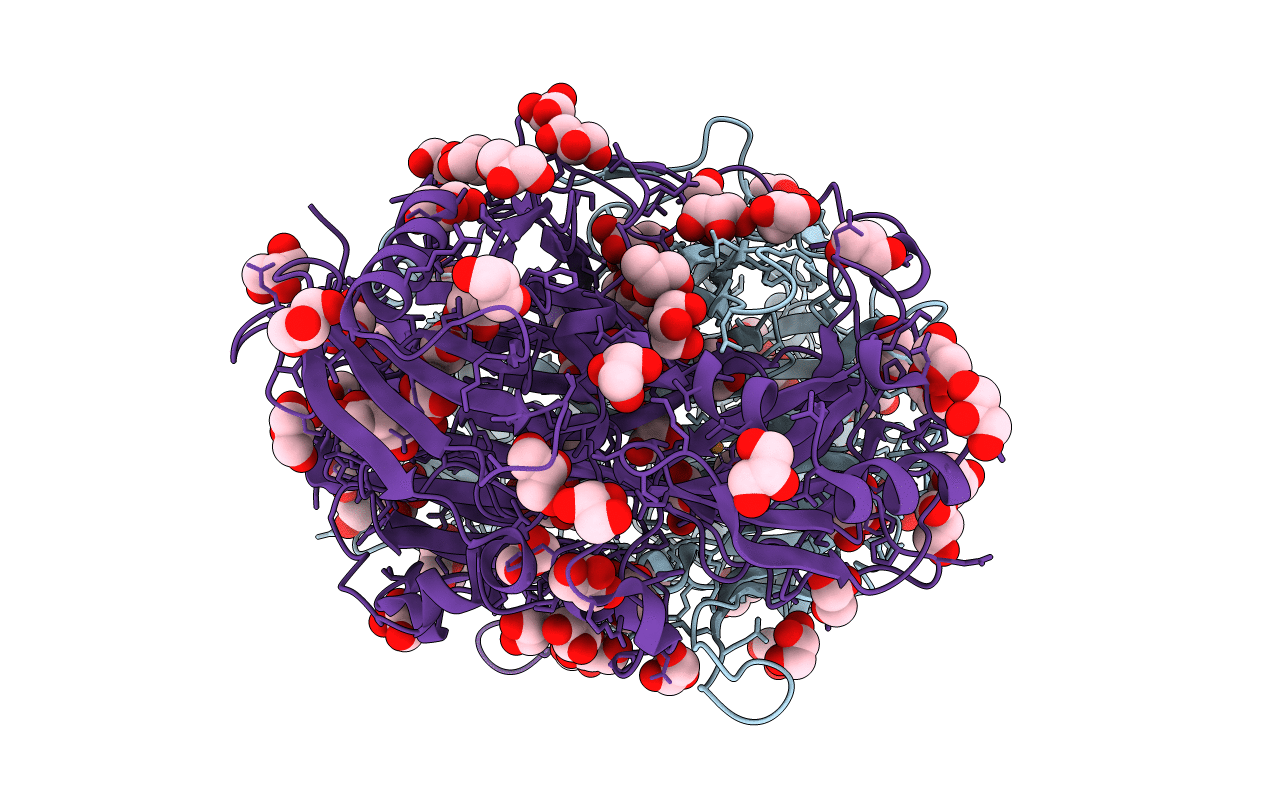
3AMO image
Deposition Date 2010-08-20
Release Date 2011-11-23
Last Version Date 2024-10-30
Entry Detail
PDB ID:
3AMO
Keywords:
Title:
Time-resolved X-ray Crystal Structure Analysis of Enzymatic Reaction of Copper Amine Oxidase from Arthrobacter globiformis
Biological Source:
Source Organism(s):
Expression System(s):
Method Details:
Experimental Method:
Resolution:
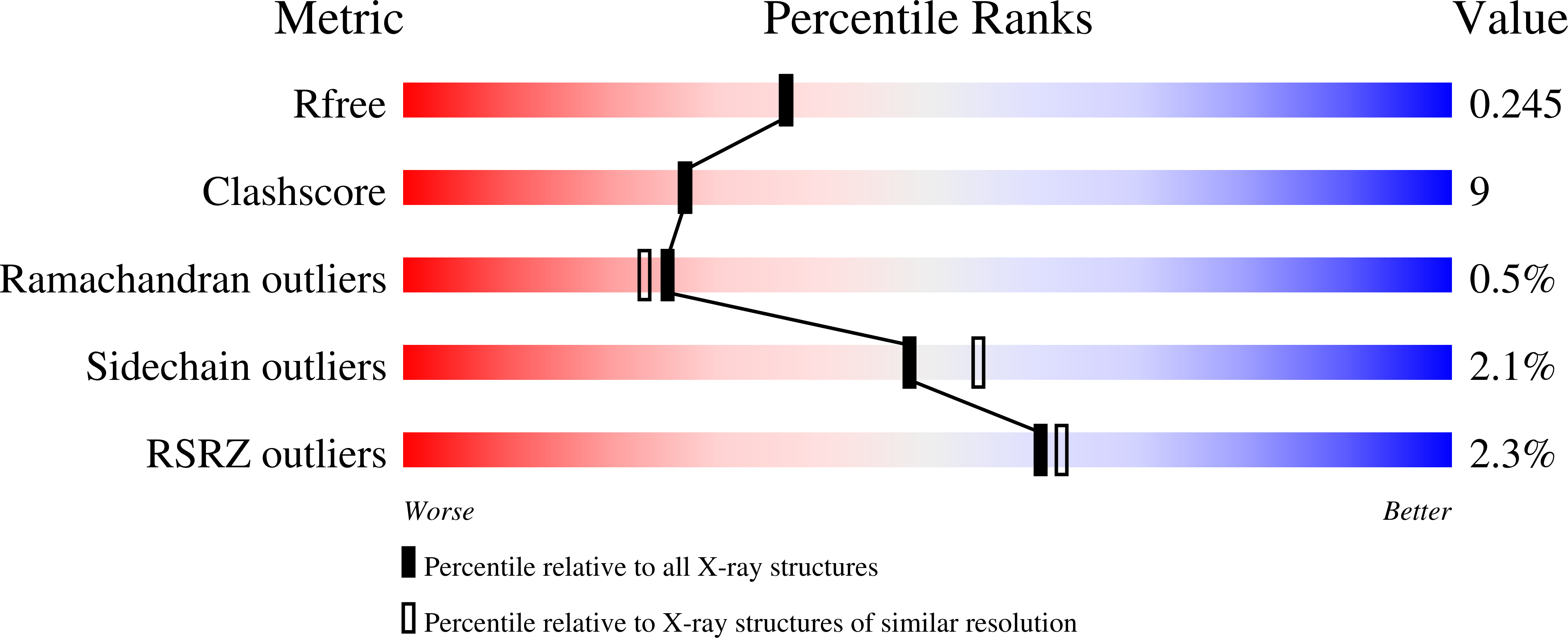
2.10 Å
R-Value Free:
0.24
R-Value Work:
0.18
R-Value Observed:
0.19
Space Group:
C 1 2 1
Macromolecular Entities
Structures with similar UniProt ID
Protein Blast
Polymer Type:polypeptide(L)
Molecule:Phenylethylamine oxidase
Chain IDs:A
Chain Length:638
Number of Molecules:1
Biological Source:Arthrobacter globiformis
Structures with similar UniProt ID
Protein Blast
Polymer Type:polypeptide(L)
Molecule:Phenylethylamine oxidase
Chain IDs:B
Chain Length:638
Number of Molecules:1
Biological Source:Arthrobacter globiformis
Modified Residue
Compound ID Chain ID Parent Comp ID Details 2D Image
1TY A TYR ?
2TY B TYR ?
Primary Citation
Detection of the reaction intermediates catalyzed by a copper amine oxidase.
J Synchrotron Radiat 18 58 61 (2011)
PMID: 21169693 DOI: 10.1107/S0909049510034989

Abstact

To reveal the chemical changes and geometry changes of active-site residues that cooperate with a reaction is important for understanding the functional mechanism of proteins. Consecutive temporal analyses of enzyme structures have been performed during reactions to clarify structure-based reaction mechanisms. Phenylethylamine oxidase from Arthrobacter globiformis (AGAO) contains a copper ion and topaquinone (TPQ(ox)). The catalytic reaction of AGAO catalyzes oxidative deaminations of phenylethylamine and consists of reductive and oxidative half-reactions. In the reduction step, TPQ(ox) reacts with a phenylethylamine (PEA) substrate giving rise to a topasemiquinone (TPQ(sq)) formed Schiff-base and produces phenylacetaldehyde. To elucidate the mechanism of the reductive half-reaction, an attempt was made to trap the reaction intermediates in order to analyze their structures. The reaction proceeded within the crystals when AGAO crystals were soaked in a PEA solution and freeze-trapped in liquid nitrogen. The reaction stage of each crystal was confirmed by single-crystal microspectrometry, before X-ray diffraction measurements were made of four reaction intermediates. The structure at 15 min after the onset of the reaction was analyzed at atomic resolution, and it was shown that TPQ(ox) and some residues in the substrate channel were alternated via catalytic reductive half-reactions.

Legend

Protein

Chemical

Disease

Primary Citation of related structures
Feedback Form
Name
Email
Institute
Feedback