

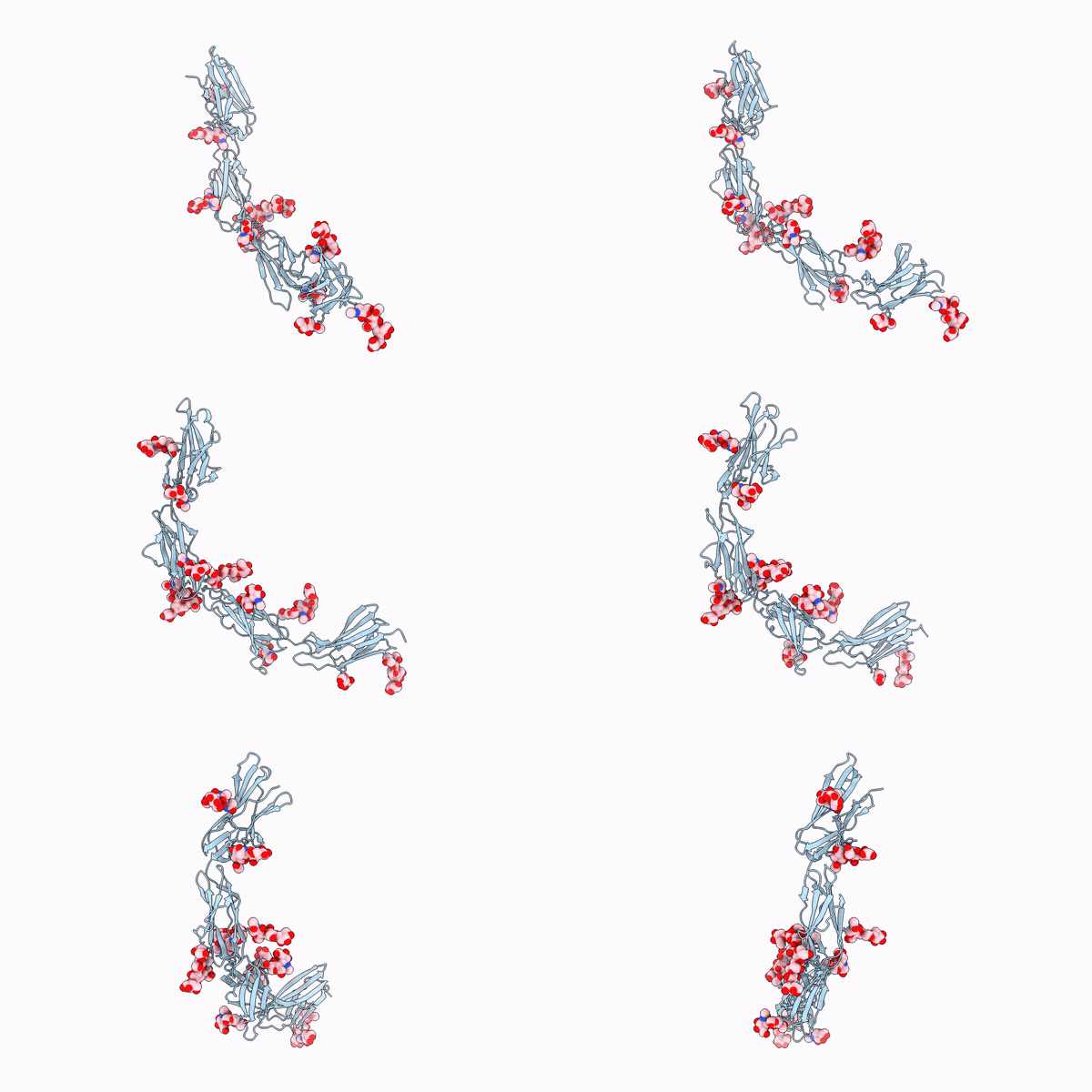
37NT image
Deposition Date 2026-07-29
Release Date 2026-10-07
Last Version Date 2026-10-21
Entry Detail
PDB ID:
37NT
Title:
Crystal structure of the extracellular region of the human receptor tyrosine kinase MERTK
Biological Source:
Source Organism(s):
Homo sapiens (Taxon ID: 9606)
Expression System(s):
Method Details:
Experimental Method:
Resolution:
3.41 Å
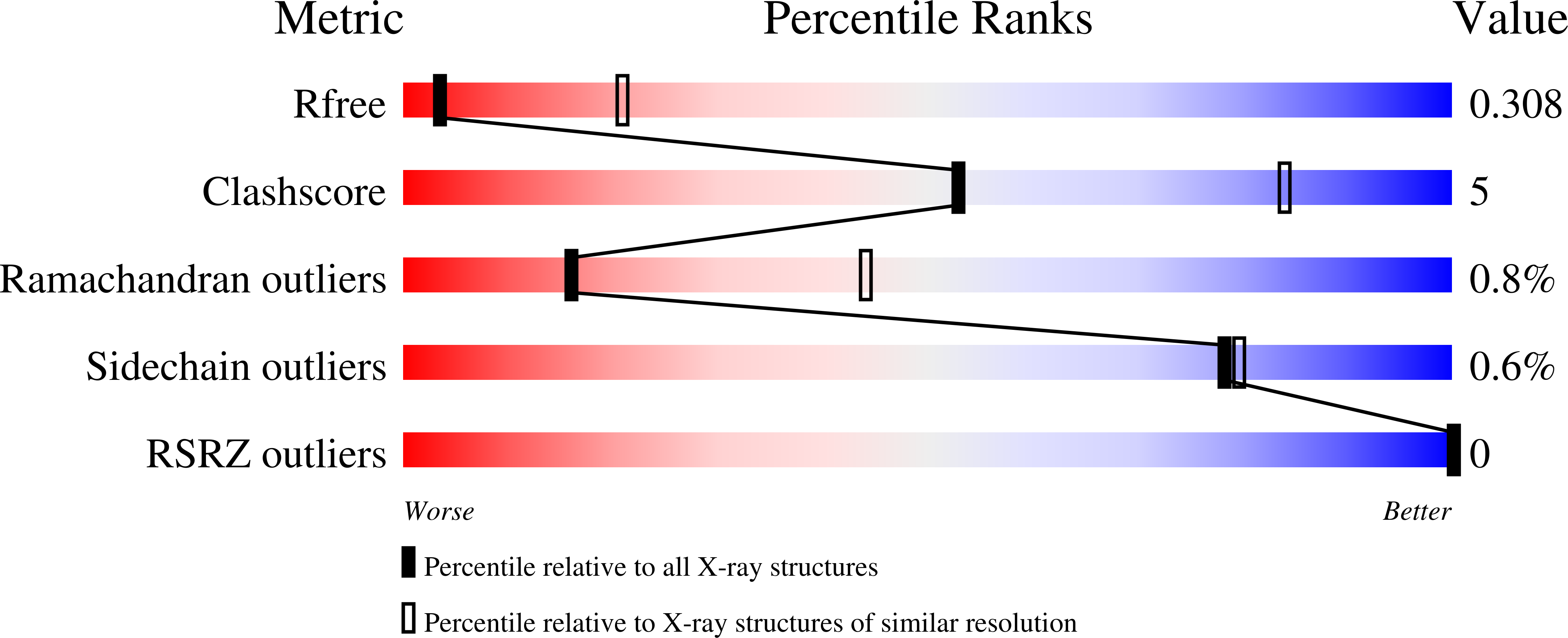
R-Value Free:
0.30
R-Value Work:
0.25
R-Value Observed:
0.25
Space Group:
P 21 21 21
Macromolecular Entities
Polymer Type:polypeptide(L)
Molecule:Tyrosine-protein kinase Mer
Gene (Uniprot):MERTK
Chain IDs:A
Chain Length:490
Number of Molecules:1
Biological Source:Homo sapiens
Ligand Molecules
Primary Citation
Structural organization of TAM receptor ectodomains.
Biochem.J. 483 2055 2073 (2026)
PMID: 42770830 DOI: 10.1042/BCJ20260584

Abstact

TYRO3, AXL, and MERTK, the TAM receptor tyrosine kinases (RTKs), play roles in phagocytosis and negative regulation of immune responses, contributing to homeostasis in many adult tissues. Aberrant TAM signaling leads to diseases including autoimmune disorders, viral infection, inflammation and cancer. Development of successful drugs targeting TAM receptors is hindered by incomplete knowledge of the receptor activation mechanism. Receptor dimerization is assumed to play a role, as seen for most RTKs. However, full biological responses require the TAM ligands to engage phosphatidylserine in an opposing cell or virus membrane, suggesting a more complex mechanism, possibly involving higher-order receptor oligomerization or clustering. Here, we present an X ray crystal structure of the ectodomain of MERTK, which adopts a highly curved conformation with key interdomain boundaries stabilized by N-linked glycan moieties. We show that this MERTK extracellular region (ECR) forms a similar conformation in solution using small-angle X ray scattering (SAXS), which also suggests a flexible ECR. We compare these crystallographic and solution data for MERTK with SAXS and AlphaFold structural predictions for the other two TAM receptors. SAXS data confirm that each TAM ECR has a distinct curvature, with TYRO3 the most bent and AXL relatively straight. This leads us to speculate that these different ectodomain conformations guide receptor-specific functions. The MERTK X-ray crystal structure also suggests a head-to-tail intermolecular interaction between the Ig2 domain of one MERTK and the FNIIIb domain of a second that has intriguing parallels with interactions that have been proposed to regulate Eph receptor clustering.

Legend

Protein

Chemical

Disease

Primary Citation of related structures
Feedback Form
Name
Email
Institute
Feedback